Index Record
Papyrus of Ani — Weighing of the Heart
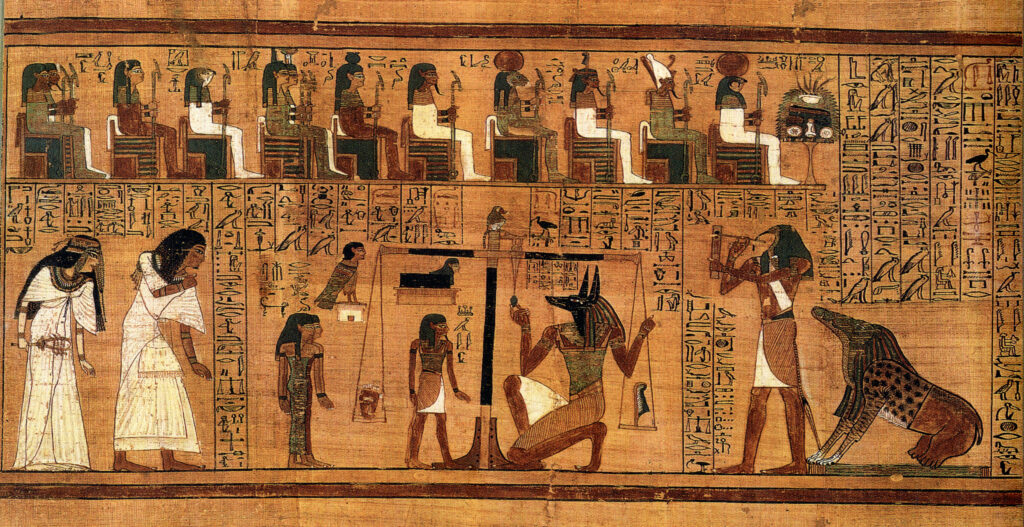
Primary image of the exact judgment scene interpreted in the essay.
Conventional Reading
The British Museum identifies the scene as Ani’s Judgment in the Hall of Judgment. Ani’s heart is weighed against a feather representing Ma’at, truth and order. The scene belongs to the ancient Egyptian afterlife judgment tradition.
Geomytha Reading
Geomytha treats the weighing as a practical image for noticing whether language turns passing experiences into a fixed “I am this” identity. Anubis, Thoth, Ma’at, Ammit, and Osiris are then read as symbolic functions in a trial of the claimant.
Parent work / tradition / source
Book of the Dead, Papyrus of Ani, New Kingdom Egypt
Source location / reference
British Museum, Papyrus of Ani, frame 3 (EA10470,3), Ani’s Judgment
Reading Boundary
The museum record supports the object, the weighing scene, and the heart/Ma’at imagery. It does not assert that the papyrus literally teaches the Is–Am–I–This grammar, that negative confessions mean “neti-neti,” or that ancient Egyptians intended a modern psychological identity practice. Those are Geomytha’s comparative readings.
Source trail
Evidence beneath the record
Papyrus of Ani, Ani’s Judgment — British Museum EA10470,3
Primary museum record identifies Ani’s heart and Ma’at feather on the balance in the Hall of Judgment. The claim that this weighs a grammatical self or false predicates is Geomytha’s interpretation, not the British Museum’s account.
The British Museum