Twenty Thousand Leagues Under the Seas — Jules Verne
GEOMYTHA reads the voyage as a test of an identity-world that offers knowledge and shelter while withholding a genuine exit. The Nautilus becomes a substitute kingdom when Nemo’s authority makes his chosen withdrawal compulsory for others. Aronnax’s fascination shows how wonder can delay recognition of that condition; Ned’s insistence on departure keeps practical freedom visible. This reading applies to the relation between enclosure, consent and action—not to every sea, vessel or instance of the word ‘this’.
The conventional work is an adventure and scientific voyage with political and ethical tensions. GEOMYTHA adds a conditional mechanism: an impressive world becomes identity-enclosure when its inhabitants cannot question its ruler or leave. Its beauty is not itself the problem.
Jules Verne, Vingt mille lieues sous les mers (1869–1870)
French illustrated text, Project Gutenberg 54873: I.3–4, I.8–13; II.3–4, II.21–23. English access: Gutenberg 2488 (Frederick Paul Walter translation; copyrighted).
GEOMYTHA’s conditional literary comparison is distinct from the novel’s documented events and from any claim of Verne’s intention. No character is assigned a universal identity or diagnosis. Counterexamples: the submarine enables real discovery and rescue; Nemo’s opposition to oppression cannot be reduced to vanity. Aronnax ultimately chooses escape. The interpretation therefore concerns coercive closure and revenge, not technology, scholarship or refuge as inherently false.
Counterexamples: the submarine enables real discovery and rescue; Nemo’s opposition to oppression cannot be reduced to vanity. Aronnax ultimately chooses escape. The interpretation therefore concerns coercive closure and revenge, not technology, scholarship or refuge as inherently false.
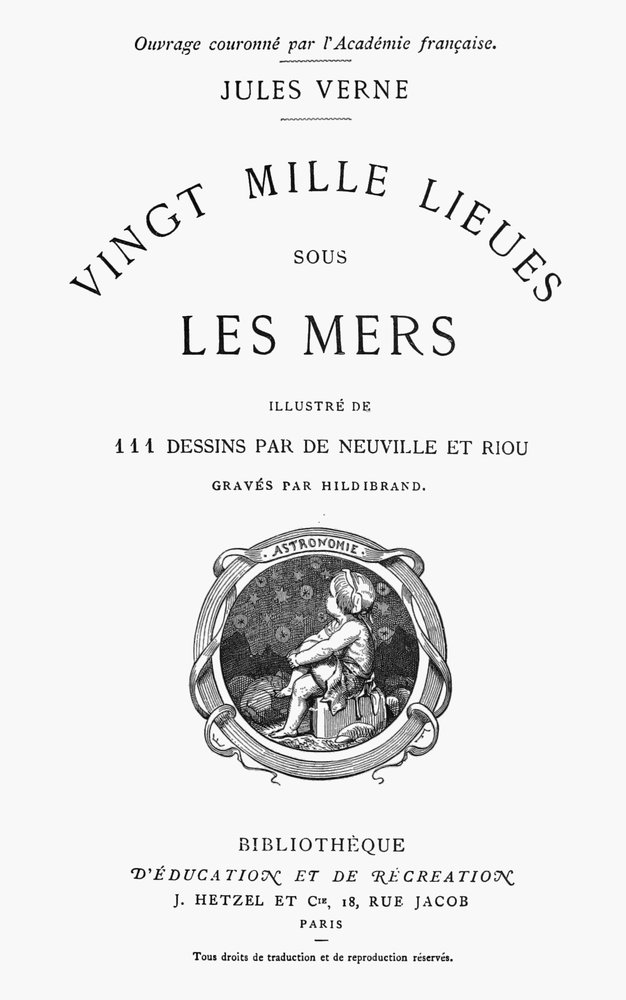
Original story: Jules Verne’s Vingt mille lieues sous les mers, not a screen adaptation. The checked French text is Project Gutenberg 54873, with the early Hetzel illustrations; BnF catalogues the illustrated Paris volume as [1871]. This source is an accessible early illustrated witness, not a claim to the oldest surviving manuscript or a verified first-serial transcription. Targeted passages were checked for this record. French illustrated text, Project Gutenberg 54873: I.3–4, I.8–13; II.3–4, II.21–23. English access: Gutenberg 2488 (Frederick Paul Walter translation; copyrighted).