Gilligan’s Island — Television Series
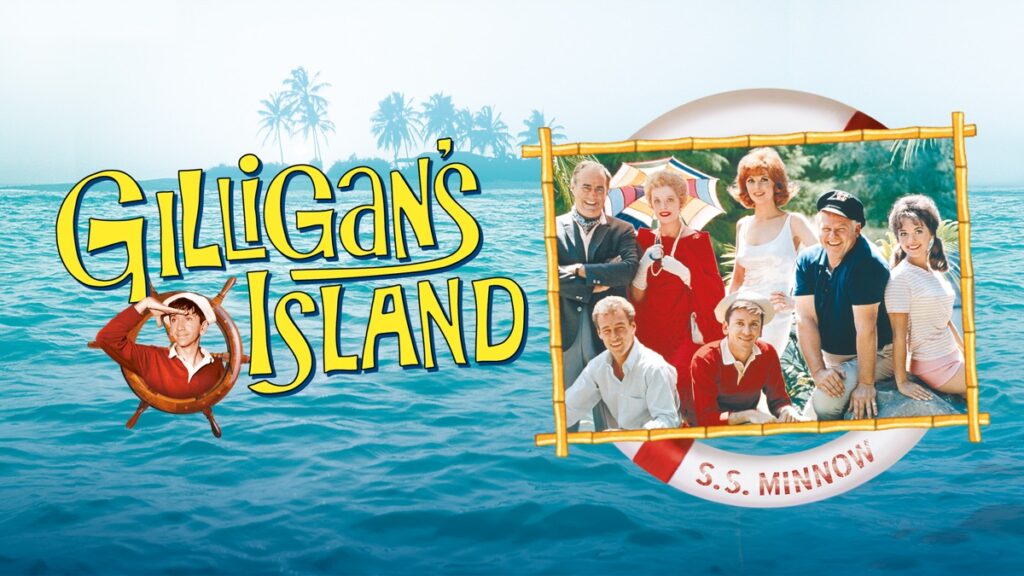
GEOMYTHA reads the recurring island setting as a world that can repeatedly absorb attempts to change it. The comparison concerns a narrative pattern: immediate problems are addressed while the larger situation remains. It becomes useful as an image of identity when familiar roles and familiar conflicts are repeatedly restored. This is a reading of the story’s structure, not proof that the castaways secretly prefer captivity or that every failed plan is self-sabotage.
The conventional source is an ensemble situation comedy with rescue plots and cooperation problems. GEOMYTHA uses the contrast between activity within a situation and changing the situation itself. The distinction matters only where an actual narrative recurrence supports it; the word ‘island’ does not carry that meaning automatically.
Gilligan’s Island (CBS, 1964–1967)
Original series; title-specific catalogue checks: Two on a Raft, President Gilligan and Goodbye Island. Separate counterexample: Rescue from Gilligan’s Island (1978). Television Academy oral-history archive supplies production-context leads, not an episode transcript.
GEOMYTHA’s literary/television comparison is an editorial interpretation, not documented creator intent or a psychological diagnosis. The original premise needs continuing castaways for comic stories: serial comedy is a simpler explanation than hidden spiritual intent. Gilligan helps discover a possible repair material, and the 1978 sequel actually includes rescue. Those facts rule out a universal never-escape claim. Cooperation can improve life without being a prison.
The original premise needs continuing castaways for comic stories: serial comedy is a simpler explanation than hidden spiritual intent. Gilligan helps discover a possible repair material, and the 1978 sequel actually includes rescue. Those facts rule out a universal never-escape claim. Cooperation can improve life without being a prison.
The original story is the television series Gilligan’s Island, created by Sherwood Schwartz, rather than a later allegorical account. Early broadcast-story reference points are cited by title; streaming numbering can include the earlier pilot. No oldest surviving script or production negative was examined. The 1978 Rescue film is a distinct sequel, not an episode of the original series. This pass checked licensed catalogue premises, cast identity and the Television Academy interview index; it did not newly watch the complete episodes or interviews. Original series; title-specific catalogue checks: Two on a Raft, President Gilligan and Goodbye Island. Separate counterexample: Rescue from Gilligan’s Island (1978). Television Academy oral-history archive supplies production-context leads, not an episode transcript.