White Crown of Upper Egypt — Hedjet
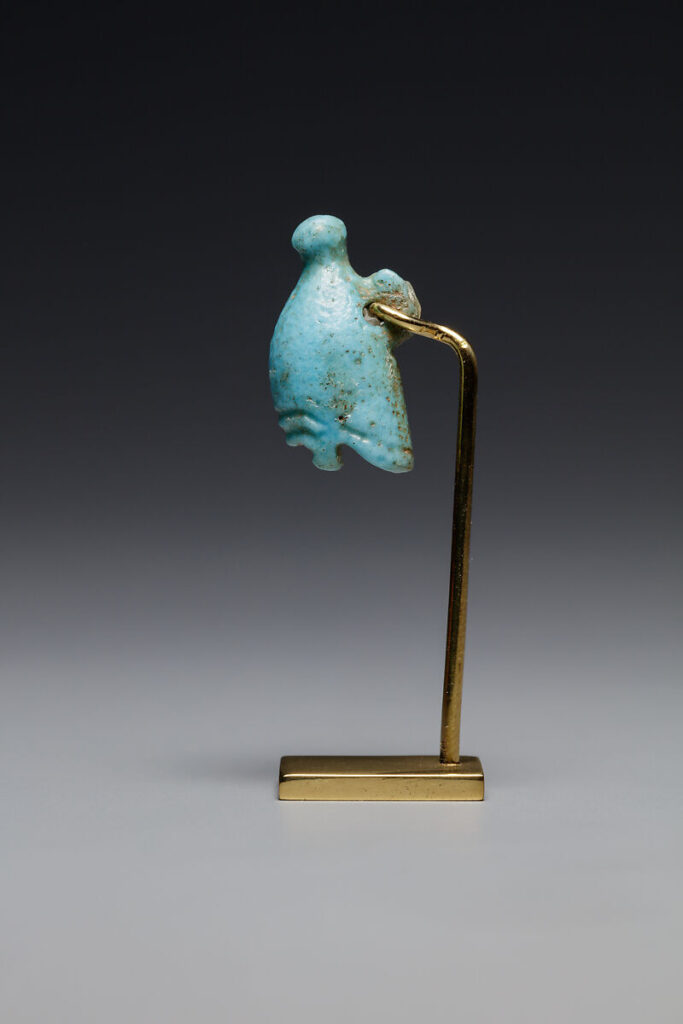
GEOMYTHA reads the White Crown as a differentiated designation before it becomes part of a larger identity. Its value in the comparison comes from its relation to the Red Crown: one domain is marked distinctly, then can be gathered with another under the combined emblem. This is a way to examine how naming a part prepares the claim to name a whole. The White Crown alone does not mean THIS or THESE in ordinary language; the structural comparison depends on a specific scene of combination, authority or boundary. The amulet also changes the question. Here royal symbolism is made available within funerary practice, so the crown cannot be reduced to the personal possession of a living king.
The conventional reading identifies a regional royal crown and its ritual uses. The GEOMYTHA reading examines how a distinct sign participates in a composite identity. The difference matters because a component's formal relation is not evidence that its makers intended modern grammatical categories.
Ancient Egyptian kingship, royal regalia and the Two Lands
Narmer Palette, White Crown/smiting face; UCL Digital Egypt, royal regalia; Met 24.4.4, Crown of Upper Egypt amulet.
Upper Egypt means the southern, upstream region, not the north of a modern map. The amulet is a small representation in faience, not proof of what a physical crown was made from. White is not assigned universal purity, virtue or spiritual superiority. Egyptian terms are not translated into English pronouns.
Claim tested: a crown component marks a differentiated part that can enter a whole. Support: its distinct form persists within the Double Crown. Counterexample: the Met's funerary amulet functions beyond the living monarch's territorial administration. This rules out a definition limited to egoic ownership. Color test: no universal white/good versus red/bad polarity is demonstrated. Result: retain the part/whole comparison only where the relationship is visible or narrated; preserve funerary and royal contexts.
Original story and earliest witnesses: no single original White Crown story is established here. The Narmer Palette, ca. 3100 BCE, is an early securely identified royal representation consulted for this audit, not asserted to be the absolute first occurrence. Later testimony includes the selected faience amulet, Met 24.4.4, dated 664–332 BCE. These objects belong to very different contexts. UCL's regalia overview and the Met catalogue provide scholarly interpretation of the material evidence; no ancient textual passage or lost crown is invented to fill a narrative template.