Two Lands — Upper and Lower Egypt
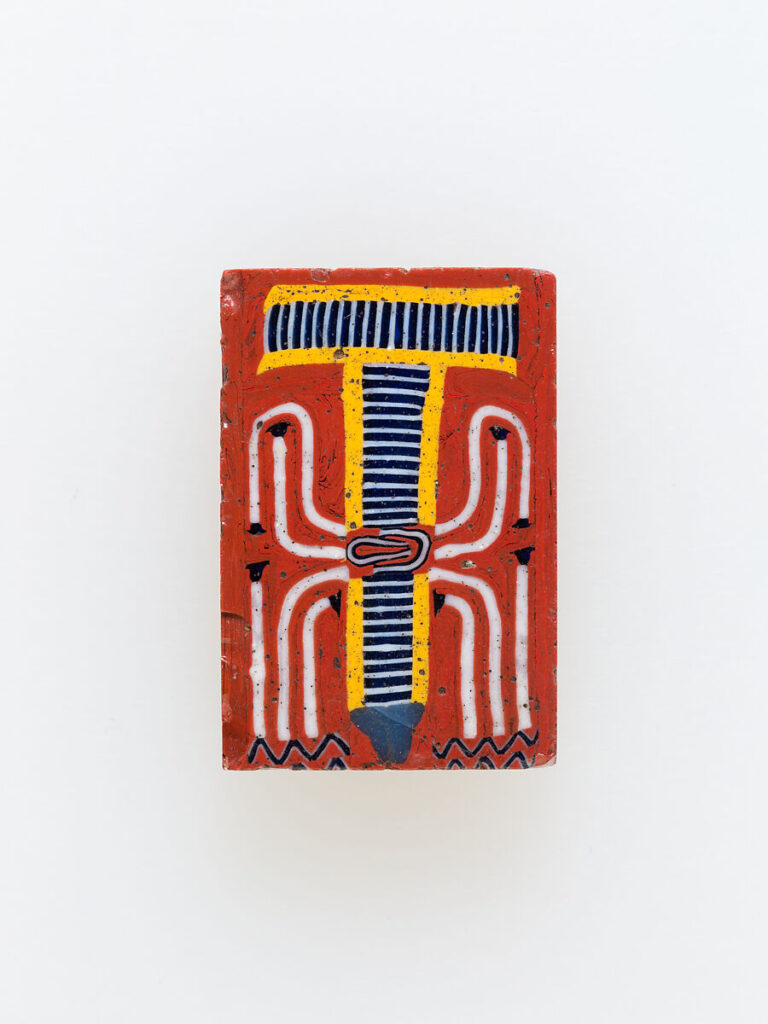
GEOMYTHA reads the Two Lands as a model of unity that retains an internal distinction. The relationship matters more than the number two: the whole is articulated through parts that remain named. In the selected motif, binding makes the relationship visible. This allows the reader to test whether identity holds differences in relation or treats them as possessions that no longer need to answer back. The comparison can illuminate THIS as a defined whole, but unity does not automatically mean a closed or false identity. A functioning relationship may require coordination and shared responsibility. The reading becomes useful only when it can distinguish integration from erasure rather than condemning every bond.
The conventional reading concerns Egyptian territorial and royal symbolism. The GEOMYTHA reading compares the binding of distinct regions with the formation and maintenance of identity. This does not turn a political emblem into proof of one timeless metaphysical doctrine.
Ancient Egyptian kingship, royal regalia and the Two Lands
Narmer Palette; UCL Digital Egypt, royal titles and regalia; Met 10.130.2703, sema-tawy inlay.
The Two Lands is not synonymous with every pair of opposites, both brain hemispheres, all gender categories or a modern map projection. Royal ideology and changing political history must remain distinct. The motif does not by itself prove peaceful consent, actual administrative unity at every date or a universal hidden teaching.
Claim tested: unity can preserve differentiation while placing it under a common designation. Support: the motif keeps regional plants distinct while joining them. Counterexample: the same symbol can affirm desired order despite political tension; an emblem is not a census of lived relations. Alternative: binding can mean coordination and stability, not only coercion. Result: retain the integration/erasure question; reject an interpretation that decides the answer from the knot alone.
Original story and earliest witnesses: this entry concerns a territorial concept and visual tradition, not one recoverable authored narrative. The Narmer Palette, ca. 3100 BCE, is consulted as early royal imagery commonly interpreted in relation to unification; its violent and ceremonial scenes are not treated as a literal film of a single founding day. The glass sema-tawy inlay, 100 BCE–100 CE, demonstrates later continuity of the motif rather than its invention. UCL and the museum catalogues provide targeted scholarly context. An exhaustive earliest-attestation or state-formation survey remains outside this review.