Gilgamesh — Epic of Gilgamesh
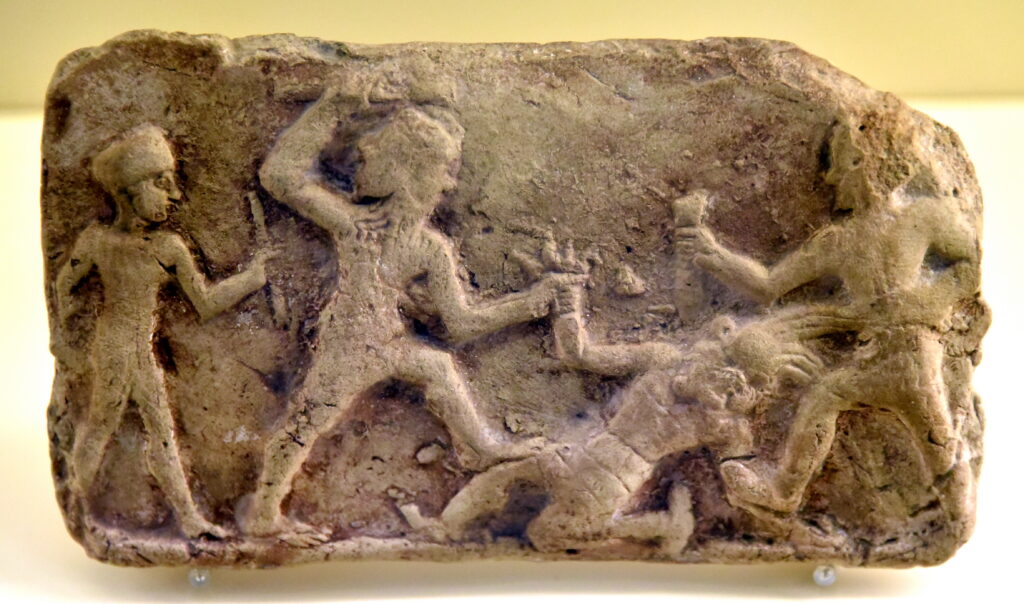
In Geomytha, Gilgamesh becomes the seeker who tries to make the time-bound self permanent. The quest for what cannot be lost is I attempting to secure This against mortality. The deeper turn comes when the sought permanence cannot be possessed: the failed claim exposes limit, and the quest is forced back toward relation, finitude, and what cannot be owned.
The Epic of Gilgamesh contains its own ancient themes of kingship, grief, mortality, and the search for life. Geomytha's I/This and possession reading is a later interpretive mapping of that quest, not a claim that the text teaches the Geomytha grammar explicitly.
Epic of Gilgamesh / ancient Mesopotamian Gilgamesh traditions
Epic of Gilgamesh, especially the Cedar Forest/Humbaba episode and the later search for immortality; textual versions vary across periods.
The analogy is interpretive; distinguish the character from the textual tradition and versions.
Gilgamesh changes through friendship, bereavement and unsuccessful pursuit of immortality. Old Babylonian and later Standard Babylonian witnesses differ. The oldest surviving episode is not necessarily the complete later epic being read.