Tin Man — The Wizard of Oz
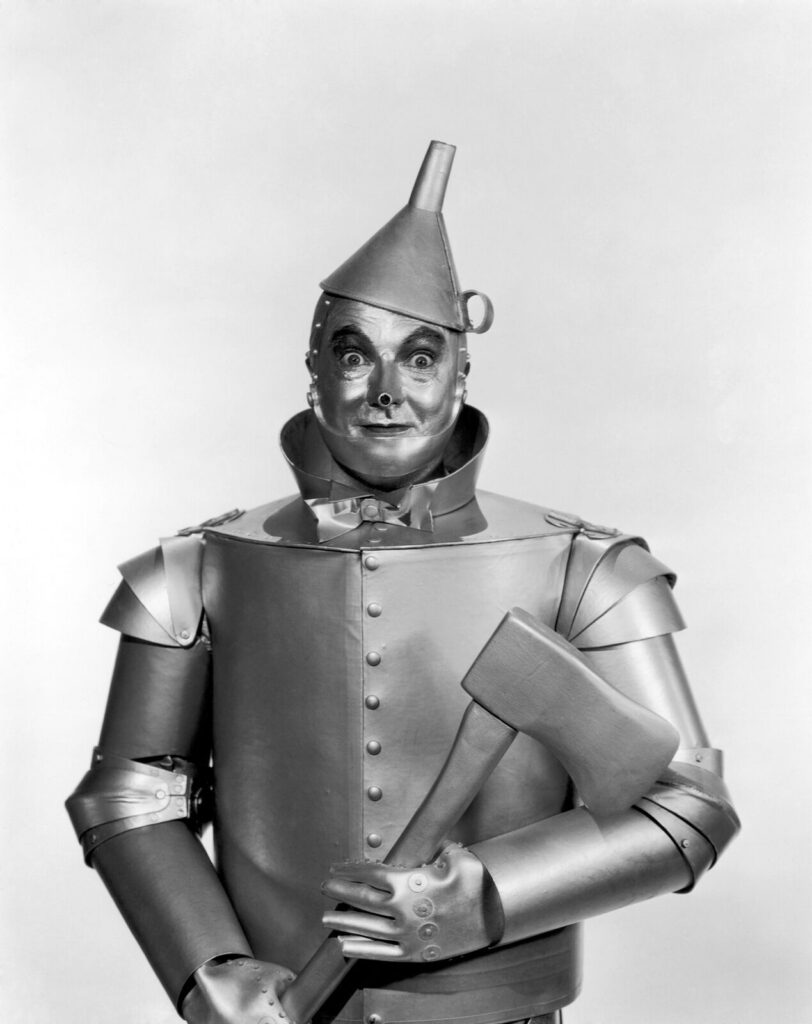
In Geomytha, the Tin Man shows identity built around an imagined absence of feeling. He grieves, cares, loves, and responds tenderly while claiming to have no heart. The contradiction exposes the claimant: I says the quality is missing even while Am is already expressing it. The sought heart is therefore not acquired as a new essence; the journey reveals that the living function preceded the identity of lack.
Conventionally, the Tin Man believes he lacks a heart. Geomytha emphasizes how tenderness, grief, loyalty, and care repeatedly appear before the promised proof arrives: the quality is lived before it is certified.
Metro-Goldwyn-Mayer, The Wizard of Oz (1939); Tin Woodman/Tin Man from L. Frank Baum’s Oz material
Library of Congress film and first-edition Oz records; MGM publicity photograph of Jack Haley as the Tin Man.
This is a scene-based GEOMYTHA comparison, not an authorial intention or psychological diagnosis. Keep Baum's 1900 book and MGM's 1939 adaptation distinct. A character can change function across scenes, and practical needs do not automatically become false identity.
The Tin Man's tenderness challenges his stated lack of a heart. That does not mean every unmet emotional need is imaginary. The test concerns the mismatch between a total deficiency label and repeated acts of care in the selected version.
Baum's The Wonderful Wizard of Oz appeared in 1900; the linked Library of Congress first-edition record is the earliest published book witness used here. MGM's 1939 film is a separate adaptation. Silver shoes belong to the book, ruby slippers to the film; the film's dream framing cannot silently determine the novel's meaning. Character actions and scene references must identify which version is being compared.