Cowardly Lion — The Wizard of Oz
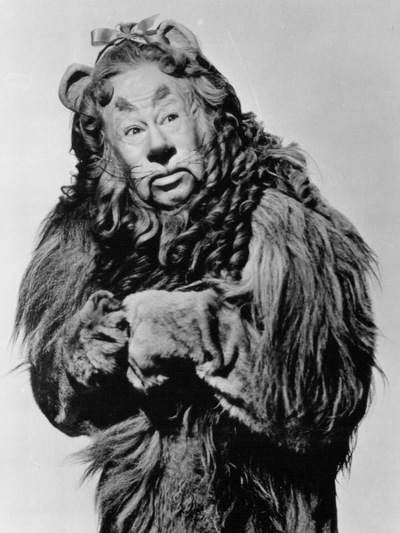
In Geomytha, the Cowardly Lion separates fear from identity. Fear is a feeling moving through Am, but the Lion converts it into I am a coward and treats the passing state as the truth of the self. His repeated willingness to act while afraid reveals courage as action that does not require fear to disappear. The symbolic correction is not becoming fearless but ceasing to enthrone fear as identity.
Conventionally, the Lion thinks fear proves cowardice. Geomytha separates feeling from identity: courage appears precisely when fear remains present but does not determine the action.
Metro-Goldwyn-Mayer, The Wizard of Oz (1939); Cowardly Lion from L. Frank Baum’s Oz material
Library of Congress film and first-edition Oz records; Bert Lahr publicity photograph associated with the 1939 film role.
This is a scene-based GEOMYTHA comparison, not an authorial intention or psychological diagnosis. Keep Baum's 1900 book and MGM's 1939 adaptation distinct. A character can change function across scenes, and practical needs do not automatically become false identity.
The Lion acts despite fear rather than becoming permanently fearless. The comparison fails if fear itself is declared an ego defect. Courage here is a relation between fear and action; practical caution can remain appropriate.
Baum's The Wonderful Wizard of Oz appeared in 1900; the linked Library of Congress first-edition record is the earliest published book witness used here. MGM's 1939 film is a separate adaptation. Silver shoes belong to the book, ruby slippers to the film; the film's dream framing cannot silently determine the novel's meaning. Character actions and scene references must identify which version is being compared.