GEOMYTHAAll stories are the same story
Index Record

Roman Triumph — Triumphus
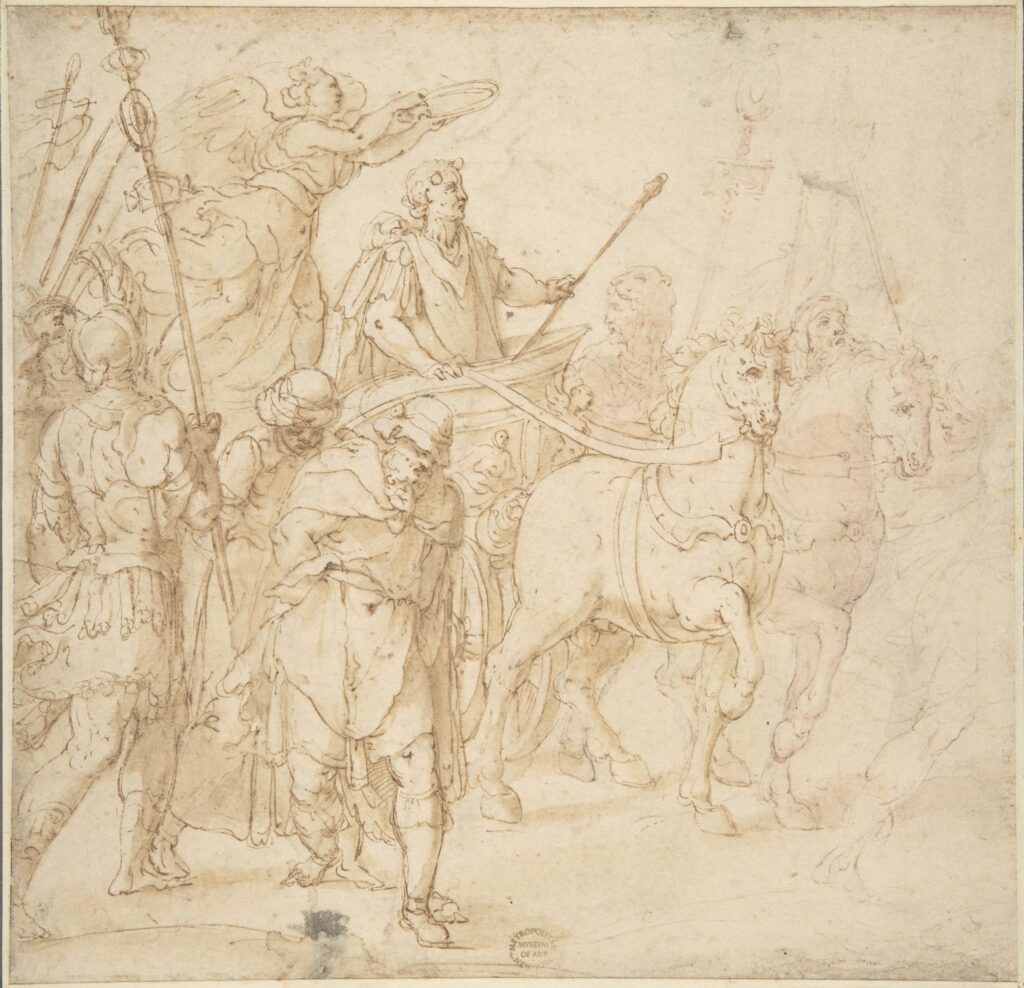
Roman Triumph, 16th century.
Roman Triumph · Taddeo Zuccaro · 16th century · The Metropolitan Museum of Art · Public domain / The Met Open Access ↗
A sixteenth-century depiction of a Roman triumph; later artistic reception is distinct from an ancient eyewitness account.
Conventional Reading
A state procession honoring a victorious Roman commander, displaying the general, captives, spoils, and public symbols of victory and status.
Geomytha Reading

Used here as the ritual opposite of Saturnalia: identity is publicly elevated rather than inverted, but both depend on social confirmation of role.

Why the Difference Matters

The historical triumph is a Roman state ritual; Geomytha uses its public elevation of role and image comparatively rather than claiming the ritual encoded Geomytha grammar.

Parent work / tradition / source

Ancient Roman triumphal procession

Source location / reference

Roman triumphal ritual; see linked historical source.

Reading Boundary

Historical claims about the triumph are distinct from Geomytha's claim-versus-identity reading. The mortality-reminder tradition is treated cautiously rather than assumed to have occurred identically in every triumph.

Archetype stress test

A triumph displayed actual military power, captives and spoils. A symbolic self-crowning reading must preserve violence and public institutions. The procession is not merely an individual's inward posture.

Source trail

Evidence beneath the record

Roman Triumph — World History Encyclopedia
Secondary historical source. The exact wording and uniformity of the mortality-reminder tradition are treated cautiously; the article already marks that element as a famous tradition rather than an uncontested detail.
World History Encyclopedia