Index Record
Garden of Eden — Genesis 2–3
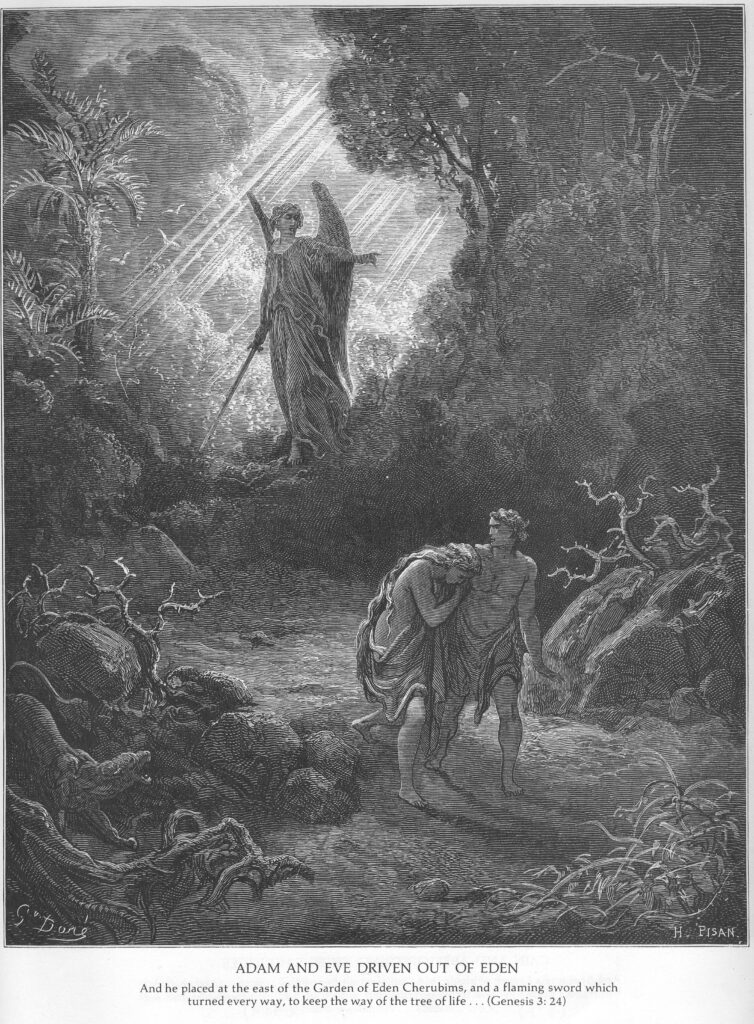
Later visual interpretation of Genesis 3; depicts expulsion from the garden, not an eyewitness record of an ancient event.
Conventional Reading
Genesis 2–3 narrates the garden, the serpent, the tree of knowledge, the eating of the fruit, the opening of the humans’ eyes, their awareness of nakedness, and their departure from Eden.
Geomytha Reading
The article reads the fall as reflection seized by the claimant: naked presence becomes self-conscious image and the body becomes an object of identity.
Why the Difference Matters
Genesis supplies the narrative sequence; Geomytha interprets the transition into shame and self-consciousness through its identity grammar.
Parent work / tradition / source
Genesis 2–3
Source location / reference
Genesis 2:4–3:24.
Reading Boundary
The biblical narrative is the documented layer. The Is → Am → I → This reading is Geomytha interpretation rather than a claim about the exclusive meaning of Genesis.
Archetype stress test
The fruit is not named as an apple in Genesis. The garden story supports multiple theological and scholarly readings. A GEOMYTHA distinction between presence and evaluative claim should not overwrite the textual vocabulary.
Source trail
Evidence beneath the record
Genesis 2–3 — Garden of Eden and Tree of Knowledge
Primary biblical text in a reputable digital Jewish text library. Used to establish what the narrative actually says before applying Geomytha interpretation.
Sefaria