Index Record
Christian Bible — Old and New Testaments
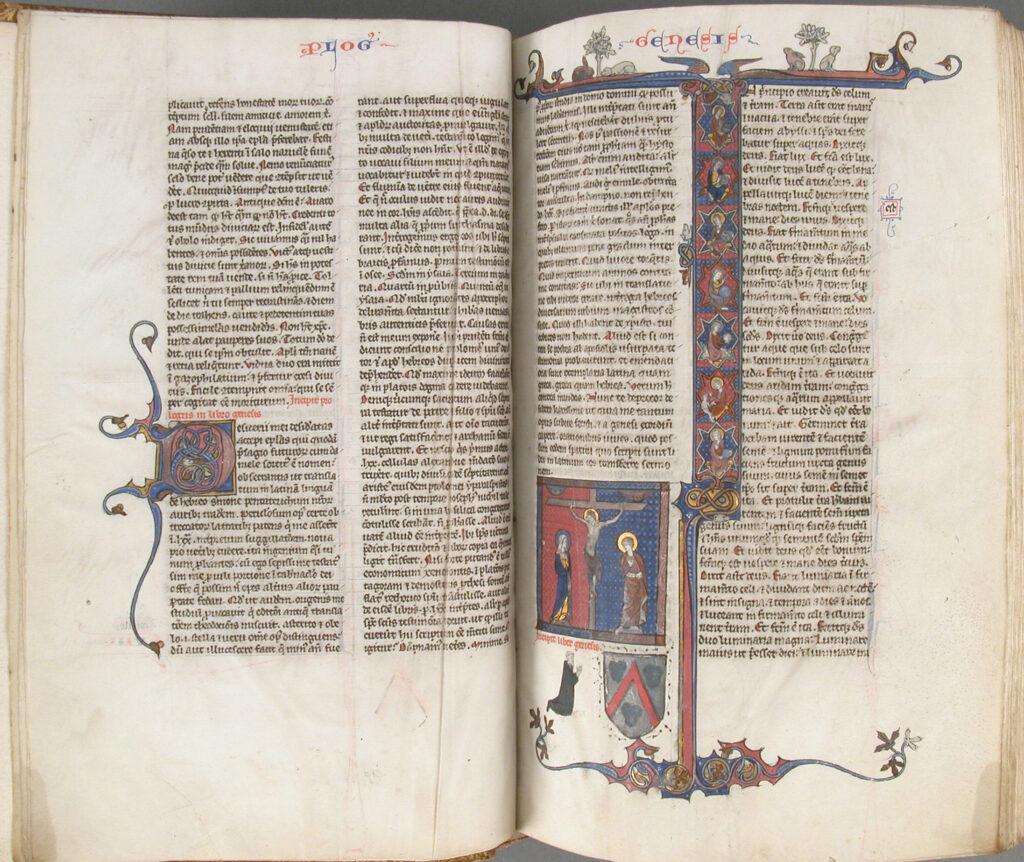
A thirteenth-century biblical manuscript; this is a surviving material witness, not the first Bible or a complete earliest canon.
Conventional Reading
The Christian Bible is conventionally organized into the Old Testament and New Testament, two collections brought together as one Bible.
Geomytha Reading
The article uses that two-part structure as a comparative example of distinct bodies joined beneath one sacred identity.
Why the Difference Matters
The canon’s two-part structure is documented; its use as a false-unity analogy is Geomytha interpretation.
Parent work / tradition / source
Christian biblical canon
Source location / reference
Bible Society overview of the Old and New Testaments.
Reading Boundary
The two-Testament structure is conventional and documented. Geomytha’s claim about hierarchy, projection, or false unity is interpretive.
Archetype stress test
The Old and New Testaments are collections with textual histories and different religious reception. Two groups of books do not prove they were designed as GEOMYTHA's two fires. Canonical counts also differ across traditions.
Source trail
Evidence beneath the record
Christian Bible — Old and New Testament Collection — Biblica
Institutional Bible-education source for the conventional two-Testament structure. It does not support Geomytha’s symbolic claim that joining them enacts reflection/projection or false unity.
Biblica