The Arnolfini Portrait — Jan van Eyck
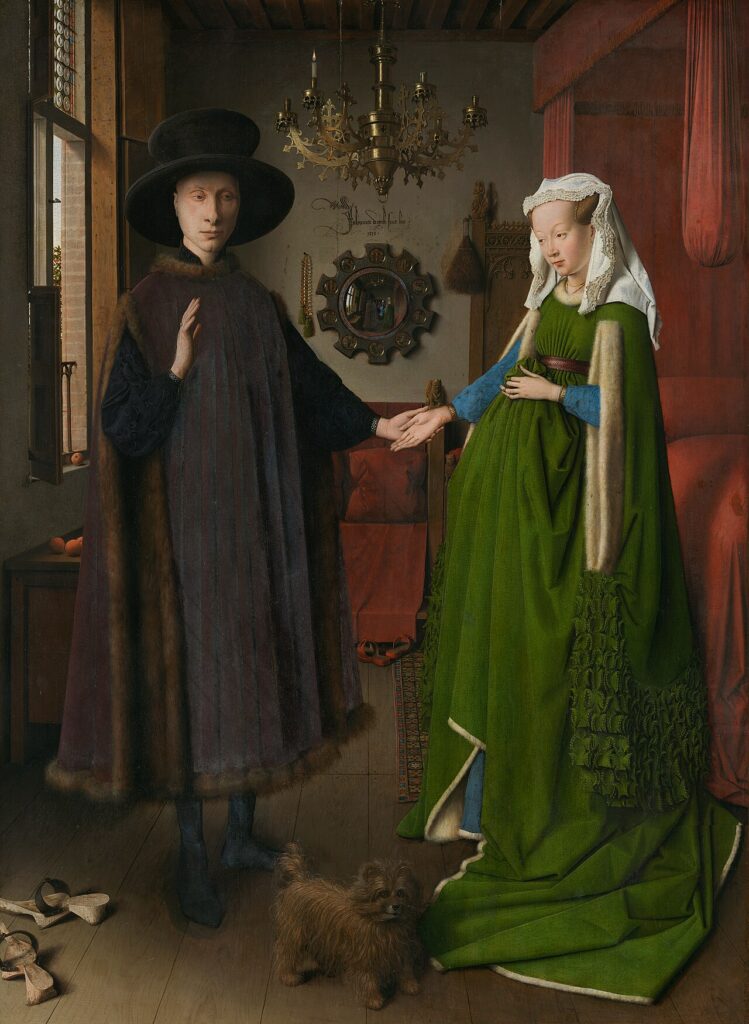
Geomytha uses the portrait comparatively as an image of two persons, joined hands, witness-like reflection, room, social identity, and public unity. In The Ritual of the False One, it becomes a visual pressure point for asking when union preserves relation and when a projected public identity begins to dominate the bodies it joins.
The institutional record treats the work as a double portrait with a contested interpretive history. Geomytha uses its visual structure—two figures, joined hands, mirror, domestic room—as an analogy for social fusion without asserting a specific ritual event.
Jan van Eyck, Netherlandish painting, 1434
National Gallery, London, NG186.
The article does not claim that the painting documents a wedding, private marriage contract, betrothal ritual, pregnancy, or a historical Geomytha fusion rite. Those older theories are disputed or rejected in current National Gallery scholarship. The fusion reading is explicitly modern and comparative.
The Arnolfini Portrait's marriage-ceremony interpretation is disputed by the owning museum's scholarship. Joined hands and a mirror do not prove a ritual of self-erasure or fusion. Keep the GEOMYTHA question comparative rather than a claim about the sitters' inner lives.
