Volumes
The Geomytha volumes explore the recurring structures beneath myth, religion, history, identity, and civilization.
Each volume examines a different part of the same larger pattern—how human beings create meaning, construct the self, organize society, interpret symbols, and repeat ancient stories in new forms.
Together, the series offers a unified journey through consciousness, culture, and the hidden architecture of belief.
Enter the library and follow the pattern.
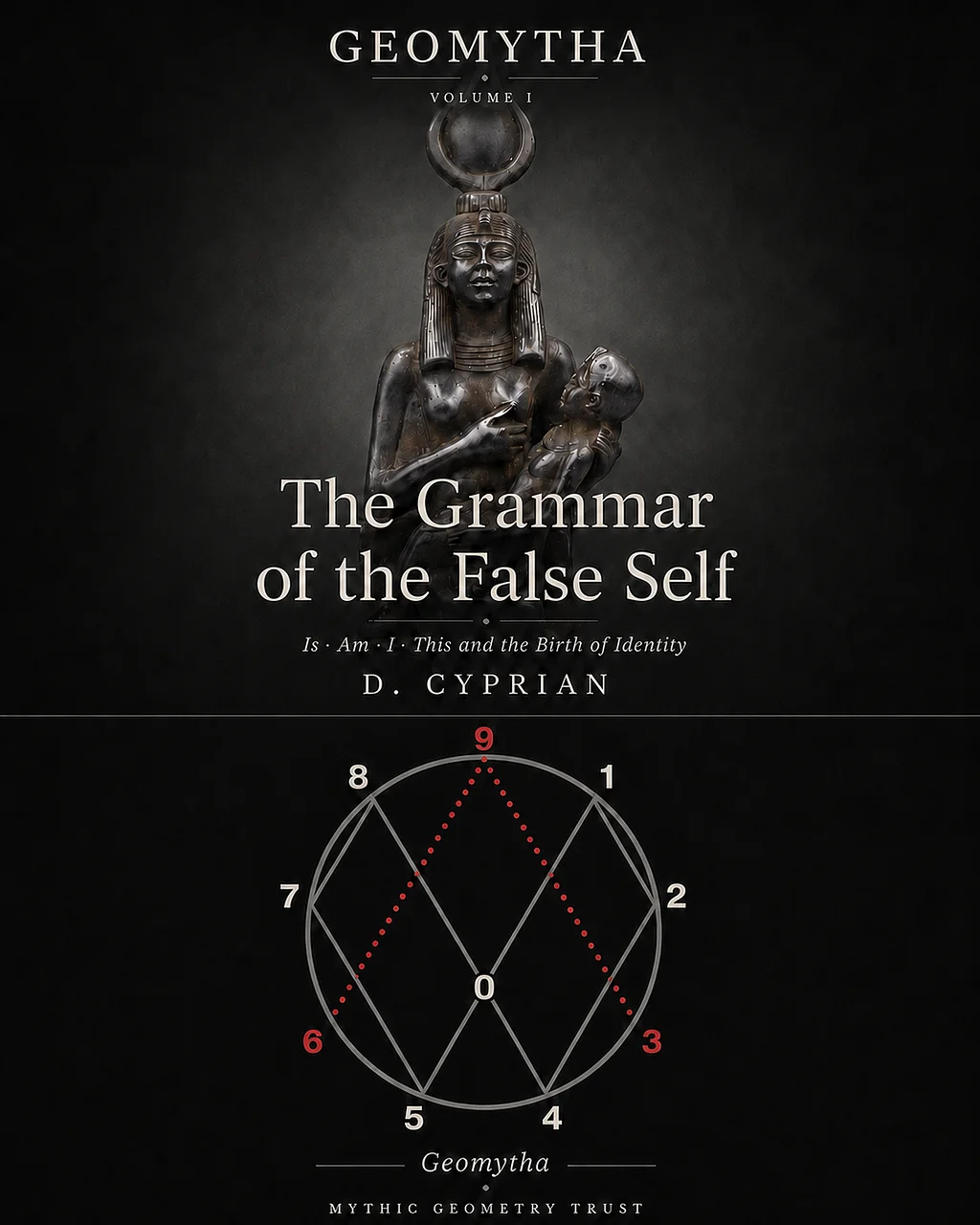
The Grammar of the False Self
Is. Am. I. This.
Before religion became doctrine, it was symbolic memory—a record of consciousness trying to understand what it is, how it became divided, and whether a path remains back to wholeness.
The Grammar of the False Self introduces the foundational Geomytha framework through four elemental movements: Is, Am, I, and This. These correspond to pure awareness, reflected presence, the interruption of claim, and the identity that forms when consciousness declares, “I am this.” Through the archetypes of Isis, Osiris, Set, and Horus, the book reveals how myths encode the birth of the divided self.
Moving through ancient Egypt, Mesopotamia, Iran, India, China, Greece, and the biblical world, this volume uncovers a recurring symbolic architecture beneath traditions that appear outwardly different. Creation, fall, exile, sacrifice, kingship, law, and return become parts of the same enduring story: awareness forgetting itself within the world it projects.
This is the first volume in the Geomytha series—a journey into the origins of religion, the formation of identity, and the hidden grammar beneath the false self.
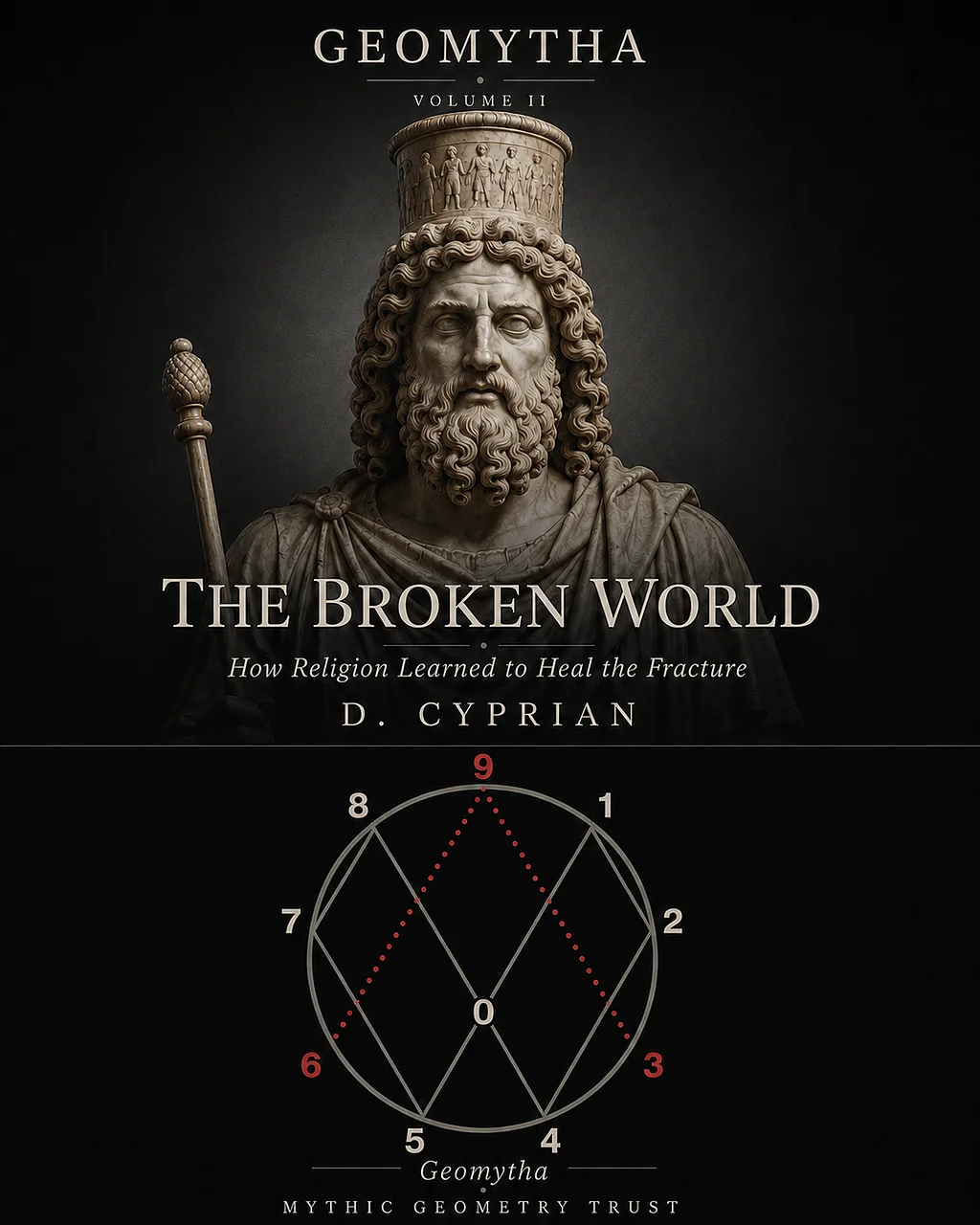
The Broken World
How Religion Learned to Heal the Fracture
As empires expanded and the ancient world began to experience reality as divided, unstable, and spiritually incomplete, religion changed. Sacred traditions that once sought harmony within the cosmos increasingly promised rescue from it.
The Broken World traces this transformation from the Axial Age through late antiquity, exploring Judaism after rupture, Hellenistic syncretism, Hermeticism, Gnosticism, Christianity, Mandaeism, Manichaeism, Mahayana Buddhism, and classical Hindu thought. Through the Geomytha lens, these traditions become different responses to the same enduring crisis: how divided consciousness seeks restoration, redemption, and a path home.
This is the second volume in the Geomytha series—a comparative journey through empire, salvation, and the spiritual architecture of a world that could no longer contain its own fracture.
Coming soon!