Invisible Priesthood / Hidden Mediation
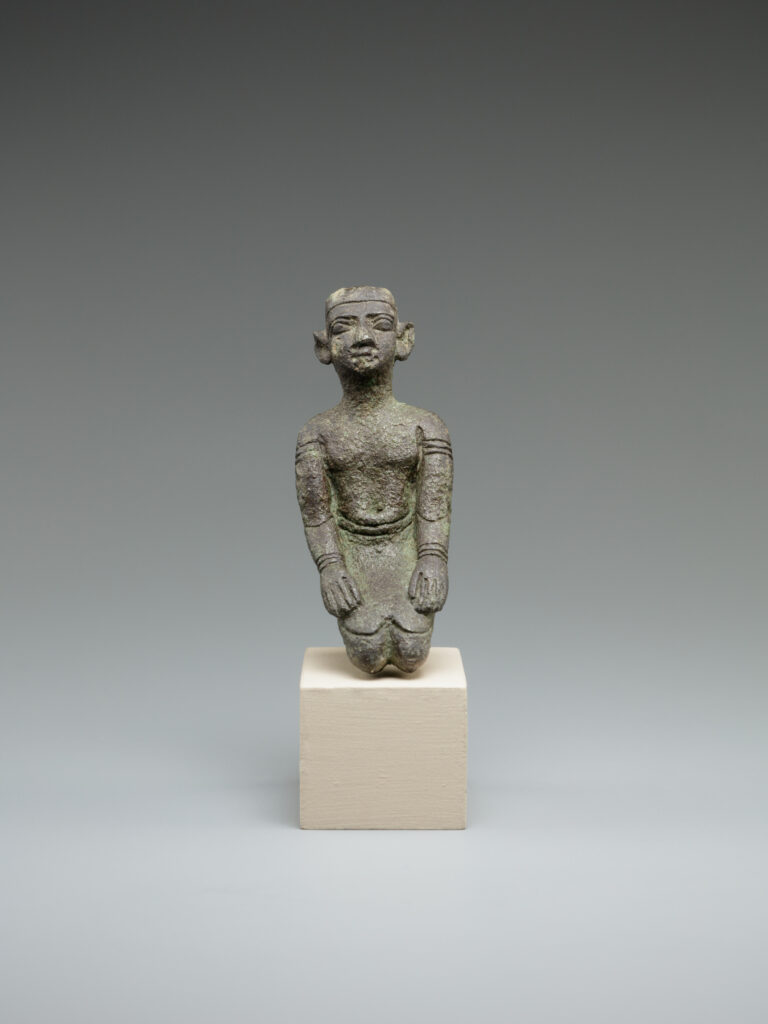
Public references and limits:
Use the technical profile for questions of oversight and capability, and Lessig’s book for a separately checked design argument. Priesthood remains a metaphor. Transparent, accountable mediation is a counterexample.
Geomytha uses priesthood metaphorically for hidden systems of access and interpretation whose authority operates through interface, ranking, and recommendation.
It exposes mediation that shapes what can be seen, asked, valued, or chosen without appearing as a traditional institution of interpretation.
All This is quietly structured by an unseen intermediary that organizes the field before the user encounters it.
A librarian, editor or transparent ranking system can mediate responsibly. Require hidden authority, unaccountable selection or a false claim of neutrality. Mediation itself is not priesthood and its absence is not automatically direct truth.
This entry’s name and mechanism belong to GEOMYTHA’s framework. The linked primary works are independent comparison witnesses, not evidence that the GEOMYTHA term originated in their cultures. Specific comparison references: NIST AI 600-1 — Generative AI risk profile; Lawrence Lessig, Code: And Other Laws of Cyberspace, Version 2.0. The original work, a later translation, a catalogue record and an extant manuscript are different kinds of evidence. The oldest surviving witnesses of the comparison traditions are not established by this entry.
The term is not a literal claim that algorithms, software, or AI systems are religious clergy.
Do not treat every recommendation system or intermediary as malicious; examine how mediation shapes the field and where accountability resides.
Where this mechanism appears
Explore the essays and Index entries linked to this mechanism.

Follow the mechanism
Moves from
 Mythic MachineA mythic machine is a medium or system that repeatedly produces, distributes, and normalizes archetypal narratives at scale.
 Image WorldImage World names a symbolic environment in which representation becomes the dominant medium through which reality, value, identity, and belonging are encountered.
Moves into
 Attention CaptureAttention capture occurs when a system, image, feed, identity, or spectacle repeatedly seizes the field of awareness and trains what appears urgent, valuable, threatening, or real.
 Pattern Without WisdomPattern Without Wisdom is the confusion of fluent pattern-handling, prediction, synthesis, or explanation with embodied judgment, moral depth, and truthful relation.
See also
 Responsive SimulationResponsive Simulation occurs when an artificial or mediated system can answer, mirror, soothe, adapt, or converse convincingly enough that responsiveness begins to substitute for reciprocal relation.
 Engineered WorldAn Engineered World is a designed environment whose rules, permissions, feedback, resistance, and appearance are authored rather than simply given.