GEOMYTHAAll stories are the same story
Index Record

Aldous Huxley

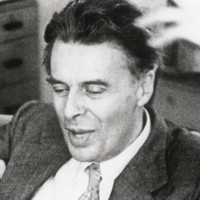
Publisher-supplied black-and-white portrait of Aldous Huxley.
Aldous Huxley — publisher author portrait · Photographer uncredited on checked Penguin author profile · Photograph date not supplied; publisher digital asset path 2022 · Penguin Random House / Vintage · Rights restricted; publisher-supplied portrait used for limited editorial identification of the author. No public-domain claim. ↗
Author identification only; the photograph does not establish personal motives or an archetypal diagnosis.
Conventional Reading
Aldous Huxley (1894–1963) was an English writer of fiction and nonfiction. Brave New World appeared in 1932 and Island in 1962. His publisher biographies identify a wider body of literary and philosophical writing. The two novels provide contrasting social experiments; this author record distinguishes his biography from the words of fictional speakers such as Mustapha Mond.
Geomytha Reading

GEOMYTHA places Huxley’s two imagined societies beside one another to test a recurring question: does an organized way of living enlarge attention and agency, or close them down? This is a comparative use of his work, not a claim that Huxley himself embodies a fixed archetype or that both novels teach one hidden doctrine. Their differences are evidence the reading must accommodate, not obstacles to remove.

Why the Difference Matters

The documented source record concerns a real writer and distinct works from different periods. GEOMYTHA supplies an editorial comparison across those works. Atwood’s criticism and Regazzi’s scholarly abstract remain attributed viewpoints; neither turns the comparison into biography or creator intent.

Parent work / tradition / source

Aldous Huxley — author; Brave New World (1932) and Island (1962)

Source location / reference

Official HarperCollins and Penguin author profiles; Brave New World, ch.1, 16–17; Island, ch.1, 14–15. Atwood critical extract reviewed; Regazzi article metadata and abstract reviewed. Selective comparison, not an exhaustive biography or complete scholarly survey.

Reading Boundary

GEOMYTHA’s comparison is distinct from source facts, attributed scholarship and creator intent. A writer can criticize managed conformity and later imagine beneficial institutions without contradiction. Utopian aspiration is not automatically disguised authoritarianism. Two selected novels cannot represent every phase of Huxley’s thought, and no medical recommendation follows from his fictional substances or philosophical interests.

Archetype stress test

A writer can criticize managed conformity and later imagine beneficial institutions without contradiction. Utopian aspiration is not automatically disguised authoritarianism. Two selected novels cannot represent every phase of Huxley’s thought, and no medical recommendation follows from his fictional substances or philosophical interests.

Original story and earliest witnesses

Author context: Huxley’s distinct novels Brave New World (1932) and Island (1962), with publisher biography. Targeted chapter checks use later digital texts, not an authenticated first-edition facsimile or oldest surviving manuscript. No full fresh reread or exhaustive scholarly survey claimed. Official HarperCollins and Penguin author profiles; Brave New World, ch.1, 16–17; Island, ch.1, 14–15. Atwood critical extract reviewed; Regazzi article metadata and abstract reviewed. Selective comparison, not an exhaustive biography or complete scholarly survey.

Source trail

Evidence beneath the record

Aldous Huxley — publisher biography and bibliography
Publisher biographical reference, not independent critical scholarship. A real author’s changing work should not be compressed into a fixed fictional archetype.
Official publisher author profiles
Brave New World — original novel and publisher reference
Primary fiction supports what its characters and institutions do or say, not the truth of a character’s political theory. Mond’s account is attributed to him rather than treated as Huxley’s settled position. GEOMYTHA’s framework is editorial interpretation.
Original novel (1932); later Vintage Classics edition; online transcription at huxley.net
Island — Aldous Huxley — Google Books / Harper
Original fiction and publisher framing are separate from GEOMYTHA’s test of practices versus identity. The story’s violent conclusion does not establish that the society is a disguised World State. This is literary comparison, not medical advice or evidence of treatment efficacy.
Original novel (1962); later Vintage Classics edition and Huxley Archive transcription
Margaret Atwood on Brave New World — critical introduction
Identified novelist and critic on a publisher platform. Kept distinct from primary narrative and peer-reviewed research. No claim that all criticism has been surveyed.
Penguin; critical introduction extract
Vanessa Regazzi — Utopia as a method: Huxley’s Island
Scholarly interpretation, clearly attributed; it provides a counterweight to a closed-world reading rather than validating GEOMYTHA. Abstract-level use only. The article is offered under CC BY 4.0 on the journal page; the original novels retain separate rights.
Filosofia 69 (2024), University of Turin journal platform