Index Record

Ammit — Devourer in the Weighing of the Heart
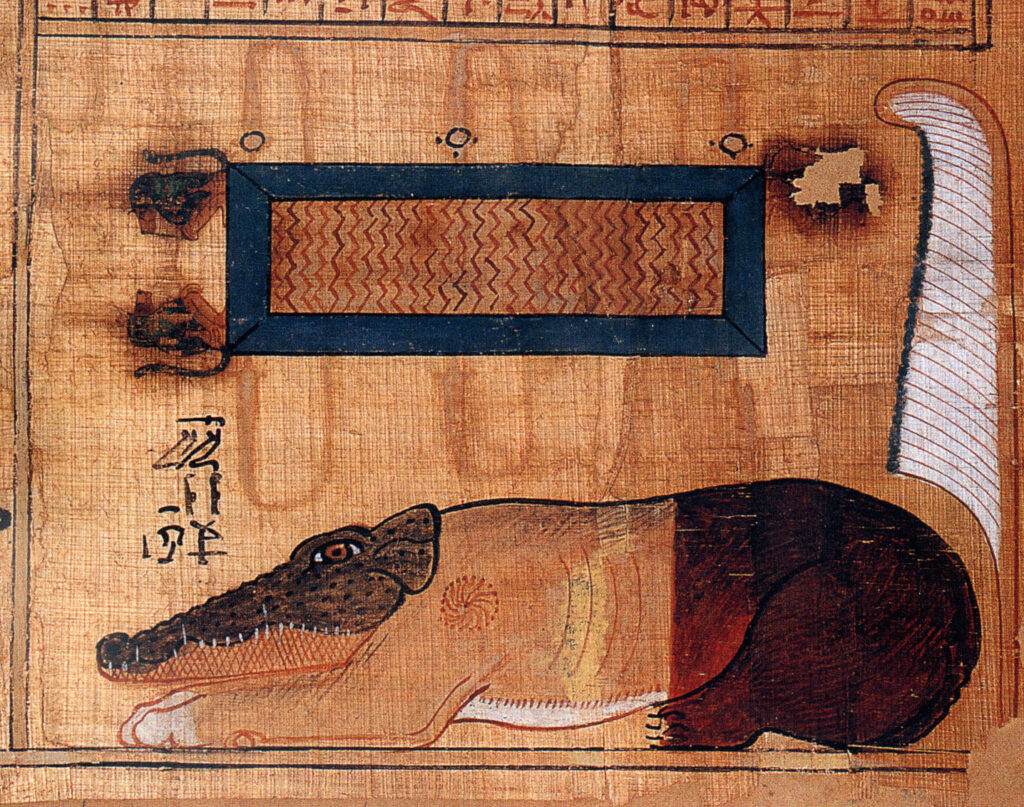
Ancient Egyptian depiction of Ammit, the composite devourer of the dead, from the Book of the Dead of Nebqed
Figure-specific early depiction of Ammit selected to distinguish the devourer from the broader weighing-of-the-heart scene and from the separate Anubis, Thoth, Ma’at, and Egypt records.
Conventional Reading
Egyptian composite being associated with the judgment of the dead.

Geomytha Reading

In Geomytha, Ammit represents the terminal consequence of a self that cannot pass the measure because it has hardened around possession. She is not merely a monster beside the scale; within the return grammar she marks the point where false continuation loses its claim to continue. The image resonates with Second Death Fire: what cannot return through surrender is finally deprived of the permanence it demanded.

Why the Difference Matters

Historically, Ammit belongs to Egyptian judgment imagery and should be read through Egyptological sources. Geomytha's comparison to terminal exposure or Second Death Fire is a later symbolic analogy, not an assertion that Egyptian texts teach the same doctrine.

Parent work / tradition / source

Ancient Egyptian funerary and judgment traditions; Book of the Dead

Source location / reference

Book of the Dead judgment traditions, especially Spell 125 and weighing-of-the-heart imagery in which Ammit waits to consume the heart of the condemned.

Reading Boundary

Mythic figure; source from Egyptological/museum records.

Source trail

Evidence beneath the record

Statue of Horus as a falcon protecting King Nectanebo II

Museum collection record from The Met Egyptian Art department.

The Metropolitan Museum of Art

Stela EA690

British Museum collection record.

British Museum

Stela of King Raneb

Museum collection record from The Met Egyptian Art department.

The Metropolitan Museum of Art

Ancient Egyptian Kingship

University-based Egyptological publication.

Institute for the Study of Ancient Cultures, University of Chicago