Index Record

Anubis — Egyptian Funerary Deity
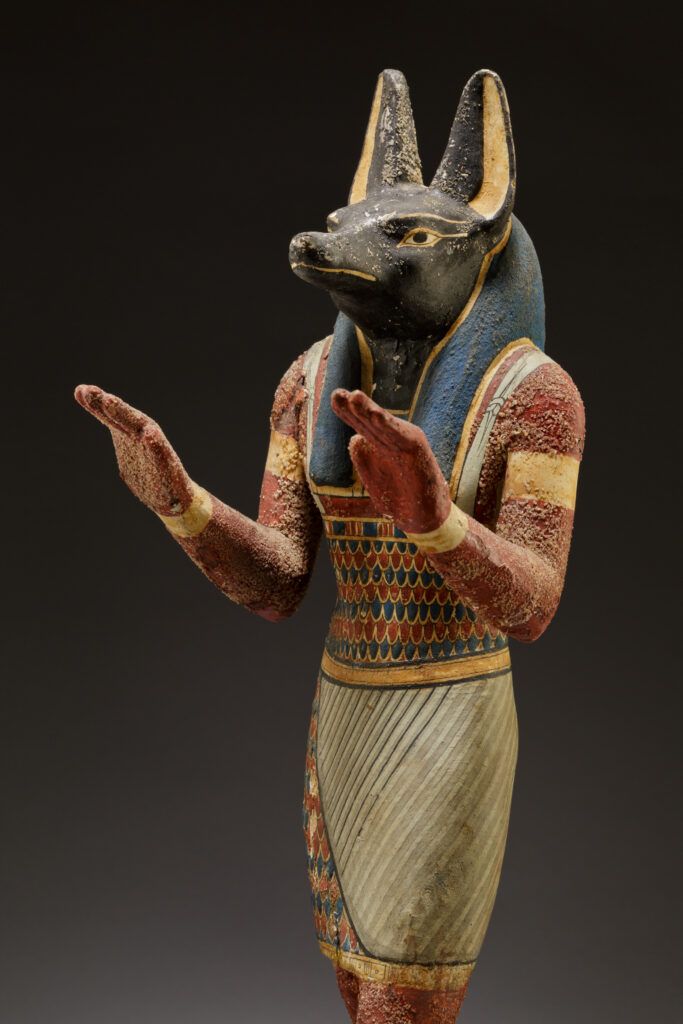
Ancient Egyptian statuette of the jackal-headed god Anubis from The Metropolitan Museum of Art
Figure-specific statuette of Anubis selected to distinguish the deity from broader Egyptian, Duat, and weighing-scene imagery elsewhere in the knowledge field.
Conventional Reading
Egyptian deity associated with funerary rites and the weighing scene.

Geomytha Reading

In Geomytha, Anubis functions at the threshold of reckoning. He does not stand for the claimant's story about itself; he accompanies the heart to the place where the story must submit to measure. The symbolic motion is therefore from defended identity toward exposure: This is brought into relation with a standard it cannot manipulate merely by narration.

Why the Difference Matters

Anubis is historically an Egyptian funerary deity associated with embalming, guidance of the dead, and judgment imagery. Geomytha reads his role in the weighing scene as a threshold function within its return grammar; that mapping is interpretive and does not replace Egyptological meaning.

Parent work / tradition / source

Ancient Egyptian funerary and mortuary traditions

Source location / reference

Ancient Egyptian funerary traditions concerning Anubis, including embalming, protection of the dead, and participation in judgment imagery such as the weighing of the heart.

Reading Boundary

Mythic figure; historical meaning separate from Geomytha mapping.

Source trail

Evidence beneath the record

Statue of Horus as a falcon protecting King Nectanebo II

Museum collection record from The Met Egyptian Art department.

The Metropolitan Museum of Art

Stela EA690

British Museum collection record.

British Museum

Stela of King Raneb

Museum collection record from The Met Egyptian Art department.

The Metropolitan Museum of Art

Ancient Egyptian Kingship

University-based Egyptological publication.

Institute for the Study of Ancient Cultures, University of Chicago