GEOMYTHAAll stories are the same story
Index Record

Babylon — Ancient City / Symbolic Empire
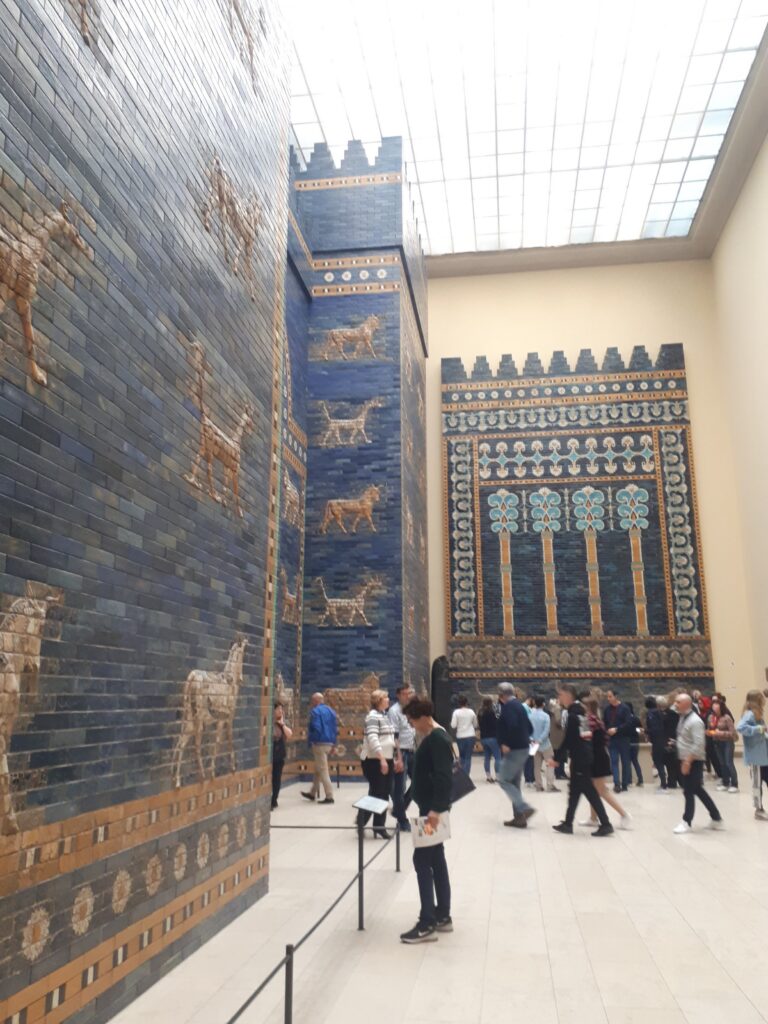
Reconstructed Ishtar Gate of ancient Babylon at the Pergamon Museum in Berlin
Ishtar Gate of Babylon · Neo-Babylonian; reconstruction photographed by Sinoulpgc · Original gate c. 575 BCE; photograph 2019 · Pergamon Museum, Berlin · CC0 / Public Domain Dedication ↗
Babylon-specific architectural image used to distinguish the ancient city and symbolic empire from the separate Tower of Babel record.
Conventional Reading
Ancient Mesopotamian city and later biblical/apocalyptic symbol of imperial world-order.
Geomytha Reading

In Geomytha, Babylon names All This when a civilization's structures begin serving their own continuation as though continuation were the meaning of life. Identity accumulates into institutions, institutions produce enemies and justifications, and the symbolic environment becomes so total that the system appears identical with reality. Babylon is therefore the world-machine at the stage when the fish no longer notices the water.

Why the Difference Matters

Historical Babylon was a real Mesopotamian city and civilization; later biblical and apocalyptic traditions also use Babylon symbolically. Geomytha builds on that later symbolic field to describe a self-perpetuating world-system, while keeping the historical city distinct from the interpretive metaphor.

Parent work / tradition / source

Ancient Babylon; later biblical and apocalyptic Babylon traditions

Source location / reference

Historical Babylon in Mesopotamia, with later symbolic uses in biblical and apocalyptic literature distinguished from the historical city.

Reading Boundary

Distinguish historical Babylon from later biblical and Geomytha symbolic uses.

Archetype stress test

The historical city of Babylon and Revelation's imperial figure are distinct referents. An apocalyptic use cannot function as a complete history of Mesopotamia. Specify whether the record is reading a city, empire or literary personification.

Source trail

Evidence beneath the record

Rick and Morty — Season 2 Episode 6 “The Ricks Must Be Crazy” — Adult Swim
Primary audiovisual work is the episode itself. Current official catalogue omits some older episodes and availability varies; catalogue metadata does not independently verify every scene interpretation.
Adult Swim
The Matrix (1999) — AFI Catalog
AFI catalog supplies film identity and synopsis. Geomytha’s use of The Matrix as a metaphor for familiarity mistaken for source is interpretive.
American Film Institute Catalog
The Truman Show (1998) — AFI Catalog
AFI catalog record for title, creators, release information, and film identity. Geomytha’s use of the film as a symbolic example of conditioned baseline is interpretive.
American Film Institute Catalog
Genesis 11:1–9 — Tower of Babel — Bible Gateway (KJV)
Direct biblical text reference. Translation wording varies; the article's symbolic reading is Geomytha's interpretation.
Bible Gateway
The Tower of Babel — Pieter Bruegel the Elder, 1563 — Wikimedia Commons
Wikimedia Commons file record for Bruegel's 1563 Tower of Babel in the Kunsthistorisches Museum, Vienna.
Kunsthistorisches Museum, Vienna / Wikimedia Commons
Hesiod, Theogony — Prometheus, fire and Zeus’s thunderbolt
Primary ancient literary anchor in a public-domain English translation. Geomytha’s distinction between gift, theft, claim, First Fire, and returned fire is interpretive.
Perseus Digital Library