Buddha and Mara — Temptation at Enlightenment
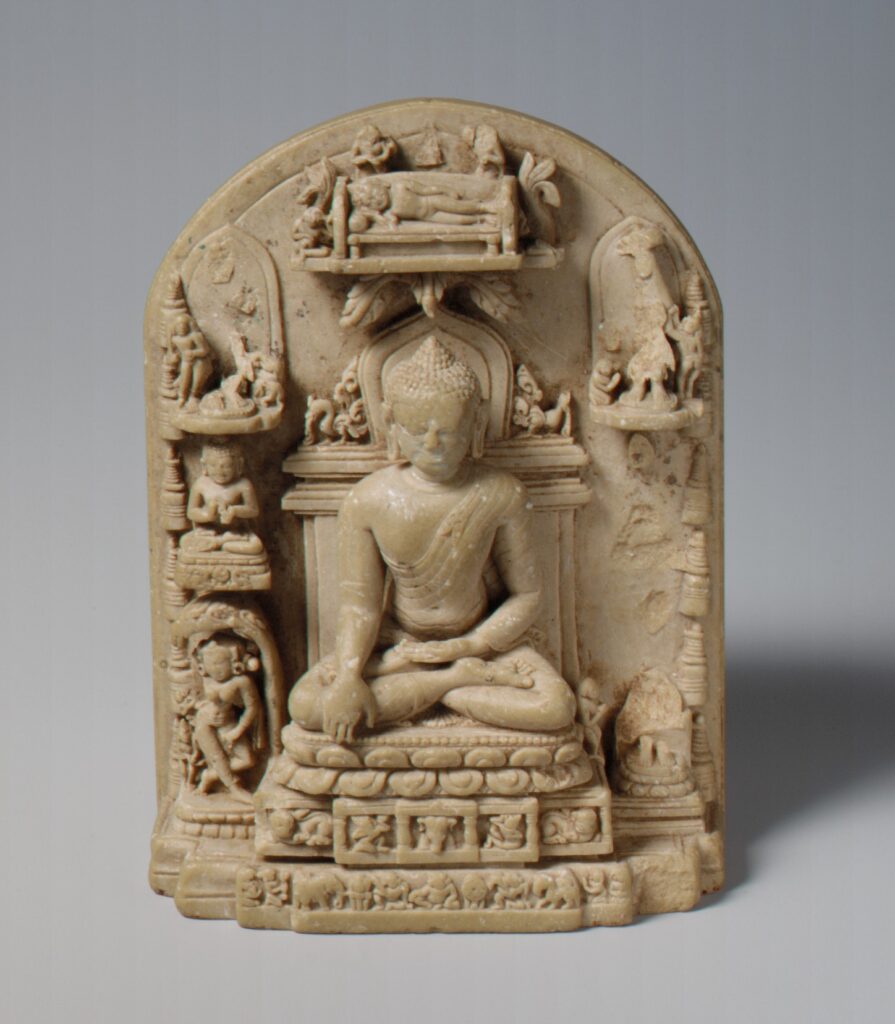
The article treats the scene as Eden reversed: images of fear, desire, authority, and doubt arise, but awareness does not identify with them.
The traditional Mara scene is the documented layer; Geomytha uses it comparatively as non-identification under symbolic pressure.
Buddhist enlightenment narrative and iconography
The Metropolitan Museum of Art, object 38317.
The Mara temptation narrative is traditional and documented; the Eden reversal and non-identification grammar are Geomytha interpretations.
Mara narratives contain religious claims and traditional imagery of awakening. Earth-witnessing is not evidence that modern psychology invented or exhausts the event. A still body alone cannot demonstrate liberation from claim.
The added primary textual witness is Sutta Nipāta 3.2, verses 425–449, in Ṭhānissaro Bhikkhu’s modern translation. It presents confrontation with Māra and his armies. The Met’s twelfth-century visual witness is later evidence of depiction, not the original text. The poem, later earth-touching narratives and their imagery must not be collapsed into one unchanging version. Oldest manuscript priority is not established.