Daedalus — Builder of the Labyrinth
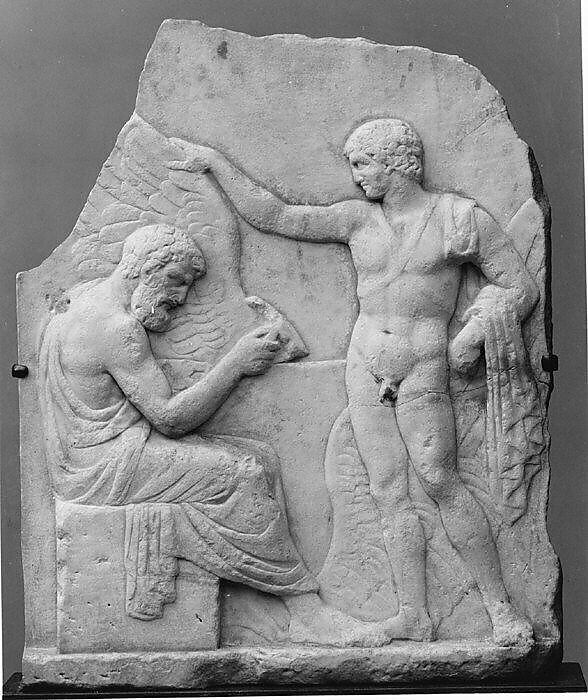
GEOMYTHA reads Daedalus as a test of technical skill's direction. The same intelligence can produce a device of deception, an enclosing structure and advice that makes exit possible. Skill has consequences through the purposes and relationships it serves; ingenuity alone supplies no moral guarantee.
The story is more difficult than a movement from complicity to redemption. The early dancing place is a positive use of craft, while the Talos tradition places professional jealousy beside artistic excellence. Daedalus's later help and escape do not undo earlier harm, and the loss of Icarus prevents treating invention as complete mastery. GEOMYTHA's distinction concerns accountable use of ability, not an assertion that technology or the craftsman archetype is intrinsically corrupt.
The sources preserve a gifted, morally complicated maker rather than a single function. GEOMYTHA compares the uses of craft—deception, enclosure, orientation and escape—while the dance, Talos and Icarus traditions prevent a simple villain-to-savior narrative.
Greek Daedalus traditions; Homer, Iliad 18.590–606; Diodorus 4.76–79; Pseudo-Apollodorus 3.1.4 and Epitome 1.8–15.
Iliad 18.590–606: dancing place for Ariadne. Diodorus 4.76–77: craft, Talos, cow, Labyrinth and alternative departures. Epitome 1.8–15: exit advice, captivity, wings and shell/thread test.
GEOMYTHA's vocabulary of claim, identity, relation and return is a comparative reading, not an ancient author's stated doctrine or a proven Egyptian origin. Ordinary occurrences of “this,” “these,” “all” or “I” do not establish the esoteric layer. Identify a narrated action before applying a function. Greek and Roman authors preserve incompatible variants; the records do not combine them into one original account. Mythic punishment is a feature of the story, not evidence of inherited moral guilt, disability as evil, or the justice of harming another person. Ancient narrative, modern scholarship, artwork and GEOMYTHA interpretation remain distinct. No proof of a historical Minos, literal maze or human-sacrifice practice is claimed. Targeted passages and selected scholarship were checked, not all manuscripts or every scholarly reference.
Claim tested: ingenuity must be evaluated by its use. Positive contrasts: the cow and Labyrinth versus counsel for escape. Counterexamples: Homer's dancing place already provides a constructive function, so the character does not begin as pure corrupt technology. Diodorus's Talos murder challenges identification of skill with wisdom. Icarus's death and alternative sailing account prevent treating the wings as either an uncontested historical event or a completed redemption. Ancient variants do not supply a modern engineering safety prescription. No automatic esoteric definition attaches to the word “craft,” and technical ability by itself establishes neither tyranny nor liberation.
The early Homeric witness in Iliad 18.590–606 names a dancing place made for Ariadne, not a complete Labyrinth biography. Later Diodorus 4.76–79 combines artistic inventions, Talos, the cow and multiple escape traditions. Pseudo-Apollodorus gives another sequence through Library 3.1.4 and Epitome 1.8–15. The modern public-domain translations are access points, not the oldest material copies. Original oral narratives, all lost-author fragments and the earliest manuscript for every passage were not examined.