GEOMYTHAAll stories are the same story
Index Record

Dhikr — Sufi Remembrance Practice
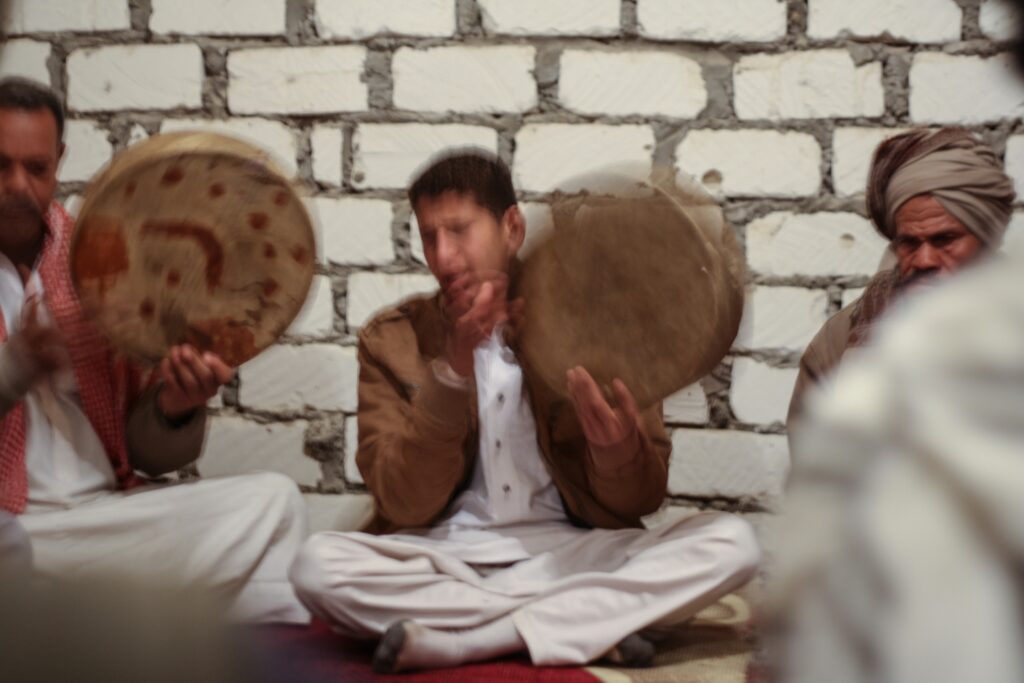
A Sufi dhikr circle in Siwa Oasis, Egypt.
Sufi dhikr circle, Siwa Oasis, Egypt — photograph by Enas El Masry ↗
Primary recognizable reference image for the work under discussion.
Conventional Reading
Dhikr (Arabic: remembrance or mention of God) is a central devotional practice in Sufi traditions. It can involve repetition of divine names or formulas and may be practiced silently or aloud, individually or collectively. Historical Sufi orders developed differing forms, rhythms, bodily practices, and ceremonial settings around dhikr, so no single performance form represents the whole tradition.
Geomytha Reading

Dhikr is read as repeated remembrance that reorients attention away from self-reinforcing narrative and forgetfulness toward source, making ritual repetition a practical form of repatterning and return.

Parent work / tradition / source

Sufi devotional practice

Source location / reference

Sufi devotional traditions; see Encyclopaedia Iranica, “ḎEKR,” especially its account of dhikr as remembrance of God and its individual, collective, vocal, silent, and order-specific forms.

Reading Boundary

This comparison does not reduce Islamic dhikr to Geomytha or claim a single practice across all Sufi traditions. Islamic primary and scholarly sources are required before publication.

Archetype stress test

Dhikr is remembrance of God in specific Islamic traditions, not a neutral technique for removing personality. Practices differ across orders and contexts. Repetition without the devotional relation does not establish that the same mechanism is being performed.

Source trail

Evidence beneath the record

ḎEKR
Specialist scholarly encyclopedia entry on dhikr in Sufism and related traditions.
Encyclopaedia Iranica