Duat — Egyptian Underworld
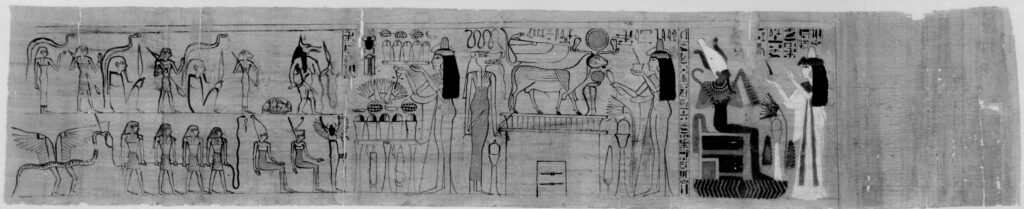
In Geomytha, the Duat functions as a hidden field beneath the authority of the visible self. In the sleep/surrender comparison, it names the descent from the daylight world of role and control into an unseen interval where This cannot remain sovereign in the same way. The point is not that sleep literally equals the Egyptian Duat, but that underworld imagery gives form to consciousness passing beneath its ordinary surface organization before return.
In Egyptian religion, the Duat is an underworld realm with its own textual and ritual traditions. Geomytha uses it comparatively as an image of descent beneath waking identity; that analogy does not collapse Egyptian afterlife traditions into sleep psychology or into the Geomytha system.
Ancient Egyptian underworld traditions; Amduat and related funerary texts
Ancient Egyptian funerary and royal underworld texts, especially the Amduat; traditions vary by period and corpus.
Historical/mythic entry; distinguish textual traditions.
Duat narratives contain particular landscapes, dangers, divine acts and funerary practices. Darkness or a difficult mood alone is not the Egyptian underworld. Version and period must constrain the inward analogy.
The surviving Egyptian record begins with ritual and fragmentary witnesses, not one recoverable original story. The late Fifth-Dynasty Pyramid Texts provide the early inscribed corpus; Middle Kingdom Lahun fragments preserve an early extensive Horus–Seth struggle. Plutarch's On Isis and Osiris, written much later in the Roman period, supplies a connected narrative. Compare versions rather than attributing Plutarch's complete sequence to the earliest inscriptions. GEOMYTHA's grammatical assignments are modern comparisons.