Julius Caesar
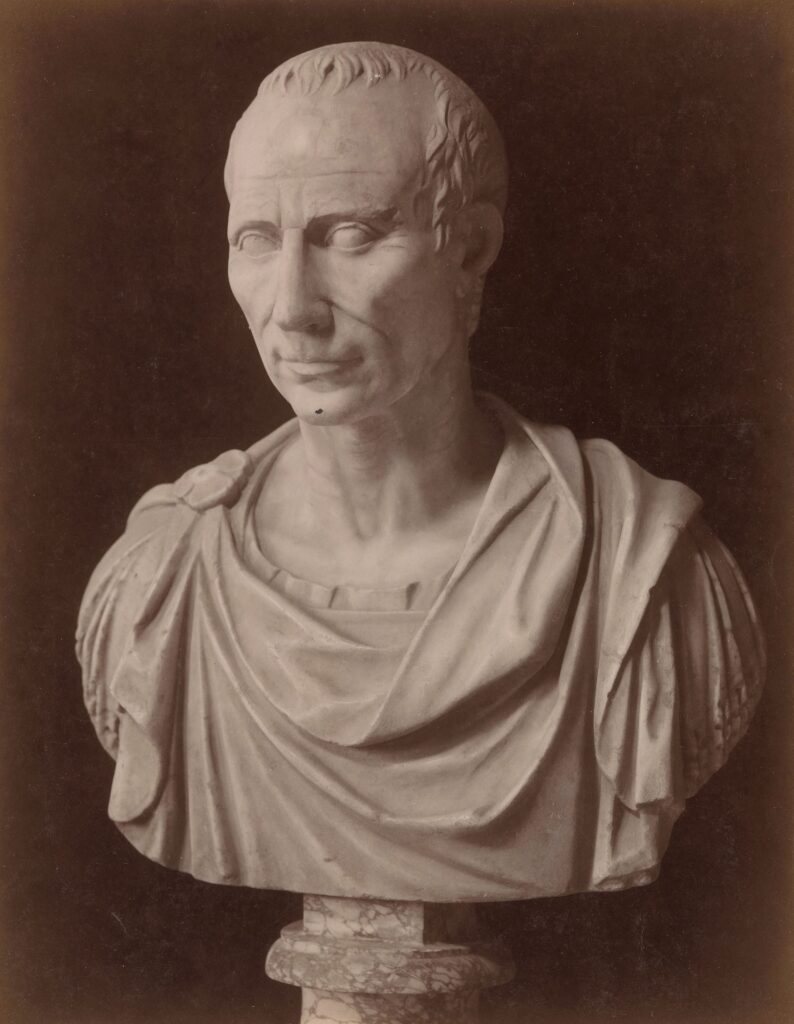
Caesar functions in Geomytha as the archetype of seizure: grab, take, steal, seize, claim. The movement is I entering a field and closing the hand around what was not previously possessed. Seizure becomes claim; claim becomes administration; administration becomes possession. In the calendar image, Caesar orders and fixes the year, yet the astronomical remainder persists beyond complete capture. This is the Set/I gesture at civic scale: the claimant turns field into territory, remainder into account, and relation into possession.
Historically, Julius Caesar's calendar reform is a Roman administrative achievement. Geomytha's Caesar/seizure association is a symbolic mnemonic and interpretive overlay, not an etymological or historical claim about Caesar's name or intention.
Roman Republic / Julian calendar reform
Julius Caesar's reform of the Roman calendar, especially Plutarch, Life of Caesar 59, with U.S. Naval Observatory leap-year context.
The Caesar/seize/grab/steal resonance is a Geomytha symbolic and mnemonic construction, not an etymological derivation and not a claim that every historical act of Julius Caesar was theft. Historical claims about Caesar and the calendar remain source-bound; the seizure archetype describes the grammar of claim.
Caesar's recorded political and calendrical actions are historical matters. An English seizure/Caesar resemblance does not establish Latin etymology or his inward archetype. Treat the wordplay as comparison and test the actual act of authority.