Ma’at — Truth, Balance, and Order
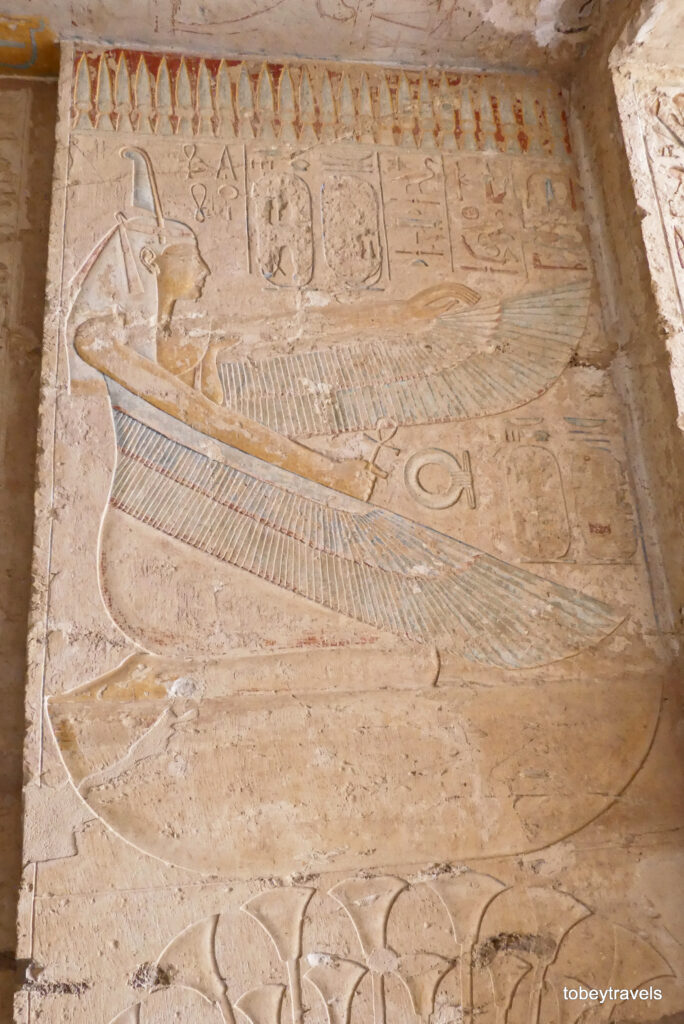
In Geomytha, Ma'at functions as measure that can expose whether an ordered world remains aligned or has become self-serving. This is not order for order's sake. Healthy order reflects relation; captured order protects All This. In the weighing image, Ma'at therefore becomes a counter-pressure to the false self's own account of itself: what matters is not how impressive the identity appears, but whether it remains light enough to return.
Historically, Ma'at is an Egyptian principle and deity associated with truth, balance, justice, and right order. Geomytha's contrast between living order and captured system is an interpretive application of that symbolic field, not a claim that Egyptian religion used the All This grammar.
Ancient Egyptian religious and funerary traditions
Ancient Egyptian textual and visual traditions concerning Ma’at as truth, justice, balance, and cosmic order; funerary judgment traditions include the weighing of the heart against Ma’at or her feather.
Historical religious meaning must remain distinct from Geomytha critique.
Ma'at orders truth, justice and cosmic/social relations, rather than functioning solely as a private feeling of balance. A comfortable inner state is not evidence of right order. Compare the judgment function without turning the goddess into self-help vocabulary.
The surviving Egyptian record begins with ritual and fragmentary witnesses, not one recoverable original story. The late Fifth-Dynasty Pyramid Texts provide the early inscribed corpus; Middle Kingdom Lahun fragments preserve an early extensive Horus–Seth struggle. Plutarch's On Isis and Osiris, written much later in the Roman period, supplies a connected narrative. Compare versions rather than attributing Plutarch's complete sequence to the earliest inscriptions. GEOMYTHA's grammatical assignments are modern comparisons.