Index Record
Macbeth — Prophecy and Crown
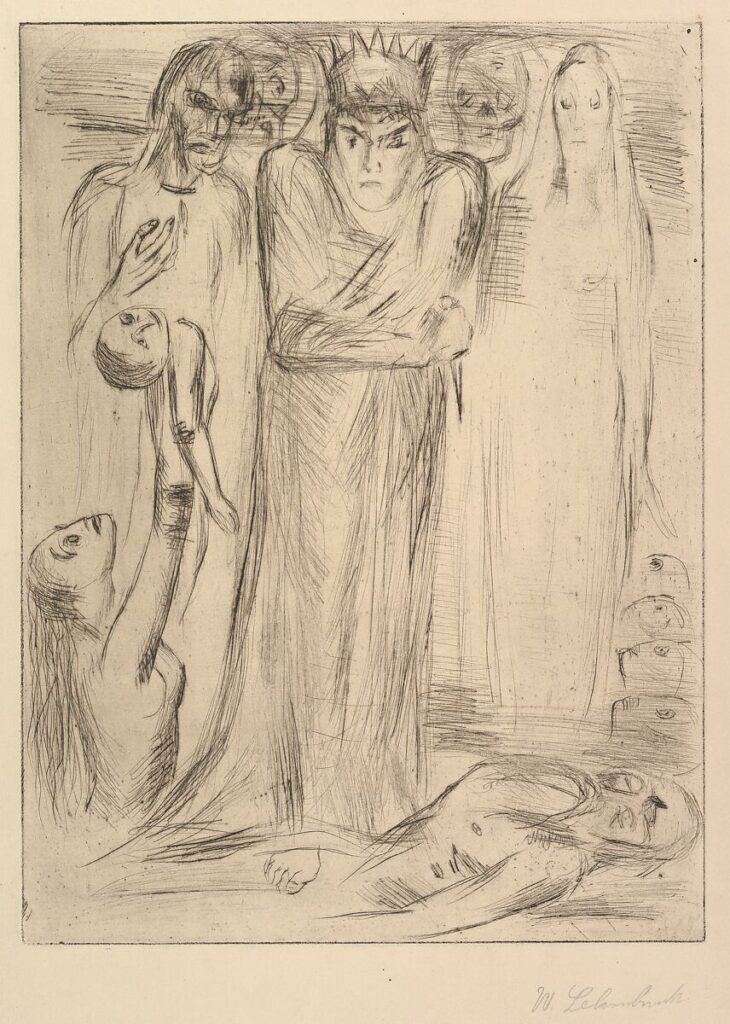
A later artistic interpretation of Lady Macbeth, with crown and dagger; distinguished from the original Shakespeare text.
Conventional Reading
The witches greet Macbeth with a prophecy that he will become king; Macbeth later kills Duncan and takes the crown.
Geomytha Reading
The article reads prophecy as a mirror in time: Macbeth encounters an image of himself as king, claims it as identity, and begins organizing action around the crowned future self.
Why the Difference Matters
Shakespeare provides the prophecy and plot; Geomytha uses them as a model of identification with a future image.
Parent work / tradition / source
William Shakespeare, Macbeth
Source location / reference
Folger Shakespeare Library edition of Macbeth.
Reading Boundary
The prophecy and plot are documented in Shakespeare; the future-mirror reading is Geomytha interpretation.
Archetype stress test
Macbeth receives a prophecy but also acts amid ambition, persuasion, guilt and political consequences. Prophecy does not remove agency. The crown reading must explain his changing relation to the prediction rather than make the witches a complete cause.
Source trail
Evidence beneath the record
Macbeth — Folger Shakespeare Library
Primary literary text in a scholarly edition. The article's use of prophecy as a future mirror of crowned identity is Geomytha interpretation.
Folger Shakespeare Library