Index Record
Prometheus — Fire Bringer
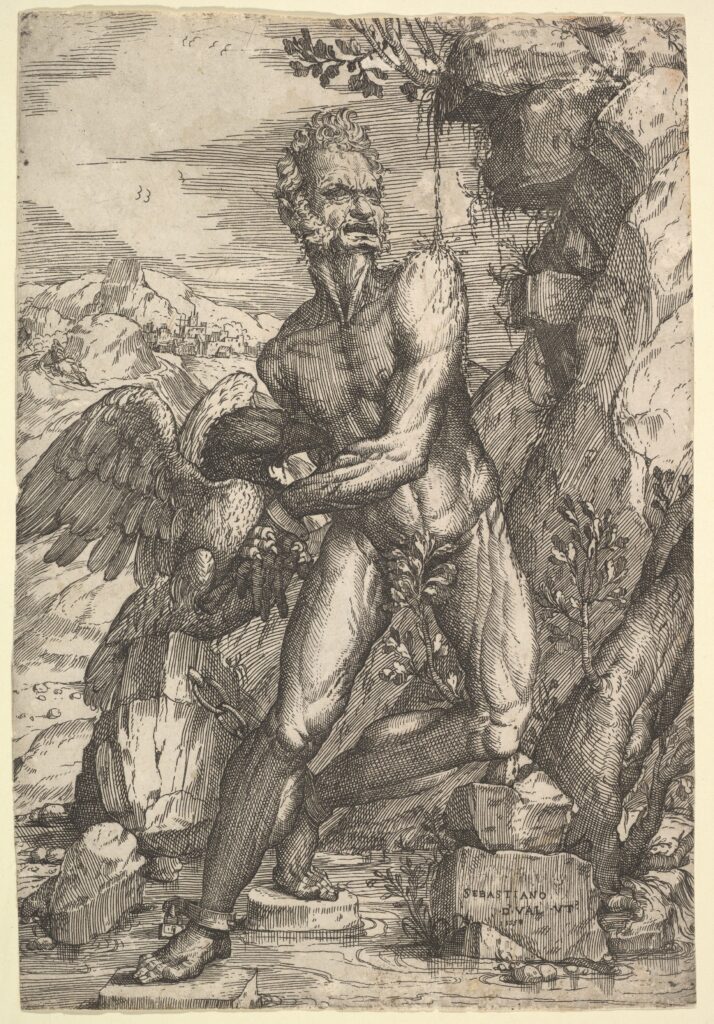
A later depiction of Prometheus; the ancient narratives remain the primary textual sources.
Conventional Reading
Prometheus is the Titan associated in Greek literary tradition with conflict over fire and its availability to mortals; later visual art repeatedly depicts him bringing or animating with heavenly fire.
Geomytha Reading
Geomytha uses Prometheus as the claimed/stolen-fire gesture: fire becomes culturally productive but also exposes the hinge at which a gift can be seized and treated as possession.
Parent work / tradition / source
Greek Prometheus traditions / Hesiod
Source location / reference
Hesiod, Theogony; National Gallery of Art Prometheus print.
Reading Boundary
Documented facts are separated from Geomytha interpretation; the symbolic mapping is not presented as creator intent.
Archetype stress test
Prometheus benefits mortals while also provoking conflict and punishment in distinct Greek accounts. Fire cannot be treated as uniformly wrong or uniformly liberating. Hesiod's version must be distinguished from later dramatic and modern technological retellings.
Source trail
Evidence beneath the record
Hesiod, Theogony — Prometheus, fire and Zeus’s thunderbolt
Primary ancient literary anchor in a public-domain English translation. Geomytha’s distinction between gift, theft, claim, First Fire, and returned fire is interpretive.
Perseus Digital Library
Prometheus Making Man and Animating Him with Fire from Heaven — National Gallery of Art
Authoritative museum source for Prometheus/fire iconography. Geomytha’s First Fire / claimed fire distinction is interpretive.
National Gallery of Art