Rocky — 1976 Film
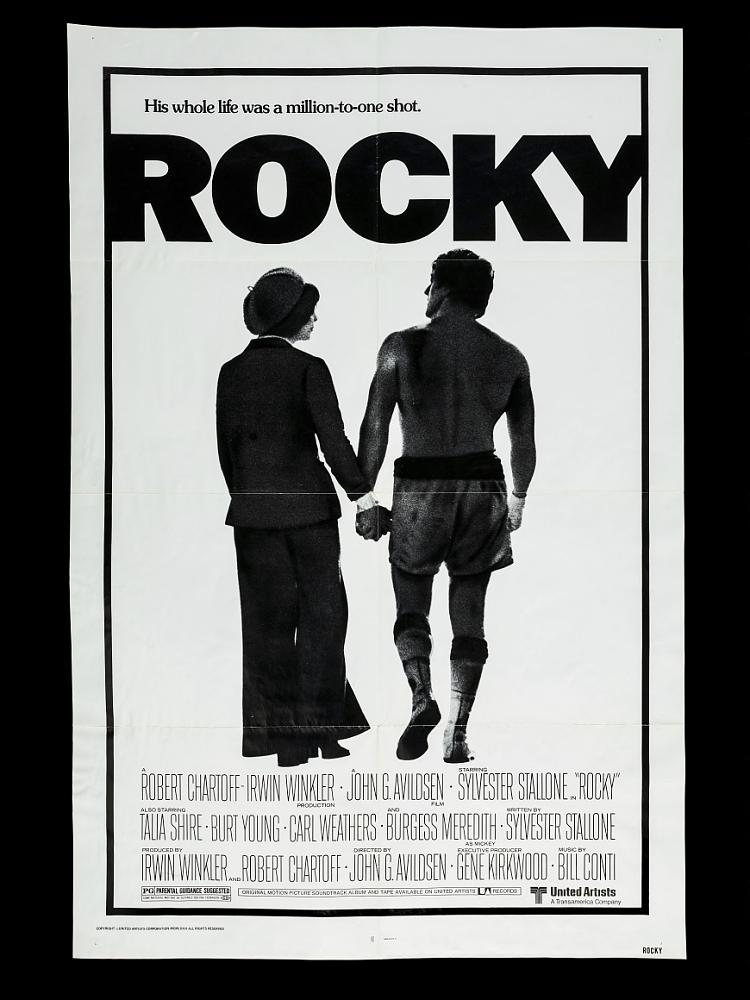
GEOMYTHA reads the ring as a test of the equation between public victory and personal worth. The scoreboard and Rocky’s chosen measure of achievement diverge: he can lose the title decision without losing the meaning of his effort. His turn toward Adrian makes relationship a further measure that the championship cannot supply. This is a reading of the ending’s arrangement, not a secret code in every boxing match.
Conventionally the film is an underdog sports drama and a relationship story. GEOMYTHA focuses on the moment a public result ceases to be the only judge of a person. The film does not abolish competition; it permits more than one standard of success.
Rocky (1976)
Original released film, as cross-checked through AFI’s synopsis: pre-fight goal, entrance, final bout and Adrian ending. Targeted screenplay passages checked; its ending is not identical in staging. Wiedenfeld (2016), author-hosted abstract only.
GEOMYTHA’s literary comparison is distinct from release facts, attributed scholarship and creator intent. Rocky still wants recognition, and Apollo’s title is a real sporting achievement. A conventional story of perseverance and community explains much of the same effect. Wiedenfeld’s scholarly abstract foregrounds relationships, race and class; those dimensions should not disappear into a purely inward allegory. Fictional endurance is not medical or training advice.
Rocky still wants recognition, and Apollo’s title is a real sporting achievement. A conventional story of perseverance and community explains much of the same effect. Wiedenfeld’s scholarly abstract foregrounds relationships, race and class; those dimensions should not disappear into a purely inward allegory. Fictional endurance is not medical or training advice.
Original story: Rocky (1976), Stallone screenplay, Avildsen direction, Chartoff-Winkler/United Artists production. The released film is primary; the digital screenplay is a separate witness with different final staging. No authenticated earliest draft or oldest film element was examined. Targeted catalogued-release and screenplay checks, not a complete new film replay or exhaustive bibliography. Original released film, as cross-checked through AFI’s synopsis: pre-fight goal, entrance, final bout and Adrian ending. Targeted screenplay passages checked; its ending is not identical in staging. Wiedenfeld (2016), author-hosted abstract only.