Rocky Balboa — Rocky
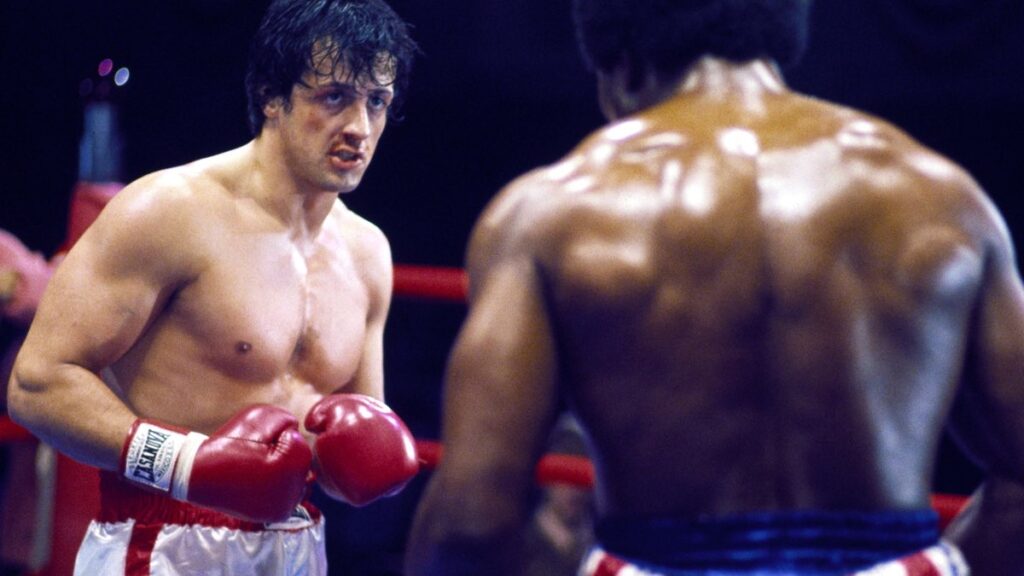
GEOMYTHA reads Rocky’s chosen aim as a partial loosening of the identity ‘winner or nobody’. He creates a measure that depends on his own commitment rather than possessing the champion’s title. The word ‘partial’ matters: he still wants the fight to prove his worth, so he has not simply escaped the need for recognition. The closing relationship complicates that dependence rather than magically erasing it.
The source character’s endurance supports a comparison between lived effort and a public label. GEOMYTHA does not turn him into an entirely awakened figure or claim that losing is intrinsically superior to winning. The meaning depends on this goal and this ending.
Rocky (1976)
Rocky (1976), pre-fight conversation and released ending, checked against AFI; related screenplay passage around PDF p.94 and final scenes. Scope is the first film, not the character’s later championship or coaching career.
GEOMYTHA’s literary comparison is distinct from release facts, attributed scholarship and creator intent. His training, ambition and desire to be seen contradict a total-renunciation reading. Community, Adrian and Mickey contribute to his achievement; it is not a solitary triumph of will. No person’s worth depends on continuing through injury, and the film’s bodily extremes should not be copied as a safety standard.
His training, ambition and desire to be seen contradict a total-renunciation reading. Community, Adrian and Mickey contribute to his achievement; it is not a solitary triumph of will. No person’s worth depends on continuing through injury, and the film’s bodily extremes should not be copied as a safety standard.
Original story: Rocky (1976), Stallone screenplay, Avildsen direction, Chartoff-Winkler/United Artists production. The released film is primary; the digital screenplay is a separate witness with different final staging. No authenticated earliest draft or oldest film element was examined. Targeted catalogued-release and screenplay checks, not a complete new film replay or exhaustive bibliography. Rocky (1976), pre-fight conversation and released ending, checked against AFI; related screenplay passage around PDF p.94 and final scenes. Scope is the first film, not the character’s later championship or coaching career.