The Hitchhiker’s Guide to the Galaxy
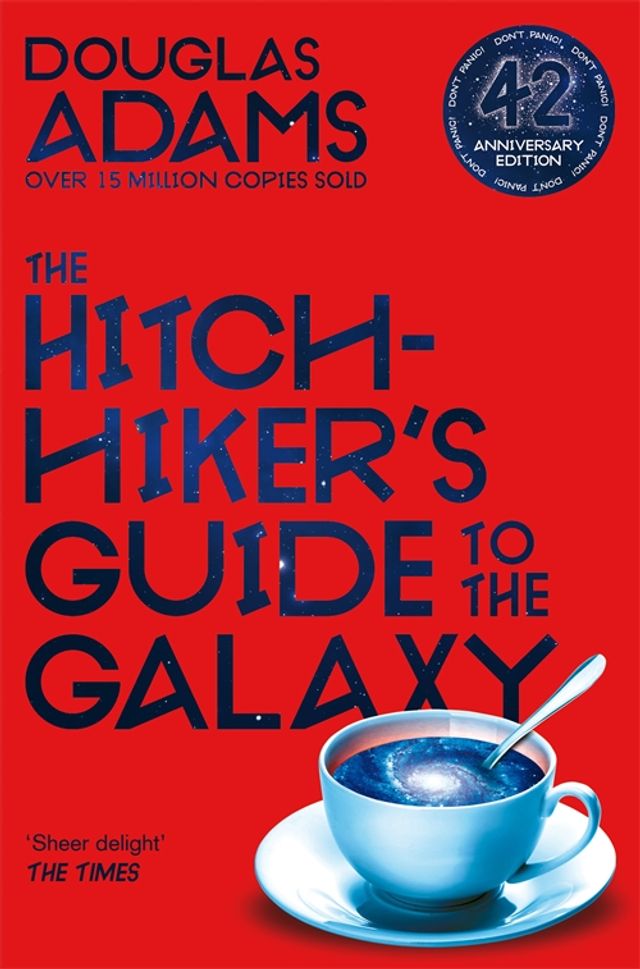
In Geomytha, the novel becomes a map of consciousness after ground has been displaced by mediation. Arthur functions as reflective consciousness in exile; the Guide as useful mediated knowledge mistaken for ground; Zaphod as spectacular identity; Deep Thought as answer-production severed from the living question; and the wider galaxy as a world thick with systems, procedures, interfaces, and commentary but poor in direct presence.
Conventionally, the novel is comic science fiction and satire about Arthur Dent’s survival after Earth’s destruction. Geomytha shifts attention from the absurd events themselves to the mechanism underneath them: a world in which mediation, explanation, bureaucracy, and answers proliferate after direct ground has been lost.
Douglas Adams, The Hitchhiker’s Guide to the Galaxy (1979)
The novel’s central narrative: Arthur Dent survives Earth’s demolition and travels through a universe mediated by the Guide, Ford Prefect, Zaphod Beeblebrox, Trillian, Marvin, Deep Thought, the Babel fish, Vogons, and the answer 42.
The documented facts are the novel’s authorship, publication, plot, characters, and narrative devices. The mappings of Arthur to Osiris, the Guide to Set-like mediation, Zaphod to Horus-like identity, Earth to Isis-like ground, or 42 to an answer without a living question are Geomytha interpretations. This record does not claim Douglas Adams intentionally encoded the Is/Am/I/This grammar or Egyptian archetypes.
The Guide often helps its travelers, and the radio and novel versions differ. The lens fails if every practical instruction becomes false ground. Locate the scene where an answer or interface displaces the question or experience rather than condemning mediated knowledge in general.
The work began as a BBC radio series in 1978, before the 1979 novel. The radio broadcast is therefore an earlier witness, while the novel is the primary source for novel-specific scenes. Later screen adaptations alter characters and sequences. GEOMYTHA comparisons must identify the version actually being read.