The Minotaur — Cretan Labyrinth
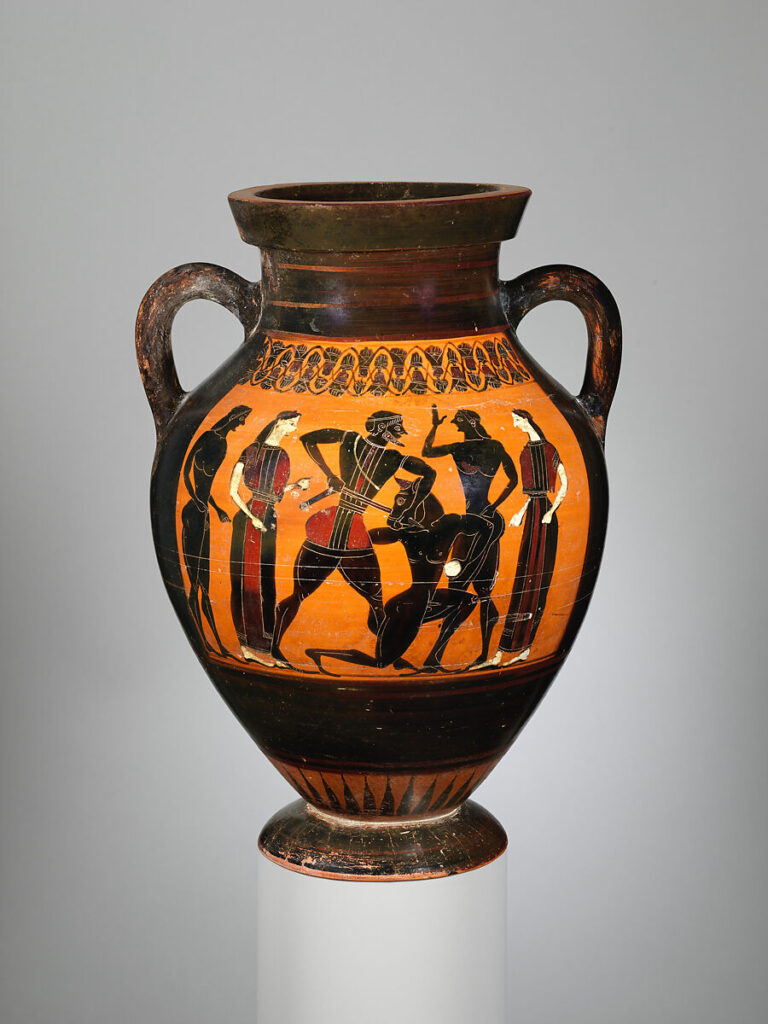
GEOMYTHA reads the Labyrinth as a way of managing a consequence while preserving the authority around it. In the mythographic sequence, the royal household does not resolve the breach that precedes the Minotaur's birth; it constructs an enclosure, and the later tribute story directs suffering toward outsiders. The proposed pattern is containment that perpetuates a problem while protecting the system that houses it.
The Minotaur is not simply Minos's evil made flesh. He is also a confined being, and his mixed body does not prove guilt. The reading concerns the arrangements of enclosure and tribute, not a moral judgment derived from physical difference. Theseus's victory ends one danger in familiar versions, but neither killing nor departure automatically establishes a healed relationship or a just political order.
The source describes a hybrid creature, confinement and the Theseus conflict. GEOMYTHA reads the surrounding arrangement as displaced consequence and maintained power. The human-Taurus variants demonstrate that this is a reading of specified narratives, not the hidden essence of every ancient version.
Greek and Roman Minotaur traditions; Pseudo-Apollodorus 3.1.4 and Epitome 1.7–9; Diodorus 4.77; Plutarch, Theseus 15–19.
Library 3.1.4: Asterius/Minotaur and enclosure; Epitome 1.7–9: Theseus, tribute and killing. Diodorus 4.77.1–4. Plutarch Theseus 15–19: monstrous and rationalizing versions. Met 56.171.12: Archaic visual witness.
GEOMYTHA's vocabulary of claim, identity, relation and return is a comparative reading, not an ancient author's stated doctrine or a proven Egyptian origin. Ordinary occurrences of “this,” “these,” “all” or “I” do not establish the esoteric layer. Identify a narrated action before applying a function. Greek and Roman authors preserve incompatible variants; the records do not combine them into one original account. Mythic punishment is a feature of the story, not evidence of inherited moral guilt, disability as evil, or the justice of harming another person. Ancient narrative, modern scholarship, artwork and GEOMYTHA interpretation remain distinct. No proof of a historical Minos, literal maze or human-sacrifice practice is claimed. Targeted passages and selected scholarship were checked, not all manuscripts or every scholarly reference.
Claim tested: enclosure can preserve a ruling arrangement while transferring its cost. Anchor it to the Labyrinth and tribute in the specified mythographic versions. Counterexamples: the Minotaur is imprisoned as well as dangerous; physical hybridity cannot stand for innate vice or inherited guilt. Plutarch's Taurus and prison traditions alter the mechanism and must not be overwritten by the monster story. Attic hero imagery has its own perspective, so Theseus's triumph is not neutral proof that all Cretans are barbaric. The sources do not establish actual Minoan human sacrifice or a surviving literal maze. Avoid turning every containing structure into denial: some containment protects people.
The ca. 540 BCE Attic vase is an early visual witness included here; no claim is made that it is the earliest surviving image. Homer supplies early references to the surrounding Cretan figures but not this complete Minotaur narrative. Fuller later accounts include Diodorus 4.77 and Pseudo-Apollodorus 3.1.4/Epitome 1.7–9. Plutarch transmits competing stories, including lost earlier authors, so source chronology cannot be reduced to the date of a modern retelling. No original oral version or oldest manuscript was identified.