GEOMYTHAAll stories are the same story
Index Record

Thoth — Egyptian Deity of Writing and Reckoning
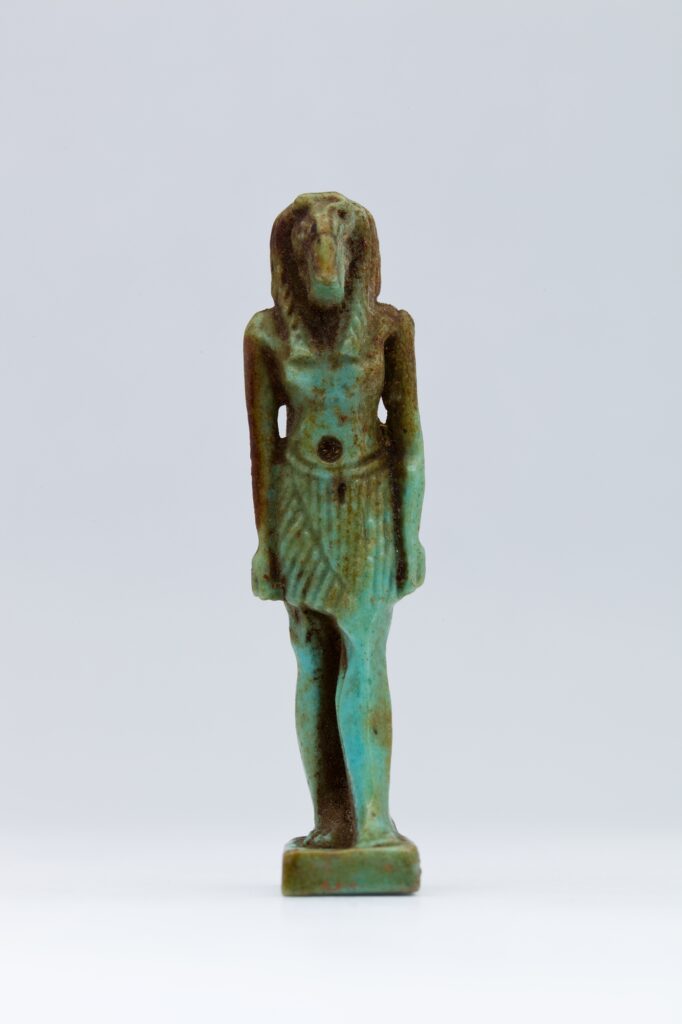
Thoth Amulet, 664–30 BCE.
Thoth Amulet · Maker not identified · 664–30 BCE · The Metropolitan Museum of Art · Public domain / The Met Open Access ↗
An Egyptian Thoth amulet grounds identification of the deity.
Conventional Reading
Egyptian deity shown recording the result in the weighing scene.
Geomytha Reading

In Geomytha, Thoth functions as the record of reckoning after the self's performance has ended. The claimant can explain, excuse, decorate, and narrate; the record simply marks what the measure shows. Symbolically, this is thought returned to service rather than enthroned as identity: intelligence witnesses and records instead of manufacturing a verdict that protects This.

Why the Difference Matters

Historically, Thoth is an Egyptian deity associated with writing, knowledge, reckoning, and judgment scenes. Geomytha uses his recorded role in the weighing image to distinguish transparent witnessing from self-protective narration; that is an interpretive correspondence.

Parent work / tradition / source

Ancient Egyptian religious, scribal, and funerary traditions

Source location / reference

Ancient Egyptian traditions concerning Thoth as god of writing, accounting, intellectual order, and reckoning; he also appears in funerary judgment imagery recording the weighing of the heart.

Reading Boundary

Mythic figure; source from Egyptological/museum records.

Archetype stress test

Thoth's writing and reckoning can preserve lawful order rather than capture it. Recording an event is not inherently a claimant's seizure. The figure's historical functions must resist a blanket identification of language with distortion.

Original story and earliest witnesses

The surviving Egyptian record begins with ritual and fragmentary witnesses, not one recoverable original story. The late Fifth-Dynasty Pyramid Texts provide the early inscribed corpus; Middle Kingdom Lahun fragments preserve an early extensive Horus–Seth struggle. Plutarch's On Isis and Osiris, written much later in the Roman period, supplies a connected narrative. Compare versions rather than attributing Plutarch's complete sequence to the earliest inscriptions. GEOMYTHA's grammatical assignments are modern comparisons.

Source trail

Evidence beneath the record

Telling Time in Ancient Egypt — The Metropolitan Museum of Art
Authoritative museum essay for the basic structure of the Egyptian civil calendar. Geomytha's symbolic interpretation of 360, the remainder, and the 'unclosed wheel' is not a claim made by The Met.
The Metropolitan Museum of Art
Festivals in the Ancient Egyptian Calendar — UCL Digital Egypt
Academic reference useful for the five epagomenal days and the listed deity-birthday tradition. The page itself cautions that festival practices varied across time and place; the Geomytha symbolic synthesis should preserve that distinction.
University College London
Statue of Horus as a falcon protecting King Nectanebo II
Museum collection record from The Met Egyptian Art department.
The Metropolitan Museum of Art
Stela EA690
British Museum collection record.
British Museum
Stela of King Raneb
Museum collection record from The Met Egyptian Art department.
The Metropolitan Museum of Art
Henri Frankfort — Kingship and the Gods
University-based Egyptological publication.
Kingship and the Gods; University of Chicago Press, 1948; First Phoenix Edition 1978
Plutarch, On Isis and Osiris — ancient narrative and commentary
Primary text, manuscript catalogue or academic institutional reference. The historical evidence and GEOMYTHA comparative reading must remain distinct.
Plutarch; Loeb Classical Library translation, hosted by University of Chicago