World State — Brave New World
GEOMYTHA reads the World State as an identity-system that arranges the field of choice before presenting its resulting contentment as universal consent. What makes the comparison specific is the link between manufactured roles, limits on inquiry and the political claim that nothing essential is missing. It is not enough that the society has symbols, institutions or pleasurable experiences; those exist in many forms of life that remain open to correction.
The source society is both materially organized and ideologically defended. GEOMYTHA’s symbolic ‘world’ does not mean the characters cannot distinguish physical reality from illusion. It means their permitted account of a good life has been narrowed and protected from challenge.
Aldous Huxley, Brave New World (1932)
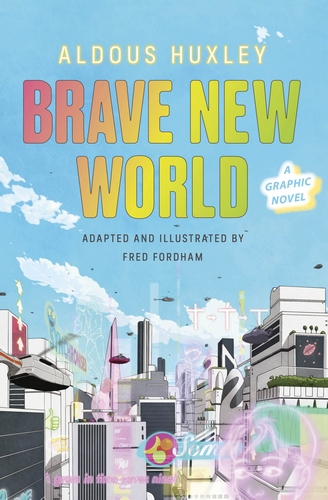
Brave New World, ch.1, 16–17. The displayed cityscape belongs to Fred Fordham’s 2022 graphic adaptation; narrative claims refer to Huxley’s 1932 prose novel.
GEOMYTHA’s comparison is distinct from source facts, attributed scholarship and creator intent. The existence of dissent and island communities defeats a claim of perfectly total mind control. Mond’s defense of the arrangement should be tested, not accepted as an objective report. The comparison concerns restrictions on freedom, not an accusation against every form of planning or public welfare.
The existence of dissent and island communities defeats a claim of perfectly total mind control. Mond’s defense of the arrangement should be tested, not accepted as an objective report. The comparison concerns restrictions on freedom, not an accusation against every form of planning or public welfare.
Original story: Huxley’s Brave New World (1932), not the graphic or television adaptations. Targeted chapter checks use later digital texts, not an authenticated first-edition facsimile or oldest surviving manuscript. No full fresh reread or exhaustive scholarly survey claimed. Brave New World, ch.1, 16–17. The displayed cityscape belongs to Fred Fordham’s 2022 graphic adaptation; narrative claims refer to Huxley’s 1932 prose novel.