Why a loving no can protect what a desperate yes would destroy.
There is a kind of promise that sounds generous until you ask what it costs.
Someone says they would do anything for love. It sounds like devotion. It may even be devotion. But what happens when love asks for something that would make the person dishonest, cruel, or absent from their own life? Does love require them to agree?
A yes is not always love. A no is not always resistance. And neither answer, by itself, is surrender.
This is where a familiar rock song becomes an unusually useful doorway. Meat Loaf's 1993 recording of Jim Steinman's I'd Do Anything for Love (But I Won't Do That) has spent decades inviting people to guess what the singer refuses. The mystery is less mysterious than it sounds. Meat Loaf explained that the word “that” points back to particular promises in the verses. Steinman described those promises as noble and chivalric, even comparing the song's world to Lancelot and the Arthurian stories.
Those explanations matter. They prevent us from pretending the songwriter secretly intended a spiritual doctrine he never claimed to be teaching. But they also leave a question we can bring to the song without claiming to have discovered its hidden origin.
What is the difference between keeping a promise and being owned by it?
The road that asks for something
An old Greek story gives us a way to examine the question.
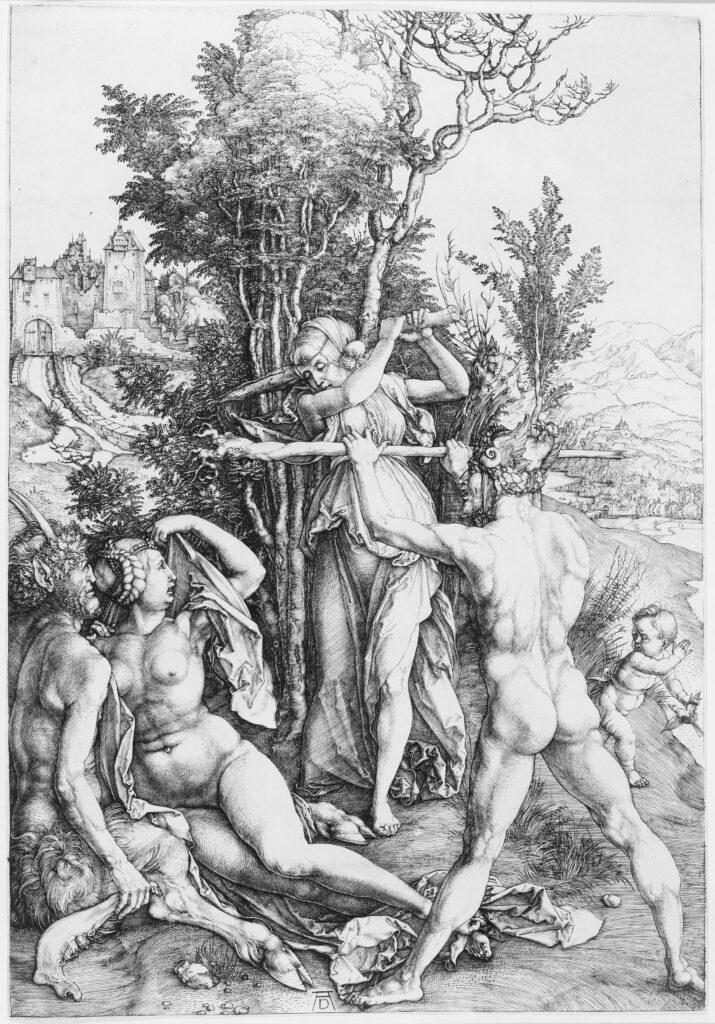
In Xenophon's Memorabilia, Socrates retells a story attributed to the teacher Prodicus. Young Heracles stands at the beginning of adult life. Two women approach him. One offers pleasure without effort, an easy road with its rewards close at hand. The other, Virtue, tells him that good things require labor, care, and responsibility.
Heracles has a choice. It is not a choice between saying yes to everything and saying no to everything. It is a choice about what kind of life his actions will serve.
The easy road promises that he can have the result without becoming responsible for the work. The demanding road asks him to act according to a value even when the result is uncertain.
This story is not the historical source of Steinman's song. It is not evidence that the ancient Greeks encoded a modern rock ballad. The comparison is simpler and more useful: a promise has moral meaning only when the person making it can still choose what it serves.
A person who agrees because they are terrified of being abandoned may appear devoted. A person who refuses because they want to punish someone may appear principled. Neither appearance tells us the whole story.
The question is not merely what was said. The question is what is governing the action.
The claimant inside the promise
GEOMYTHA gives us four ordinary words for examining this movement: IS, AM, I, THIS.
IS is the living situation before we claim to own it. Two people are here. Something is happening between them. Neither person can possess the other person's presence.
AM is relationship in motion. We listen, respond, help, disagree, repair, and make commitments. A promise can be a useful form for that relationship. It gives another person a reason to trust what we will do.
I is the first-person capacity to choose and act. There is nothing wrong with that capacity. We need it to tell the truth and keep our word. But I can become a claimant. It begins to insist that the relationship must prove something about who I am.
THIS is the fixed picture the claimant defends. I am the devoted one. I am the good partner. I am the one who never leaves. Therefore you must behave in a way that keeps my picture intact.
A living promise has become a demand for identity.
That is the fracture. The form that once helped two people relate now threatens to rule them. The claimant does not simply want to keep a promise. It wants the promise to guarantee an outcome.
We can see the same motion in smaller situations. A friend offers help and then resents the person for not showing enough gratitude. A parent says everything was sacrificed for a child and later presents the sacrifice as a debt. A partner promises unlimited availability, becomes exhausted, and treats the exhaustion as proof that the other person is unloving.
In each case the original action may have been sincere. The trouble begins when the action becomes a title of ownership.
What a refusal can do
A refusal can interrupt that movement.
Someone may decline to lie for a friend, not because friendship has ended, but because the lie would injure the relationship's foundation. Someone may decline to continue an argument late at night while still agreeing to return to it when both people can speak clearly. Someone may refuse an unsafe request while continuing to care for the person who made it.
Those refusals are not abandonment. They are attempts to keep a real relationship from being replaced by a compulsory performance.
But we should not romanticize the word no. It can be used to punish, control, humiliate, or escape responsibility. A person can hide behind the language of boundaries while refusing every difficult conversation. A person can call their withdrawal surrender when it is really a way of making someone else chase them.
The same outward action can serve opposite purposes.
So GEOMYTHA's distinction must remain exact: refusal is an action; surrender is a change in what claims authority over the action.
When the claimant surrenders, it stops demanding that the other person's response certify its identity. The person may still say no. They may say yes. They may remain, leave, apologize, or make a new agreement. What changes is the demand that one outcome must happen for the self to remain intact.
Surrender is not compliance. It does not require giving up consent, judgment, safety, or duty. Nor is it a magical way to stop feeling fear or grief.
It is the willingness to act responsibly without making the result a verdict on one's existence.
The promise and the person
This also explains why a vow can be beautiful.
Steinman's description of his song emphasizes honor, not a secret refusal of intimacy. A chivalric promise, at its best, sets a limit on what the speaker will do even when desire is strong. That can be a meaningful form of care.
Yet a promise is not automatically noble because it is dramatic. The person receiving it is not a prop in the speaker's story of devotion. Their freedom and judgment remain real.
If a promise becomes impossible, or begins to cause harm, it may need honest revision. Revision is not always betrayal. Sometimes the more faithful act is to admit what one can and cannot do.
The opposite is also true. Not every difficult commitment should be abandoned in the name of freedom. Staying through inconvenience, repairing harm, and doing unglamorous work can be expressions of love. The test is not whether the action feels effortless. Heracles's harder road warns us against that mistake.
The test is whether the commitment still serves the living people involved, or whether the people have been made to serve the commitment's image.
A small practice
The next time you feel pushed to say yes or no, try three questions.
What am I protecting? Name the actual value, not the title you want to earn. Truthfulness, safety, rest, reliability, dignity, and care are more precise than being a good person.
What am I trying to control? Notice whether you need the other person to agree, praise you, forgive you immediately, or behave as proof that your choice was right.
What responsibility remains? A boundary may end one demand without ending your duty to communicate, repair, or keep another promise.
These questions do not deliver an easy answer. They make the answer more honest.
The old story places Heracles at a crossroads. The modern song places a limit inside an extravagant vow. GEOMYTHA places a question underneath both: Who is making the choice, and what is the choice being made to preserve?
The person does not disappear when the claimant loosens its grip. The capacity to love, decide, and act remains.
You may still say no.
You may still keep your promise.
What you no longer need is for either act to make you someone.
Sources and further reading
Historical and creator evidence: Jim Steinman, The Artist's Mind; Meat Loaf's explanation of the refrain; Xenophon, Memorabilia 2.1. The GEOMYTHA interpretation is a modern comparison, not an assertion of historical transmission.