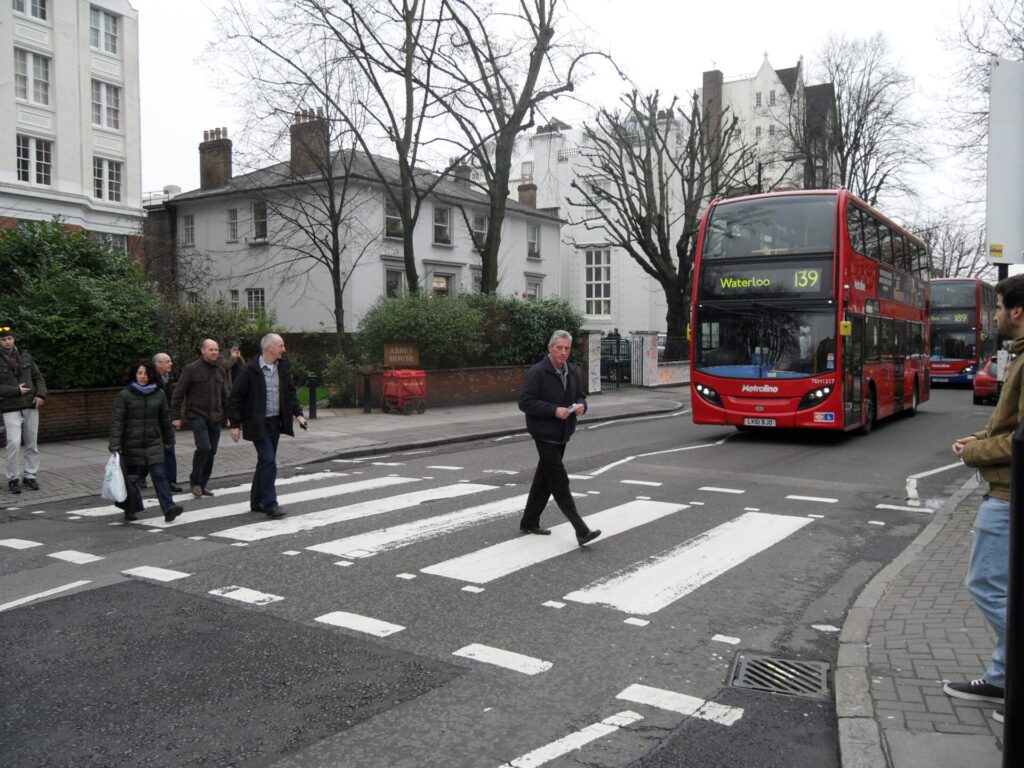
How a story takes possession of what we see and hear.
Imagine showing someone a picture of four people crossing a road.
They might notice the white stripes, the parked car, or that one man is barefoot.
Now tell them the picture is a coded funeral.
They look again.
The bare feet become evidence. The order of the walkers becomes evidence. The parked car becomes evidence. Each detail seems to know the same secret.
The picture has not changed.
The story around it has.
That is what makes the 1969 “Paul is dead” rumor so useful for thinking about identity and interpretation. The rumor falsely claimed that Paul McCartney had died years earlier and been replaced. Listeners searched Beatles songs and album covers for hidden admissions. The fascinating question is not whether he died. He did not. It is how a story began to manufacture the proof people thought they had discovered.
A claim arrives before the clues are collected
By September 17, 1969, the rumor appeared in a student newspaper at Drake University. The university archive preserves that issue of the Times-Delphic. In October, the story received new attention through Detroit-area radio and a satirical article in The Michigan Daily. Accounts from the University of Michigan describe student writers embellishing an already circulating tale, adding clues that readers then repeated as discoveries. [1][2]
That order matters.
The rumor did not simply spring, fully proven, from one decisive discovery in a recording.
People heard a claim. They returned to older material. They chose details that seemed to fit it. Those details were passed around as support for the very claim that had instructed people how to find them.
It is a loop:
Suggestion → search → apparent clue → stronger belief → wider search.
Once that loop closes, the clues can feel independent even when the belief guided the search.
The difference is small in the beginning. It can become enormous by the end.
The crossing
On August 8, 1969, photographer Iain Macmillan photographed the Beatles crossing Abbey Road outside the studio. The official Beatles and Abbey Road Studios accounts describe the short photo session and its ordinary production history. [3]
The album cover has long been interpreted by rumor believers as a funeral procession. Paul was barefoot. A car was parked nearby. The positions and clothing of the four men acquired ceremonial meanings.
But the cover itself does not establish a death.
McCartney later explained that he had arrived wearing sandals, removed them because it was hot, and happened to be barefoot in the selected frame. He also spoke directly about the playful reuse of the rumor in his later Paul Is Live cover. [4]
This does not mean we should stop noticing patterns in photography.
Art is made through choices. A photograph can carry symbolism. A striking coincidence can deserve investigation.
The distinction is between noticing something that is present and claiming that it proves a hidden event.
The white stripes are present.
The barefoot man is present.
The secret funeral is an interpretation.
To move from interpretation to historical fact, we need evidence that does not simply repeat the original assumption.
Hearing what someone told us to hear
Consider Strawberry Fields Forever, released in 1967.
Near its ending, some listeners believed they heard Lennon saying that he had buried Paul. Lennon later corrected this in an interview: he said the words were “cranberry sauce.” [5]
Both listeners are responding to sound.
But the person expecting a burial confession is listening with a suggested sentence already waiting to be recognized.
Once the sentence is heard, it can become hard to unhear.
Something similar happened with Revolution 9, the Beatles' 1968 sound collage. Its experimental recording includes speech, loops, manipulated audio, and some reversals. Those production features are documented in the band's official history. [6]
They are real.
What follows from them is a different question.
A listener may play a fragment backward, hear a phrase, and become convinced it was deliberately planted. Yet recognizing a pattern in ambiguous sound does not, by itself, establish who intended it or why.
A 1985 paper by psychologists John Vokey and J. Don Read examined claims about subliminal and backward messages in popular music. The authors distinguished the supposed existence of messages from claims about what they could make listeners do. Their results gave little support to claims of behavioral influence and suggested that listeners can actively construct apparently meaningful backward phrases. [7]
This study does not prove that no musician ever deliberately records reversed words. Some do.
It supports a narrower caution: hearing a message is not proof that the intended message was there.
The joke that really was there
Now comes a serious objection.
What about Glass Onion?
In 1968, Lennon recorded a song that openly refers to earlier Beatles songs and plays with the idea of offering clues. Its mention of the walrus as Paul is not something rumor hunters invented. It is actually in the song. [8]
If we call every clue imaginary, we miss the point.
Artists make jokes. They plant references. They tease their audiences. They sometimes encourage more interpretation than they will ever explain.
A real reference, however, cannot automatically prove an unrelated story about a secret death.
Even a deliberately placed clue must be examined for what it establishes.
The existence of a playful lyric establishes that a playful lyric exists.
It does not establish that a band replaced one of its members.
An honest investigation has to allow evidence to matter without letting one detail swallow the whole world.
That is the stress test. GEOMYTHA fails here if it dismisses all intentional symbols—or if it mistakes every intentional symbol for proof of a conspiracy.
When the reader becomes the one who knows
The argument can move beyond the Beatles.
Maybe a friend does not answer your message.
At first, you know only that there has been no reply.
Then someone tells you that the friend is angry.
You replay their last words. You remember an awkward glance. You notice that they were online but did not write back. Each detail now seems to support the warning.
Perhaps your friend really is angry.
Perhaps they are busy.
Perhaps something else happened.
But once you have decided that you are being rejected, the explanation can start selecting its own proof.
GEOMYTHA names the movement in which an observed thing becomes a possessed claim.
Is is the event before we own it.
Am is the reflection we can see or hear.
I enters when a claim announces what the reflection must mean.
This is the fixed account that follows: This is what happened. This is what kind of person they are. This is the person I am—the one who saw the truth.
The eightfold grammar then describes how that fixed account spreads.
These are all the collected details.
Those are the people who agree, disagree, or must be converted.
All This is the world in which the claim seems to explain everything.
At this point, the person is not simply evaluating evidence.
The person may be protecting an identity: I am the one who knows.
The Beatles rumor offers a vivid case study of this pattern, not proof that the band's songs secretly contain GEOMYTHA grammar.
The danger of calling every connection false
There is another serious limit.
Not every dismissed pattern is wrong.
An investigative journalist can connect records that initially seem unrelated. A scientist can form a hypothesis before every piece of evidence is available. A survivor can notice warning signs that other people overlook.
Patterns are how human attention often begins to find something.
The difference is what happens next.
Does the pattern face independent testing?
Can a contrary fact change the story?
Are alternative explanations considered fairly?
Does the evidence grow more precise—or does every possible outcome become another confirmation?
Healthy interpretation remains answerable to what the world can show.
A self-sealing account changes the rules whenever something threatens it.
If the photograph supports the rumor, it is a clue. If McCartney denies the rumor, the denial is part of the cover-up. If the musicians laugh at it, the laughter is further proof.
A theory that can explain anything this way has stopped risking being wrong.
That is not stronger evidence.
It is a belief protecting itself from examination.
Return to the thing itself
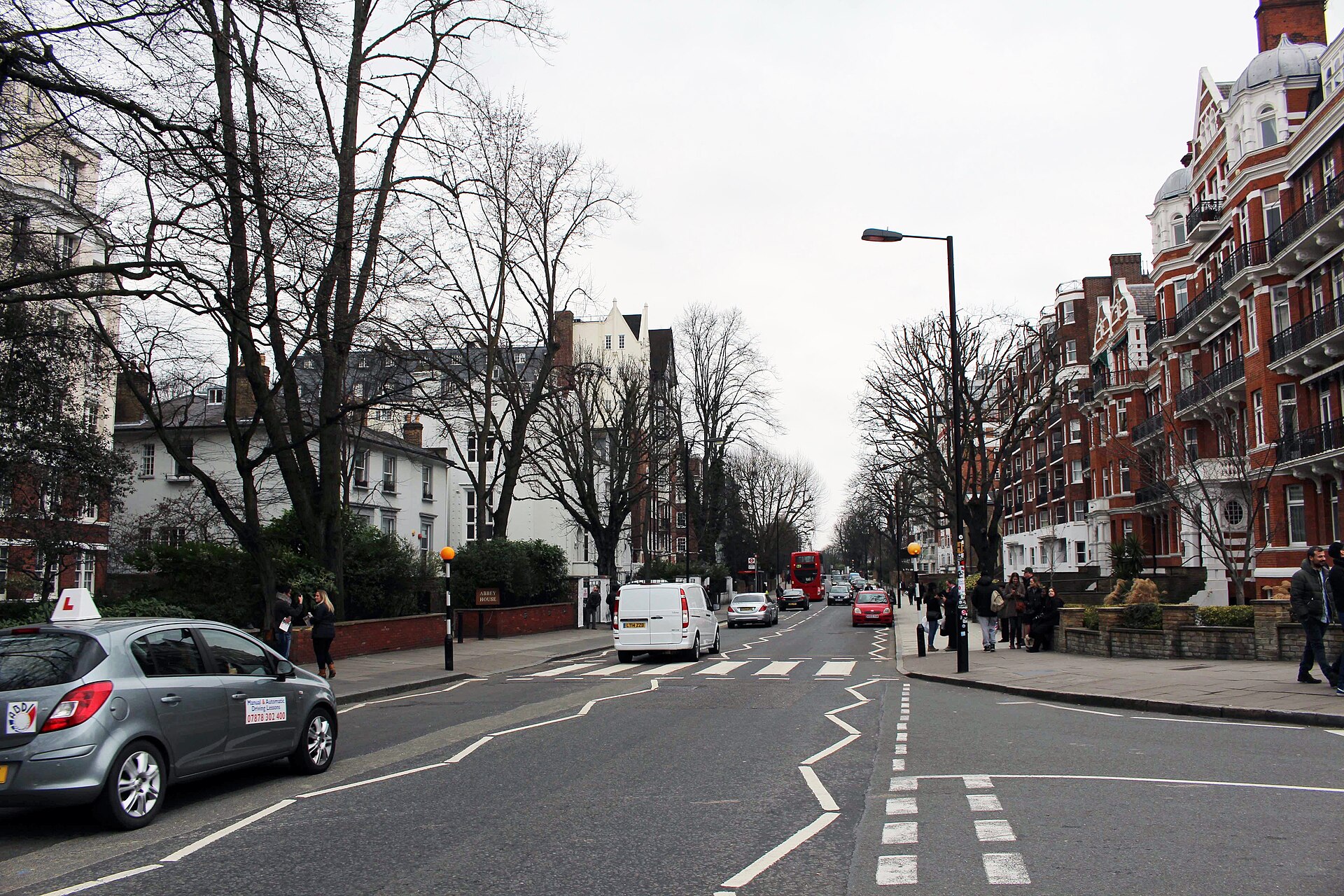
The real Abbey Road crossing can still be crossed.
The songs can still be heard as songs.
The album can still be studied as a work of art.
We do not have to stop interpreting.
We can stop confusing an interpretation with a possession of the truth.
GEOMYTHA calls that movement Return.
Return does not mean refusing stories or symbols. It means letting the observed world correct what we thought we knew.
When a pattern begins to feel too perfect, ask three questions:
What did I actually observe?
What meaning did I add?
What evidence would change my mind?
The point is not to become a person who never suspects, imagines, or interprets.
It is to remain a person who can look again.
The clues did not create the conspiracy all by themselves.
The conspiracy taught people how to collect the clues.
And the way out begins whenever we allow a thing to be more than the story we have placed upon it.
Sources and image credits
1. Drake University Archives, Drake Times-Delphic, September 17, 1969. Primary archival newspaper. Its scans are copyright-restricted; not reproduced here.
2. University of Michigan, Michigan Today, “The write side of history” (2015). Oral-history discussion of the student newspaper's part in spreading and embellishing the rumor.
3. Abbey Road Studios, “Deconstructing: Abbey Road Cover Photography Session” (2019); The Beatles, Abbey Road 50th-anniversary announcement. The two official sources differ in identifying which of the six photographs became the cover; the article does not rely on frame number.
4. Paul McCartney, “You Gave Me the Answer — Paul Is Live.” First-person retrospective on the barefoot photograph, plate, and rumor.
5. John Lennon, 1980 Playboy interview. His correction of the disputed recording.
6. The Beatles, official Revolution 9 song history. Composition and tape manipulation.
7. John R. Vokey and J. Don Read, “Subliminal Messages: Between the Devil and the Media,” American Psychologist 40 (1985): 1231–1239. Research on the construction and claimed influence of backward messages; do not infer that it proves all reversed recordings unintentional.
8. The Beatles, official Glass Onion song page. The lyric is genuine; its existence is not evidence of a secret death.
9. Featured image: Abbey Road crossing and Studios, photograph by Josephenus P. Riley, CC BY 2.0. Contemporary photo, not the 1969 album cover; no changes beyond display scaling.

10. In-article image: Abbey Road Studios, 2015, photograph by Kazuyanagae, CC BY-SA 4.0. No changes beyond display scaling.

GEOMYTHA's Is/Am/I/This and Eightfold language is a symbolic interpretation. It is not an assertion of the Beatles' intention or a finding of the psychology research.