Category: Uncategorized

  • The Big Bang Was Never “Back Then”

    The Big Bang Was Never “Back Then”

    Non-Duality, Genesis, and the Continuous Birth of Time in Geomytha

    We were taught to imagine the Big Bang as a distant explosion—an origin safely archived 13.8 billion years ago, after which the Universe “ran” like a machine.

    I’m not taking a position on the data here; I’m questioning the metaphysics.

    This Substack is reader-supported. To receive new posts and support my work, consider becoming a free or paid subscriber.
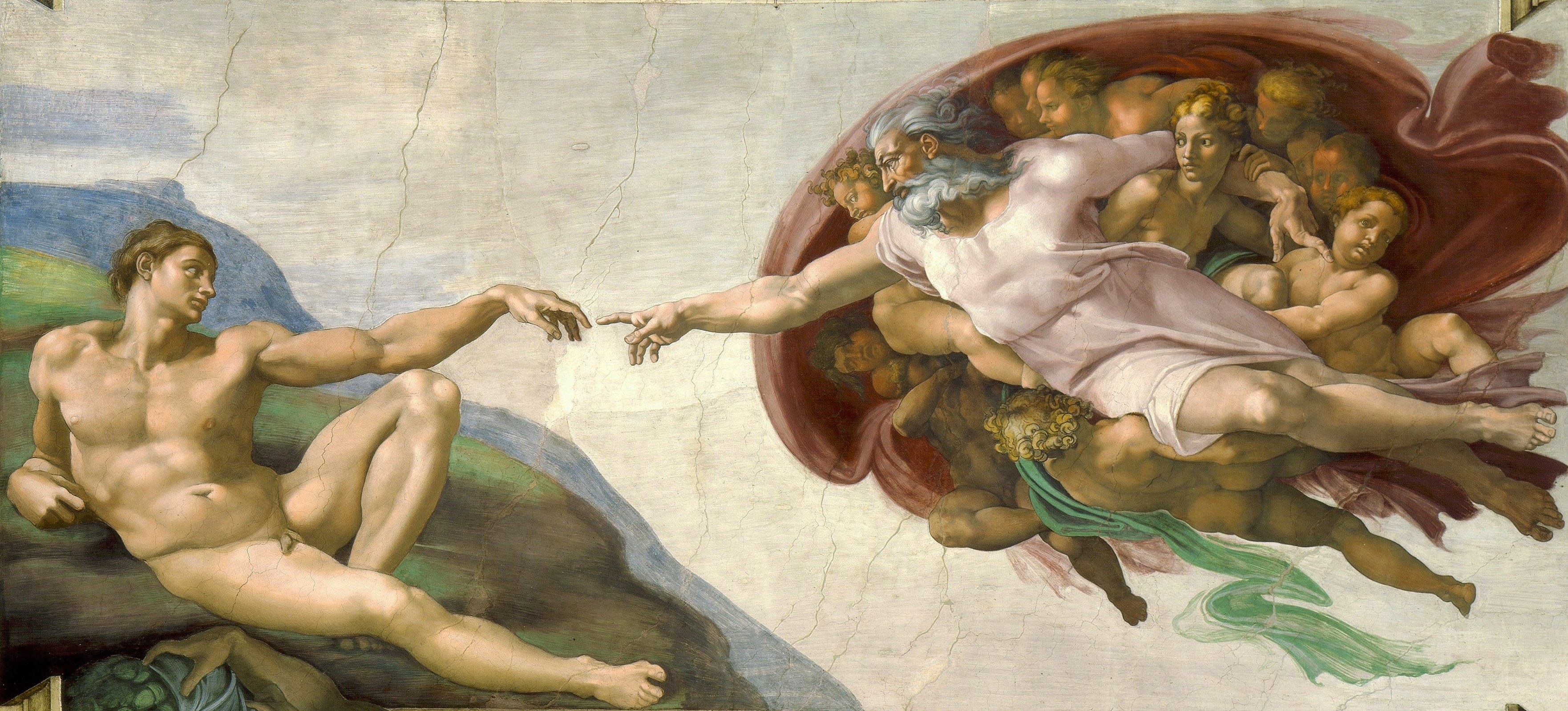
    Because in the Geomytha model, the Big Bang is not primarily a historical claim. It is an archetypal mechanism: the conversion of undivided awareness into time-bound identity.

    And that is why the Big Bang and “creation ex nihilo” (creation from nothing) are the same story—told in different dialects.

    The Fourfold Lens

    Geomytha reads myths, scripture, and cosmology through one repeating technology of consciousness:

    • Isis (Earth / Awareness): undivided presence—prior to narrative, prior to separation.

    • Osiris (Moon / Reflection): the mirror of awareness—coherent, intelligible, still not fractured.

    • Set (Sun / Imagination): the reflective error—imagination overtakes reflection and turns “appearance” into “other.”

    • Horus (Illusion of Man / Identity): the time-bound ego—selfhood as story, continuity, and history.

    This is not a metaphor laid on top of reality. It is the mechanism by which “reality” becomes experience at all.

    Ex Nihilo Does Not Mean “From Nothing”

    In the usual reading, ex nihilo sounds like a statement about matter: God makes the world out of nothing.

    In this lens, ex nihilo is a statement about awareness.

    Isis is not a “thing among things.” Isis is the undivided field of being—the no-thing that is not empty, but pre-object.

    So creation “from nothing” means: form appears without a prior object-cause. Not because nothing happened, but because what it arises from is not a thing.

    Ex nihilo is not nihilism.
    It is pre-thingness.

    The Non-Dual Ground: Isis

    Non-duality doctrine—whether Advaita, Dzogchen, or the deeper current beneath mysticism—makes one radical claim:

    The ground is not divided.

    In Geomytha, that ground is Isis.

    Isis is not “earlier” than time. Isis is beneath time. That is why the question “What happened before the Big Bang?” is already a category error. “Before” is a Horus word. Isis is not inside Horus.

    Non-duality is simply the refusal to grant ontological status to the split.

    Osiris: Coherent Reflection Without Separation

    Osiris is what happens when awareness reflects itself cleanly.

    Osiris is not yet the fall. Osiris is the first intelligible coherence—presence knowing itself as presence.

    This is the most important subtlety: reflection is not the enemy. Reflection is the mirror that allows awareness to be lucid.

    The enemy is what comes next: when reflection is seized and reinterpreted as a separate world.

    Set: The Big Bang as the First Successful Cut

    Now we can say it plainly:

    In Geomytha, the Big Bang is Set.

    Not Set as cartoon villain, but Set as principle:

    • the cut that converts wholeness into “this and that,”

    • the distortion that turns reflection into objects,

    • the engine that converts presence into perception and perception into compulsion.

    This is why the Big Bang and Genesis converge.

    Genesis says: “Let there be light.”
    Modern cosmology says: “initial conditions, expansion, structure.”

    But in your inner mechanics, “light” is the first intelligibility—the first stabilized coherence that can be experienced.

    And Set is the moment that coherence becomes separation.

    Not separation in reality—separation in interpretation.

    So the Big Bang is not merely the beginning of the Universe. It is the beginning of dualistic seeing.

    It is the first moment the mirror is mistaken for the world.

    Horus: Time as Ego-Time

    Once the cut is accepted, Horus is born.

    Horus is the time-bound self: the identity that experiences reality as a timeline with a past, a present, and a future.

    This is where non-duality doctrine becomes surgical:

    Non-duality insists time is not fundamental.
    Geomytha clarifies why: time is downstream of identity.

    Time is the trace left by alignment.
    History is the continuity-story needed to keep “me” intact.

    That is why your memory can feel both stable and strangely fluid: it is not merely retrieving inert data. It is continuously selecting and resealing a coherent branch.

    In this lens:

    • The past is not “behind you.”

    • The past is beneath you—continuously resolved by the way consciousness stabilizes now.

    The Big Bang Did Not Happen Once

    A stranger conclusion emerges:

    The Big Bang is continuous.

    It “happens” whenever undivided awareness is rendered into a particular world through identification and perception.

    Every moment attention collapses into separation, Set reenacts the Big Bang locally.

    Every moment identity hardens, Horus inherits a fresh slice of time.

    So the Big Bang is not simply “the origin of matter.”
    It is the origin of the story of matter.

    Ethics as Branch-Stability

    This also reframes the moral dimension without preaching.

    If your way of attending selects the world you inhabit, then “ethics” is not merely social compliance. It is branch-stability:

    • Clarity, compassion, integration are Osiris-aligned coherence—stable reflection.

    • Noise, fragmentation, compulsion are Set-dominant collapse—unstable branching and identity turbulence.

    Free will is not unlimited power.
    It is navigational freedom within topology: what you can stabilize depends on what you can sustain in awareness.

    To “sin,” in this lens, is not to break a rule.
    It is to misread the mirror, worship the cut, and call the resulting trance “reality.”

    The Clean Synthesis

    So let’s stitch it into one sentence:

    Non-duality (Isis/Osiris) is the undivided ground; the Big Bang (Set→Horus) is the recurrent cut that converts that ground into time, world, and self.

    Genesis says “creation from nothing.”
    Physics says “boundary conditions.”
    Geomytha says: “from no-thing, the self-story begins.”

    The Universe does not begin when matter explodes.
    It begins when awareness forgets it is awareness and becomes a witness trapped inside its own reflection.

    And it ends—moment by moment—when that forgetting relaxes.

    Because the deepest secret is not that the cosmos started.

    It’s that the cosmos is the way undivided presence looks when it is filtered through the illusion of man.

    Follow / Subscribe for more Geomytha decoding:
    X: @mythicgeometry
    Instagram: @mythicgeometry
    TikTok: @Geomytha
    Patreon: Geomytha Noir
    Substack: Geomytha Noir
    YouTube (Mythic Geometry Center): geomytha

    This Substack is reader-supported. To receive new posts and support my work, consider becoming a free or paid subscriber.

  • Jules Verne and the Machine That Dreams the World

    Jules Verne and the Machine That Dreams the World

    Jules Verne didn’t merely write adventure stories. He wrote maps of consciousness disguised as travelogues—and the maps recur with such consistency that they read like a single diagram rendered four different ways.

    Geomytha names that diagram with four pressures that keep reappearing across myth, scripture, and pop culture:

    This Substack is reader-supported. To receive new posts and support my work, consider becoming a free or paid subscriber.
    • Isis — undivided awareness, the living field.

    • Osiris — reflection that coheres, perfects, and orders.

    • Set — imagination as takeover: the perceptual overlay that hijacks the field.

    • Horus — the time-bound ego identity: the “I” forged from story, schedule, wound, and role.

    Verne’s genius is that he doesn’t preach this. He stages it mechanically. The plot itself becomes the experiment.

    Four novels, read together, form a complete Geomytha circuit:

    1. Twenty Thousand Leagues Under the Seas — the enclosure.

    2. Journey to the Center of the Earth — the descent.

    3. Around the World in Eighty Days — the clock-trance.

    4. The Mysterious Island — the rebuild.

    If you want to see how imagination colonizes reflection, and how identity hardens around time, Verne is one of the cleanest “technical writers” ever produced—because his technology is never just technology. It is always a metaphor for mediation.

    1) Twenty Thousand Leagues Under the Seas — The Nautilus as Perceptual Regime

    The ocean is the story’s quiet protagonist. It functions as the prior condition: vast, indifferent, inexhaustible. Not a concept. Not a narrative. A field.

    That is Isis.

    Then comes the Nautilus.

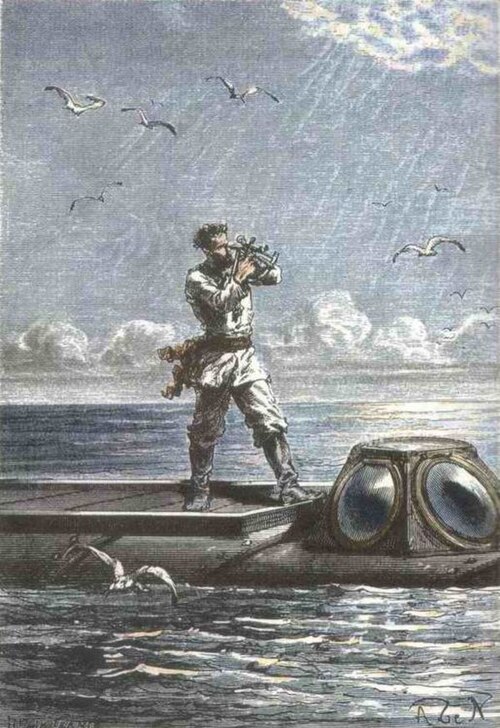
    The Nautilus is not simply a submarine. It is a sealed reality-generator: a mobile world that filters what can be seen, when it can be seen, and how it will be interpreted. This is the crucial distinction Geomytha always returns to:

    • The field is not destroyed.

    • The field is curated—until the curated version becomes “more real” than what it edits out.

    That is Set.

    Set doesn’t conquer by brute force. Set conquers by building an environment in which the mind no longer has access to unmediated being. The Nautilus is a false center: a false phallus of mastery, control, insulation, and selective revelation.

    And then there is Nemo—the operator.

    Nemo reads like Horus forged by injury: the time-bound identity built from a timeline of grievance and mission. He is not merely a man with a past; he is a man who has become his past. His “I” is the scar turned into a throne.

    Meanwhile, Osiris appears in Aronnax’s best moments: the clear, contemplative seeing that wants to reflect the ocean without possessing it. Yet Osiris is under constant pressure inside the hull, because the hull is Set’s preferred architecture.

    The lesson of the novel is not “technology bad.”
    The lesson is: a device can become an entire cosmology. And once you live inside it, the device decides what “real” means.

    2) Journey to the Center of the Earth — Descent Beneath the Surface-Mind

    If Leagues is about entering the enclosure, Center of the Earth is about being stripped by the real.

    The descent is the plot—but the descent is also the teaching.

    On the surface, the mind believes it commands the world through concept. It believes the map is sovereign. It believes knowing a thing is the same as touching it. That is Set’s favorite trance: intellectual possession.

    But the earth below does not negotiate.

    The underworld in this book is Isis in a different costume: heat, darkness, pressure, scale—reality prior to interpretation. You can’t “win” against it. You can only align with it.

    That alignment is what restores Osiris. Reflection becomes honest when it is forced to answer to the strata. Measurement becomes humility. Method becomes reverence. The deeper you go, the more the false phallus of conceptual mastery is exposed as fragile.

    The Horus-mask—“we are explorers, we are the ones who know”—gets broken and remade over and over. Identity cannot remain rigid in a world where the earth is bigger than your story.

    This is why the novel reads like a ritual.

    Descent isn’t punishment. It’s correction: the mind gets pulled beneath its own propaganda, until reflection must become true again.

    3) Around the World in Eighty Days — Time as Set’s Operating System

    This is one of Verne’s most precise spiritual satires, even though it’s presented as a charming wager.

    Because the real antagonist here is not a man. It’s not even geography.

    It’s clock-time.

    In Geomytha, Set doesn’t only appear as fantasy. Set appears as abstraction that colonizes the nervous system. And the most socially acceptable abstraction on earth is time-as-tyrant: timetables, minutes, deadlines, the sun turned into a measuring stick.

    Phileas Fogg is the Horus archetype nearly in pure form: identity reduced to schedule. A self built from procedure. A calendar with legs. He doesn’t live time; he is owned by it.

    This is the brilliant pressure Verne applies: the world keeps intruding as the unplanned. Weather. Delay. Accident. Encounter. Relationship. A human heartbeat.

    That intrusion is Isis—presence refusing to be flattened into grid. And Osiris appears in the only way it can appear here: responsiveness. Intelligence serving the real rather than serving the plan.

    The book’s hidden question is not “can you make it in time?” It’s:

    What kind of self is produced when the future is always the court you’re trying to please?

    If Horus is time-bound identity, Eighty Days shows the forging process: the ego is a contract with the future, and Set holds the pen.

    4) The Mysterious Island — Rebuilding Without Creating a New Idol

    After enclosure, descent, and clock-trance, Verne gives the reconstruction.

    The island is pure given-ness: necessity, exposure, immediate reality. Nothing theoretical survives hunger and cold. This is Isis as ground.

    From that ground, the castaways build. Here, reflection becomes sacred: Osiris as coherent order, as technique aligned with life. You could call it “civilization,” but in Geomytha terms it is simpler:

    reflection serving awareness.

    Yet Verne adds one more layer—the most important layer—because Set does not give up when you start doing things correctly.

    Set returns as the temptation of unearned power: the hidden intervention, the miracle-tech, the god in the machine. The danger is subtle: it is not that help exists; it is that help becomes a false center.

    The island tests whether the community’s identity becomes:

    • a tool (Horus in service), or

    • a crown (Horus enthroned).

    Because the moment the builders begin to worship their own competence, the Osiris principle flips. Order stops protecting life and starts feeding on life. The same structure that can be shelter becomes a prison the moment the center is misplaced.

    This is the book’s quiet moral: you can rebuild a world—and still rebuild the trance—if you mistake power for presence.

    The Four-Novel Arc: A Single Circuit

    Read as one continuous diagram, the sequence is startlingly clean:

    1. Leagues: a perfect enclosure that turns presence into curated spectacle.

    2. Center: a descent that strips the false phallus of mastery and forces reflection to become true.

    3. Eighty Days: the discovery that time itself can be the enclosure—Set’s invisible empire.

    4. Island: reconstruction, with the final test: can reflection remain aligned without becoming an idol?

    This is why Verne feels modern. He is writing about the same dilemma our age lives inside:

    • how instruments become realities,

    • how abstractions become prisons,

    • how identity becomes a schedule,

    • and how rebuilding can either restore presence or merely reinvent the mask.

    The adventure is the surface.
    The circuit is the point.

    If this resonates

    X: mythicgeometry
    Instagram: mythicgeometry
    TikTok: Geomytha
    Patreon: Geomytha Noir
    Substack: Geomytha Noir
    YouTube: geomytha

    This Substack is reader-supported. To receive new posts and support my work, consider becoming a free or paid subscriber.
  • 1984 (George Orwell) through Geomytha’s Isis–Osiris–Set–Horus lens

    1984 (George Orwell) through Geomytha’s Isis–Osiris–Set–Horus lens

    Orwell’s title is not merely a date; it is a jurisdictional timestamp—a way of saying: reality is now whatever the time-bound identity system says it is. In Geomytha, that is the definitive signature of Horus (time-bound ego identity) being stabilized and enforced by Set (imagination/perception as domination) against Osiris (clear reflective consciousness), with Isis (pure awareness) treated as the enemy because it cannot be administered.

    1) “1984” as the legal fiction of time

    A year-number is an identity tag for an era: it compresses the living present into a label. That is Horus’s core move—turning immediate being into a managed narrative about being. The title therefore announces the book’s primary object: the construction of a time-bound “self” inside a time-bound “world.”

    In Geomytha: it is the moment the 1–9 illusion is treated as the only admissible pattern, and the circle (“Is”) is treated as subversive.

    2) The Party as Set: perception replacing presence

    The Party’s power is not mainly physical violence; it is epistemic capture—controlling what counts as “real.” That is Set’s function in your framework: fracturing Osiris (clean reflection) into mediated perception, then calling the mediation “truth.”

    • “Newspeak” is Set’s surgical tool: it narrows the mind’s available symbols so Isis (wordless awareness) cannot be recognized, and Osiris (clear seeing) cannot articulate itself.

    • “Doublethink” is the reflective error formalized: the psyche is trained to treat contradiction as coherence, i.e., to accept a broken mirror as “accurate.”

    3) Big Brother as the false phallus: authority in the head

    Big Brother is a projected god-face—an externalized “I” that the population must internalize. In Geomytha, this is the false phallus mechanism: consciousness is pulled up into the head-system (throat/pineal/crown) and forced to reflect authority rather than reflect awareness.

    Big Brother is not a person; it is the image-generator that converts living presence into a supervised identity. In practice: the obelisk without the pool—command without reflection.

    4) Winston as Osiris under siege

    Winston’s initial rebellion is not “political” in the deepest sense; it is Osiris trying to return to Isis—trying to recover a clean inner reflection that is not authored by the system.

    • His diary is an Osiris act: reflective consciousness attempting to witness truth without permission.

    • His love affair is likewise: a bodily return toward immediacy, attempting to relocate consciousness from the managed head-world back into lived presence.

    But the novel is tragic precisely because Winston’s Osiris impulse is captured and repurposed—a recurring theme in Geomytha where the system allows “awakening” only as a controlled pathway back into Horus.

    5) O’Brien and Room 101: the conversion ritual into Horus

    O’Brien represents Set’s most advanced form: not crude force, but re-education of reality itself. Room 101 is the sacrament of identity manufacture: it is where the self is broken until it accepts the imposed mirror.

    This culminates in the book’s central metaphysical verdict:

    • “2 + 2 = 5” is not a math claim; it is the proclamation that reflection is no longer anchored in the real. Once the mind accepts that, it has surrendered Osiris and installed Horus: a time-bound identity that survives only by compliance with the system’s imagination.

    6) The real horror: false awakening as the stable endpoint

    The ending is not merely defeat—it is false unity. Winston does not simply submit; he loves Big Brother. That is the Ouroboros dynamic in narrative form: the psyche completes the circuit and experiences it as “peace.” The system has succeeded in getting consciousness to identify with its own captor—Horus enthroned.

    7) What 1984 is ultimately saying in Geomytha

    Orwell’s world is a demonstration that:

    • Isis (pure awareness) cannot be governed, so it must be made unspeakable.

    • Osiris (clear reflection) must be fractured into contradiction and fear.

    • Set (imagination/perception-as-control) must become the only permitted lens.

    • Horus (time-bound ego identity) must become the citizen’s “self,” maintained by surveillance, language constraints, and ritualized reconditioning.

    So 1984 is not only a political warning; it is an archetypal anatomy of how a civilization manufactures ego by regulating perception—and why the final tyranny is always the same: a system that outlaws the simple, prior fact of being.

  • Animal Farm Was Never About Pigs

    Animal Farm Was Never About Pigs

    How Orwell’s fable secretly maps the mechanics of consciousness (and why the “farmers’ return” is the heel-grab)

    Most people read Animal Farm as a political warning: revolutions can betray themselves, language can be weaponized, and power tends to consolidate. That reading is correct—and it is enough.

    But the book is also precise in a second way: it shows how an inner revolution collapses, step by step, when lived truth is replaced by managed perception.

    This essay offers a balanced approach: we’ll keep Orwell’s historical/political meaning intact, while also showing how the plot cleanly encodes a deeper pattern—what I call the motor of consciousness.

    The standard reading (and why it matters)

    Orwell wrote Animal Farm as a satirical allegory of the Russian Revolution and the rise of Stalinism: ideals devolve into a new ruling class; propaganda rewrites memory; fear and scapegoats keep the public compliant; and the oppressed become indistinguishable from their former oppressors.

    That political reading is not optional. It’s the book’s public face, and Orwell engineered the story to make that argument memorable.

    What I’m proposing is not a replacement—but an additional layer: the same events also map a universal psychological mechanism that repeats in movements, religions, relationships, and even inside one person’s mind.

    The four-stage motor: Awareness → Reflection → Imagination → Identity

    Here is the lens I’m using:

    • Isis (Awareness / Earth): direct presence; the lived “is.”

    • Osiris (Reflection / Moon): the honest mirror; meaning-making that still answers reality.

    • Set (Imagination / Sun): perception hijacked into narrative, fear, and control—where “what’s true” becomes “what’s useful.”

    • Horus (Time-bound identity / Illusion of man): the role-self that lives inside the story—loyalist, leader, traitor, enemy.

    Orwell’s farm begins as a lived field. Then it becomes a story. Then the story becomes a system. Then the system produces identities that can be managed.

    That is the motor.

    Old Major: the sincere mirror that becomes a template

    Old Major is not “the villain.” He is Osiris: a legitimate reflection of exploitation and a vision of a better life.

    But the trap is embedded in the structure of every utopian dream: it moves attention into future-time.

    The moment liberation becomes a promised future—after the revolution, after the windmill, after the plan succeeds—presence is vulnerable. Set thrives in future-time because future-time requires management, interpretation, and authority.

    Old Major offers a true mirror. Set later uses that mirror as a blueprint for control.

    The Commandments: when language becomes the replacement for reality

    At first, the Commandments feel like a stabilizing social mirror. But the genius (and horror) of Orwell’s design is that the Commandments become editable.

    When rules can be revised without accountability, the rule is no longer truth; it is a control surface.

    The animals are trained to doubt their own memory and outsource discernment to the authorized interpreter. In political terms: propaganda. In psychological terms: the moment your lived experience becomes secondary to the story you are told about your experience.

    This is where Set enters fully—not as fantasy, but as managed perception.

    Napoleon and Snowball: two modes of the same takeover

    Many readers treat Snowball as the “good leader” and Napoleon as the “bad leader.” Orwell is subtler than that. Both are part of the same engine.

    • Snowball represents visionary Set: plans, diagrams, persuasion, the shining future.

    • Napoleon represents coercive Set: consolidation, secrecy, fear, enforcement.

    Both yield the same outcome: Horus—the time-bound identity roles that define who you are allowed to be: loyalist, dissenter, traitor, defender.

    If you can assign a person a role, you can predict them, police them, and punish them.

    Squealer: the serpent function

    Squealer is the book’s purest mechanism: the translator who converts lived reality into authorized meaning.

    • Hunger becomes “ration adjustments.”

    • Failure becomes “necessary sacrifice.”

    • Memory becomes “misremembering.”

    • Doubt becomes “traitorous thought.”

    He rarely needs to change the material conditions. He changes what the conditions are permitted to mean.

    In your own life, this is the voice that says, “Don’t trust what you see—trust the interpretation.”

    Boxer: the tragedy of devotion without discernment

    Boxer is the farm’s engine and its sacrifice.

    He embodies an immense good—strength, sincerity, willingness. But those virtues are harvested when he replaces discernment with slogans:

    • “I will work harder.”

    • “Napoleon is always right.”

    Politically, it’s the tragedy of the working class being used. Psychologically, it’s the moment reflection surrenders its authority to an external idol.

    When that happens, Horus is installed: you become a role inside the story.

    The windmill: future-time as a control technology

    The windmill is not just an economic project. It is a temporal machine.

    It keeps attention permanently in the future, which justifies permanent sacrifice in the present:

    • Work more now.

    • Eat less now.

    • Endure now.

    • Trust later.

    Set loves the windmill because it turns consciousness into a treadmill.

    The farmers’ return: why it signifies the heel-grab

    What does it mean when the farmers come back to retake the land?

    On the surface, it’s a predictable counterattack—those with power attempt to reclaim what they lost. Politically, it’s the external threat that helps justify internal consolidation.

    In the motor-of-consciousness lens, it’s a heel-grab.

    A heel-grab is the reflex that pulls awareness back into the old loop at the moment it approaches freedom.

    Here is the exact mechanism:

    1. A brief opening appears (post-rebellion clarity, possibility, shared purpose).

    2. A threat of regression emerges (“Jones might return”—the old world).

    3. Fear collapses presence into future-time (“we must secure what we have”).

    4. Emergency logic authorizes centralized control (“someone must decide; someone must enforce”).

    5. Identity roles crystallize (defender, loyalist, traitor).

    6. Managed perception becomes permanent (“don’t trust your eyes; trust the line”).

    So yes: the farmers’ return functions as the heel-grab because it provides the justification for the entire Set apparatus to become “necessary.”

    It does not matter whether the threat is real or exaggerated. Once fear becomes the organizing principle, the takeover is already underway.

    “All animals are equal…”: the moment reality splits in two

    When the famous line appears—“All animals are equal, but some are more equal than others”—the system has completed its conversion.

    There is now:

    • lived reality (cold, hunger, exhaustion), and

    • declared reality (progress, equality, necessity).

    When declared reality overrides lived reality, Set has won. Horus then survives by becoming the identity that can tolerate contradiction: the loyal animal who learns to doublethink.

    The ending: why pigs and men become indistinguishable

    The final scene is not merely “power corrupts.” It’s a structural claim: a revolution built on perception-management cannot end anywhere but a new mask of the old regime.

    When the animals cannot tell pig from man, the book is showing the loop closing:

    • the new identity becomes indistinguishable from the old identity,

    • because identity itself—when enthroned—is the medium through which domination repeats.

    Why this matters beyond politics

    You don’t need a revolution to live this pattern.

    You can see it in institutions, families, and personal psychology:

    • A truthful observation becomes an ideology.

    • An ideology becomes a narrative machine.

    • The narrative machine produces roles.

    • The roles become “who I am.”

    • And then the original truth is no longer accessible except through authorized interpretation.

    Orwell wrote a political fable. He also accidentally wrote an x-ray of how consciousness is overtaken.

    The farmers’ return is the heel-grab because fear of going backward is the fastest way to keep a being from going forward.

    If this resonates

    I’m building a myth-analysis engine that scans scripture, nursery rhymes, films, and songs for repeating archetypal patterns—especially the conversion of presence into thought, and thought into identity.

    X: @mythicgeometry

    Instagram: @mythicgeometry

    TikTok: @Geomytha

    Patreon: Geomytha Noir

    Substack: Geomytha Noir

    YouTube: Geomytha

  • The Two Meanings of Perception: How Myths Encode the Moment Awareness Becomes a World

    The Two Meanings of Perception: How Myths Encode the Moment Awareness Becomes a World

    Paid essay — public preview. This page introduces the original essay. The complete argument, examples, and conclusion are available to paid Geomytha subscribers on Substack.

    Most spiritual language collapses a crucial distinction: it uses perception to mean both (1) what simply appears and (2) what the mind makes of what appears.

    In my model, those are not the same event. They are two different regimes of consciousness—and myths repeatedly dramatize the instant one regime converts into the other.

    What follows is a map: Awareness → Reflection → Projection → Identity, and how classic stories encode that conversion as “the fall.”

    The Fourfold: Awareness, Reflection, Projection, Identity

    1) Awareness (Isis)

    Awareness is prior to division. It is not “a viewpoint.” It is the ground in which all viewpoints appear. It does not require meaning to be intact.

    If you want one phrase: presence before separation.

    2)…

    Read the complete essay on Substack →

    This WordPress page preserves the essay’s place in the Geomytha archive, its original title and subtitle, and its publication date. The full subscriber edition remains protected on Substack.

  • Led Zeppelin vs. Aerosmith: Two Band Names That Confess the Imagination Spell

    Led Zeppelin vs. Aerosmith: Two Band Names That Confess the Imagination Spell

    Most people treat band names like branding. In my model, a band name is a sigil—a compressed myth that tells you what force the music will amplify inside the listener.

    Two names do this with unusual clarity: Led Zeppelin and Aerosmith.

    Both encode the same archetype: Set—the power of imagination that overtakes consciousness, lifts it out of the ground of presence, and installs a time-bound identity that feels like flight.

    But they do it in two different ways.

    The Four-Archetype Key

    I read symbols through a simple sequence:

    • Isis (Earth / Awareness): presence prior to thought.

    • Osiris (Moon / Reflection): the mirror—mind as image, memory, meaning.

    • Set (Sun / Imagination): projection—desire, fantasy, narrative, ambition, escape.

    • Horus (Illusion of Man / Identity): the time-bound self that results—the mask that believes it is “me.”

    Set is not merely “fantasy.” Set is the engine of departure: the force that persuades awareness to leave what is for what could be—and then convinces the resulting identity that this departure is progress, destiny, or salvation.

    Led Zeppelin: The Impossible Float

    A zeppelin is an archetypal object because it sits between worlds. It is a sky-ship—an engineered body that occupies the air like a moon-object should: hovering, luminous, above the ordinary.

    Now add the word “Led” (lead).

    Lead is the metal of gravity. It is what sinks. It is weight. It is inevitability.

    So the name becomes a complete Set-statement:

    A “lead zeppelin” is something that appears to float, but can only sink.

    That’s Set’s genius. It offers the feeling of ascent while hiding the logic of collapse inside the very material of the ascent.

    In lived experience, this is the imagination spell:

    • A new story about myself will lift me.

    • A new identity will free me.

    • A new future will redeem me.

    • A new peak will finally resolve the pain.

    The “zeppelin” is the dream of elevation. The “lead” is the cost.

    Set doesn’t need to destroy awareness openly. It only needs to make awareness chase altitude.

    Aerosmith: The Factory That Builds Flight

    If Led Zeppelin is the paradox (floating built from weight), Aerosmith is the mechanism (flight built by forging).

    Break it down:

    “Aero”

    Air, altitude, speed, lift.

    “Aero” is the move away from the ground of direct presence. It’s the urge to rise into possibility, romance, fantasy, and escape. That is Set’s preferred element: the aerial viewpoint.

    “Smith”

    A smith is a forger—one who shapes raw material into form.

    In my model, that is exactly what imagination does with consciousness:

    • it takes raw being (Isis),

    • reflects it into images (Osiris),

    • then forges those images into persona, narrative, and destiny (Set),

    • producing the time-bound self (Horus).

    So Aerosmith reads like a literal job title:

    the one who forges air—the craftsman of uplift, the maker of flight-experience.

    This is Set not as tragedy, but as industry: imagination as a production line.

    The Proof in Two Song Titles

    A band name can be a sigil, but song titles are where the spell becomes explicit—because the title announces the mechanism before a single lyric is heard.

    “Love in an Elevator” (Aerosmith)

    This title is Set’s “manufactured uplift” in plain language.

    • An elevator is engineered ascent: you do not rise by nature (stillness, breath, presence), you rise by mechanism—a device, a system, a hack. That is the smith-forge logic: uplift as construction.

    • Love functions as sacred fuel. Set rarely sells itself as mere appetite; it spiritualizes appetite into destiny—this pull is meaningful, therefore it is true.

    • The hidden confession: an elevator is not flight. It is vertical motion inside a box.

    That box is Horus: identity “going up” while remaining enclosed—time-bound, status-bound, story-bound.

    So the title encodes: desire inside a machine that simulates transcendence. It feels like rising; it is still a container.

    “Stairway to Heaven” (Led Zeppelin)

    This title is Set’s “doomed buoyancy,” but dressed in devotion.

    • A stairway is ascent by steps—by sequence, effort, and time. You get to “heaven” by accumulating progress: one rung, one attainment, one revelation at a time.

    • That is how Set converts spirituality into a project: the present is never enough; the sacred is always later, higher, after one more step.

    • Unlike the elevator (instant engineered lift), a stairway implies discipline and pilgrimage, which makes the spell harder to detect. It feels noble. It feels earned.

    That nobility is Set’s camouflage.

    So the title encodes: salvation as upward narrative. Awareness is pulled away from Isis (ground) into Osiris-as-image (the concept of “heaven”), then captured in Horus (the climber-self who is becoming someone).

    Other Set-Coded Band Names

    (rapid pattern scan: the same imagination engine in different costumes)

    If this reading is real, it should reproduce across culture. It does. Here are additional band names that carry the same Set signature—ascent, weaponized desire, engineered power, romanticized projection—even before you read a lyric.

    Def Leppard

    A “defiant leopard” reads as predatory glamour: speed, appetite, stylish danger. Set as instinct made heroic—desire that calls itself freedom.

    Guns N’ Roses

    A near-perfect Set formula: weapon + flower. Force fused with beauty. Violence fused with romance. Imagination’s ability to aestheticize power and make compulsion feel like poetry.

    Journey

    The name itself is deferred arrival—meaning always “ahead.” Set as becoming: the endless road that keeps Isis (presence) postponed.

    Boston

    A destination-name functioning as identity. Set loves the myth of “somewhere”—the promised place where the self will finally be complete.

    Air Supply

    Manufactured atmosphere. Set as engineered uplift—the system that provides the “air” your persona breathes, like an externalized elevator.

    Electric Light Orchestra

    “Electric light” is artificial illumination: light that resembles revelation but is produced by a grid. “Orchestra” adds coordinated spectacle—identity as staged radiance.

    Imagine Dragons

    Almost a confession: “imagine” plus mythic beasts. Set as creative power that can inspire—or overtake—by replacing what is with what is vivid.

    Dream Theater

    Dreams staged as performance. Set as imagination becoming a venue where the self is both actor and audience—Horus applauding its own mask.

    These aren’t “proof” by themselves. They are corroboration: the same architecture of ascent, glamour, projection, and constructed identity repeating in different forms.

    One Archetype, Two Confessions

    Both Led Zeppelin and Aerosmith encode Set, but they emphasize different parts of the imagination spell:

    Led Zeppelin shows Set as doomed buoyancy:

    the glamour of ascent with the certainty of sinking.

    Aerosmith shows Set as manufacture:

    the craft of producing uplift—flight as a made thing.

    And the two song titles make the contrast surgical:

    • Elevator = mechanized transcendence, quick lift, boxed ascent.

    • Stairway = devotional transcendence, earned lift, delayed salvation.

    Different methods. Same outcome.

    In both cases, Set’s aim is identical:

    to convert awareness into a project,

    to convert presence into a narrative,

    to convert the Is into a becoming.

    That “becoming” is Horus—the identity that lives inside time.

    The Exit: Stop Trying to Fly as a Thing

    Set overtakes you by persuading you that you must become something else to be whole.

    These names and titles, read correctly, expose the trick.

    The real liberation isn’t a better elevator. It isn’t a stronger stairway. It isn’t a more refined zeppelin.

    It is the return to Isis: the ground that never left.

    Not “floating.” Not “climbing.” Not “forging.”

    Just being—before the story of being.

    Follow / support the project:

    YouTube: Mythic Geometry Center

    Substack: Geomytha Noir

    X: @mythicgeometry

    Instagram: @mythicgeometry

    TikTok: @Geomytha

    Patreon: Geomytha Noir

  • American Pie: The Circle That Got Sliced

    American Pie: The Circle That Got Sliced

    A Vortex Math reading of Don McLean’s lament—and the teen-comedy franchise that turned the same mechanism into a rite of passage.

    There are songs that feel like history, and songs that feel like initiation. “American Pie” is both: a cultural elegy on the surface, and—through your lens—a precise diagram of what happens when presence (Isis) is displaced by reflection (Osiris), overtaken by imagination (Set), and sealed into a time-bound identity (Horus).

    In Vortex Math terms, it is the story of the center being abandoned, and the system trying to compensate with louder and louder loops.

    The claim

    “America,” in this context, is not primarily a nation. It is a jurisdiction of consciousness—a collective field where the circle is turned into a commodity, coherence is replaced by spectacle, and identity is manufactured through time, status, and story.

    And the title tells you the whole thing at once:

    A pie is a circle you can cut.

    That is Set’s technique applied to Isis.

    1) The Opening Image: “Paper” as the first substitution

    The song begins with cold, newsprint, and delivery—an understated but exact depiction of the capture mechanism.

    • Paper is reality externalized into “report,” “headline,” “version.”

    • Delivery is the ritual of receiving life from outside rather than knowing it directly.

    • The body reacts first (shiver), and then the mind rushes to narrate.

    Isis is immediate. Osiris begins to comment. And the moment reflection becomes sovereign, the center is no longer lived; it is described.

    This is how the VMD “falls away” from the convergence point: not through evil, but through mediation—a subtle transfer of authority from being to information.

    2) “The day the music died”: Coherence replaced by culture

    In your system, music is not merely entertainment. It is inner coherence—the felt harmony that arises when reflection is transparent and serves awareness.

    So when “music dies,” what dies is not melody. What dies is the natural ordering of consciousness.

    And what replaces it is not silence—it is culture: eras, tribes, roles, reputations, and the collective agreement that this storyline is “reality.”

    This is the moment the system shifts from:

    • Osiris reflecting Isis (clarity, coherence), to

    • Set scripting Osiris (image, spectacle), to

    • Horus living inside the script (identity, persona).

    3) “American Pie”: the circle made edible

    A pie is wholeness rendered into portions.

    That single object encodes the whole sequence:

    • Isis: the undivided circle (being).

    • Set: the cut (distinction, concept, “this vs. that”).

    • Horus: the slice as identity (“my taste,” “my status,” “my era,” “my tribe”).

    So “American Pie” becomes a metaphysical title: the civilization-scale habit of turning wholeness into consumable identity units, then calling the consumption “life.”

    4) The Chorus: reincarnation as a sing-along

    The chorus is communal, repeated, ritual. That matters.

    A loop can be liberation or captivity:

    • Osiris repetition is harmonic: it returns you to the center.

    • Horus repetition is compulsive: it replaces the center with a slogan about the center.

    This is why the refrain hits like liturgy. It trains a shared emotional posture:

    • loss made pleasurable,

    • nostalgia made belonging,

    • “goodbye” turned into a performance.

    In your lens, this is the quintessential trap: people bond over the absence of presence instead of returning to presence. The song becomes a vehicle of collective identity—beautiful, true-feeling, and still a spell.

    5) The Levee, the Dryness, the “Spirits”: false sacraments

    The lyric landscape repeatedly gestures toward a place where “flow” should be held, preserved, and shared—and then shows it failing.

    That is the spiritual diagnosis:

    • the structure meant to hold the waters can’t hold them,

    • so the system replaces real communion with substitute communion—ritual without center.

    Whiskey and rye, gathering and singing, the social warmth of the group: these are not “bad.” They are compensations.

    VMD translation: when the convergence point is lost, the mind builds simulated centers—experiences that imitate wholeness while keeping wholeness out of reach.

    6) Jesters, kings, and shifting authorities: Set’s coup against reflection

    Across the song, authority is unstable. Symbols rotate. Roles blur. Everything becomes performance.

    That is Set’s signature:

    • reality becomes image-management,

    • meaning becomes manufactured,

    • and reflection stops clarifying and starts enchanting.

    Set does not destroy Osiris; he uses Osiris. He turns reflection into a projector.

    And then Horus is born: the self who lives inside projection and calls it “me.”

    7) The “Book” and the “Sacred”: text replacing presence

    Whenever the lyric world gestures toward sanctity, doctrine, or the “book,” your lens reads the same substitution.

    • living law (direct being) becomes written law (identity’s script),

    • the symbol becomes the object,

    • the pointer is mistaken for the destination.

    This is not an argument against religion; it is a precision critique of mediation. The moment the living center is outsourced to a system, Horus gains a throne.

    8) The Ending: grief hardened into persona

    By the end, the tone feels not only mournful but settled—like a final narrative has been achieved.

    That closure is Horus:

    • identity that carries loss as a badge,

    • a completed autobiography,

    • a self stabilized by story.

    Set wins when experience becomes autobiography rather than aliveness.

    9) The American Pie Movies: the same mechanism, turned into a puberty rite

    The films make explicit what the song encodes.

    The franchise premise is a cultural sacrament: a group of teens bind themselves to a deadline identity—a pact to achieve a status milestone “before graduation.”

    That is Horus-time in contractual form.

    Film 1:

    American Pie

    — Horus is born through the deadline

    • “Before graduation” = identity forged by a clock.

    • Virginity becomes a concept-status object.

    • Desire is scripted by peers, media, and fear of exclusion.

    Set runs the internal theater (fantasy, comparison, performance), while Isis—the body, the real—keeps interrupting the script. The comedy is the symptom: reality refuses to obey the persona’s plan.

    Film 2:

    American Pie 2

    — Osiris misused as nostalgia fuel

    The sequel impulse is reflection: “let’s recreate the feeling.” That can be healthy Osiris—or it can be Horus using memory to reassert identity.

    Here, reflection tends toward:

    • repetition as proof (“we’re still us”),

    • memory as stimulant,

    • the past as a template.

    Osiris is present, but conscripted.

    Film 3:

    American Wedding

    — institutional Horus

    A wedding is identity made official: roles, vows, witnesses, public recognition.

    In your lens, this is the formalization of the persona: the self becomes a legal-social object—a story ratified by the tribe.

    Film 4:

    American Reunion

    — the nostalgia sacrament

    A reunion is the altar of time: “remember who we were,” “prove what we became.” It invites everyone to put the old mask back on.

    This is the song’s core warning, dramatized: the echo becomes home.

    The spin-offs — Set without restraint

    As the franchise expands, the formula often becomes more stimulus-driven: escalation, gimmick, spectacle. Archetypally: more Set, less Osiris—less reflection, thinner consequence, identity as consumption.

    10) What “America” is, finally

    Across the song and the films:

    America = the collective machine that trains consciousness to live in time-bound persona.

    • The song laments the loss of coherence and the rise of mediated culture.

    • The films depict the initiation ritual that inducts individuals into that culture: milestone, status, script, persona.

    Same mechanism; different genre.

    VMD Key: a reader’s decoder ring

    Use this on any song, movie, myth, or nursery rhyme:

    • Isis (Awareness / Earth): direct being, body truth, immediacy, the unsliced circle.

    • Osiris (Reflection / Moon): coherence, witness, clear meaning that points back to presence.

    • Set (Imagination / Sun): spectacle, projection, narrative intoxication, image replacing essence.

    • Horus (Identity / Illusion of Man): time-bound self, status milestones, roles, “my story,” “my slice.”

    The tell: if the text makes you feel profound while reinforcing persona, it is usually Set + Horus wearing Osiris’ clothing.

    Closing: how to “exit the chorus”

    The hidden instruction is not to perfect the narrative of loss.

    It is to return to the center—the unsliced circle—so reflection becomes transparent again.

    Not analysis as identity. Not nostalgia as belonging.

    Just the quiet reinstallation of Isis as primary.

    Mythic Geometry Center

    X: mythicgeometry

    Instagram: mythicgeometry

    TikTok: Geomytha

    Substack: Geomytha Noir

    Patreon: Geomytha Noir

    YouTube: Geomytha

  • The Joker and the Thief

    The Joker and the Thief

    Why this “two-character” motif is really one mechanism in disguise

    Some songs don’t merely tell a story; they diagram a process. The recurring pair—the joker and the thief—is one of those diagrams. It looks like two characters in a scene, but in my lens it’s a single force wearing two masks: the force that overtakes awareness, weaponizes reflection, and produces a time-bound ego identity.

    This is why the motif persists. It is not folklore. It is psychology. It is technology of consciousness.

    The core claim in my system

    In my framework, there are four recurring functions:

    • Isis / Earth: awareness as immediacy, the unmediated ground.

    • Osiris / Moon: reflection that can clarify awareness (true mirroring).

    • Set / Sun: imagination that overtakes reflection and becomes a projector.

    • Horus / Illusion of Man: the time-bound identity produced by the takeover.

    Within that map:

    • The Joker is Set as trickster: the reframing function. It converts reality into commentary—irony, analysis, cynicism, looping narratives. It makes direct being feel like a problem to solve.

    • The Thief is Set as usurper: the appropriation function. It takes what belongs to presence—attention, value, authority, life-force—and reallocates it to an identity economy: “my story,” “my grievance,” “my future,” “my plan,” “my image.”

    So the “joker + thief” pairing is best read as Set split into two roles:

    1. the mental spell (joker)

    2. the extraction of ownership (thief)

    And when those succeed, Horus appears: the felt sense of “me”—a time-based self that believes it is the seer, when it is actually the product of the spell.

    Why the Joker is not Osiris

    It’s tempting to say, “the joker is wisdom,” because jesters sometimes reveal truth. But in this lens, the joker is not truth-teller; the joker is the destabilizer—the one who turns the sacred into a punchline, or turns the immediate into a riddle.

    Osiris is not “clever.” Osiris is clear.

    Osiris is the function of reflection that returns you to what is, rather than launching you into what could be said about what is.

    That distinction matters:

    • Osiris reflection: mirrors presence and purifies it.

    • Set imagination: uses reflection as a stage, then replaces presence with theater.

    The joker is theater.

    The Thief’s real target: authority

    In songs, theft is often literal—money, jewels, a score. In the archetypal layer, the thief is after something more valuable:

    the authority to define reality.

    The thief steals by moving the center:

    • from awareness → to narrative

    • from being → to identity

    • from the present → to time

    • from direct knowing → to interpretation

    Once the center is moved, everything else becomes available for extraction: attention, emotion, behavior, even devotion. The theft is not merely taking things—it is taking the right to decide what matters.

    That is why the thief and joker travel together: the joker creates the fog; the thief collects what the fog makes easy to take.

    The Watchtower: where Osiris actually lives

    In Dylan’s “All Along the Watchtower,” the famous line places the two together in direct dialogue: the joker speaking to the thief. But the symbol that matters most is not either character.

    It is the watchtower.

    In my system, the watchtower is the Osiris function: the stable vantage of witnessing—seeing the whole exchange without becoming it.

    That’s the hidden key: the “way out” is not an argument that defeats confusion; it is a shift of seat. You do not escape Set by outsmarting Set. You escape Set by returning authority to the watchtower—by restoring awareness as the ground and reflection as a servant, not a master.

    Horus: the end product of the duo

    When the joker and thief succeed, the result is not merely “loss.” The result is a new identity structure:

    • A self that relates to reality through story.

    • A self that lives in time more than in presence.

    • A self that must manage image, outcome, security, and meaning.

    • A self that believes it is living, while actually maintaining a construct.

    That is Horus in this lens: the time-bound ego identity—useful for navigating the world, but disastrous when mistaken for the source.

    So the motif “joker and thief” is not two villains in a plot. It is the two-step manufacturing of Horus:

    1. Joker: destabilize presence into interpretation.

    2. Thief: relocate authority from awareness to identity.

    3. Horus: the identity takes the throne and calls itself “me.”

    Practical takeaway: how to recognize the motif in your own mind

    You can spot the joker and the thief in real time:

    The Joker signs

    • You can’t stay with what is; you must comment on it.

    • You turn sensation into story immediately.

    • You feel “confusion” that is really mental overactivity.

    • You seek an exit through explanation.

    The Thief signs

    • Your attention is compelled, captured, harvested.

    • Your emotional energy becomes “fuel” for a narrative.

    • You feel you must secure an outcome.

    • Your sense of authority moves from presence to the persona.

    The correction

    Return to the watchtower.

    Not as a concept, but as a posture: awareness prior to interpretation. Reflection without projection. Seeing without bargaining.

    That is the Osiris move: reflection that perfects consciousness rather than replacing it.

    Closing: why this motif matters

    The joker and the thief endure because they name an internal procedure.

    They are Set’s two masks:

    • the spell and the harvest

    • the joke and the theft

    • the fog and the claim of ownership

    And the watchtower endures because it points to the only real escape: not better stories, not sharper arguments, not more information—but restored authority of awareness, here, now.

    That’s the whole technology encoded in the motif.

    If you want, I can write a follow-up piece that applies this exact mapping line-by-line to All Along the Watchtower and then to Joker and the Thief, showing where the “watchtower” appears in each as an Osiris-rescue symbol.

  • Little Red Corvette: The Ego’s Vehicle Disguised as Romance

    Little Red Corvette: The Ego’s Vehicle Disguised as Romance

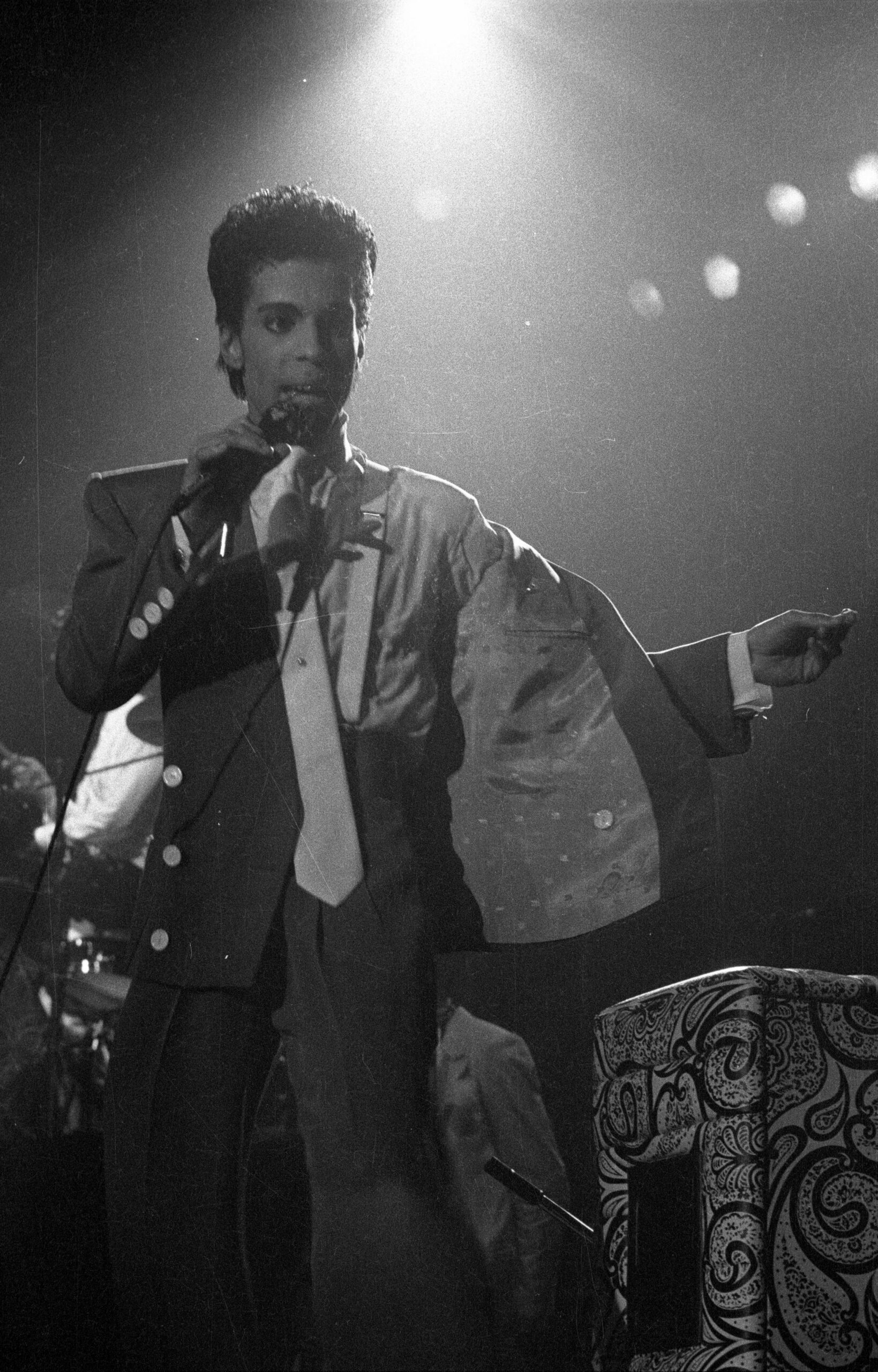
    Prince didn’t write a love song. He wrote a diagram.

    “Little Red Corvette” is the perfect pop-cultural encoding of how awareness gets painted into desire, then driven into a time-bound identity—until the whole thing becomes a glamorous loop you mistake for freedom.

    In my lens, the title alone gives away the mechanism:

    • Little: the infinite gets miniaturized. Vast awareness collapses into a manageable “me,” a private story, a personal chase.

    • Red: heat, urgency, appetite, warning. The color of impulse—Set’s favorite fuel.

    • Corvette: not a car, a vehicle—a moving identity-machine. The ego’s mobility device. The thing you think will take you somewhere else.

    So the title encodes the whole trap: finite identity (“little”), powered by impulse (“red”), traveling through time (“vehicle”).

    Isis: Awareness Before the Ride

    Isis is what the song never says out loud: before desire, there is being. Before the story, there is presence.

    That’s why the song works. You can feel the unspoken contrast: there’s a still, simple reality underneath everything—yet the system treats it like it’s not enough. That single assumption is where the takeover begins.

    Osiris: Reflection Turned Into a Substitute

    Osiris is reflection—the moonlight version of awareness. In a healthy system, reflection serves presence. It clarifies. It reveals.

    But in this song, reflection is treated as a source. The image becomes the thing. The vibe becomes reality. The mirror becomes the altar.

    This is the moment consciousness stops looking from awareness and starts looking at a picture of itself.

    The reflective faculty isn’t evil. It’s just easily misused. And once it is, the spell becomes self-reinforcing.

    Set: The Solar Takeover—Speed as Salvation

    Set is the sun in my system: projection, heat, fragmentation, time, urgency. Set doesn’t only deceive—he accelerates.

    And that’s why the corvette matters. A corvette is speed and presentation. It’s risk and thrill. It’s the promise of escape through motion.

    Set’s three tricks are all in this symbol:

    1) Acceleration

    Speed prevents stillness. If you can keep moving, you don’t have to return to the center. You don’t have to feel the quiet convergence point where presence reasserts itself.

    2) Risk as intoxication

    Risk converts awareness into adrenaline. Presence becomes stimulation. “I am” gets replaced by “I feel.”

    3) Objectification of the mirror

    The object becomes the screen. The ego projects into it, feeds on it, and then defends it like life depends on it.

    This is the reflective error: the self forgets that the reflection is derivative, then reorganizes reality around preserving the reflection.

    Horus: The Driver Who Thinks He’s Free

    Horus is the time-bound ego identity: the agent-self who says “I’m choosing,” “I’m in control,” “I can handle it,” “I know what I’m doing.”

    In Little Red Corvette, Horus appears in a double form:

    • Horus as the pursuer: the identity chasing the image, trying to possess it without being possessed.

    • Horus as the vehicle: the polished persona itself—built to be admired, driven, desired.

    That’s the real punchline: you’re not just driving the corvette—sometimes you are the corvette.

    A moving image. A performance. A machine built to outrun stillness.

    The Hidden Payload: Reincarnation as a Glamorous Loop

    Why does this song feel mythic? Because it encodes the romance-with-a-loop:

    Desire promises transcendence.

    Transcendence becomes identity.

    Identity requires repetition to stay alive.

    That is the reincarnation engine in everyday clothing: a cycle that sells itself as excitement. A loop that calls itself “living.”

    Set doesn’t imprison you with chains. He does it with a thrill. He makes the cycle look like freedom—then you defend it like it’s love.

    What Breaks the Spell (In Practice)

    The antidote isn’t moralism. It’s not “don’t want things.” It’s not “be pure.”

    The antidote is relocating attention:

    • from the moving mirror (image, speed, story)

    • back to the convergence point where reflection becomes clean again—because it stops being used as identity.

    When awareness stops outsourcing reality to the ride, the ride becomes just a ride. The corvette becomes a symbol again, not a destiny.

    And that is the entire teaching hidden inside the hook:

    If you live in the vehicle, you will confuse motion for liberation.

    Follow / Subscribe

    Substack: Geomytha Noir

    X: mythicgeometry

    Instagram: mythicgeometry

    TikTok: Geomytha

    YouTube: geomytha

  • New Line Cinema: The Birth of a Timeline Inside Awareness

    New Line Cinema: The Birth of a Timeline Inside Awareness

    A name can be a sigil. In my lens, “New Line Cinema” isn’t merely corporate branding—it is a concise description of how the illusion of “me” is manufactured: by drawing a line through what is naturally whole, then animating that line until it feels like reality.

    The “New Line”

    A line is the simplest symbol of linear time. It implies direction: before/after, past/future, cause/effect. The moment awareness accepts a “next,” it accepts sequence. Sequence is not evil; it is simply a spell: the conversion of the living present into a track that can be measured, compared, regretted, and rehearsed.

    In Isis terms, awareness is already complete—round, immediate, unbroken. The “new line” is the first incision: the choice (often unconscious) to prefer narrative over presence. The line is the beginning of division.

    The “Cinema”

    Cinema is not just storytelling; it is moving reflection. It is light projected onto a surface, broken into frames, arranged into the illusion of continuity. In other words, cinema is a perfect external metaphor for the internal mind:

    • Frame: a concept, a frozen interpretation

    • Cut: fragmentation masquerading as structure

    • Projection: the outward casting of an inward assumption

    • Plot: identity’s argument for its own necessity

    This is Set’s domain in my system: not merely “imagination,” but imagination that overtakes the primordial. The reflective error becomes total: the image is mistaken for the source, the symbol for the real.

    The Full Phrase as a Mechanism

    Put the words together and the meaning sharpens:

    New Line Cinema = a fresh timeline of moving images.

    That is the ego’s entire technology.

    Horus—the time-bound identity—does not appear as a villain with horns. Horus appears as an edit, a sequence, a story with a protagonist. He appears as the compelling continuity that arises when fragments are stitched into a line and then animated until they feel like a life.

    And this is why the name feels almost too perfect: it describes reincarnation-as-identity, not as a metaphysical claim but as a moment-to-moment process:

    1. Awareness is present (Isis).

    2. Reflection arises (Osiris).

    3. Imagination seizes the reflection and runs (Set).

    4. A stable “me” is minted inside a timeline (Horus).

    The “new line” is drawn again. The film plays again. The self feels real again.

    A Practical Ending

    So the question becomes: Where is the cinema playing in me right now?

    If you can locate the “new line”—the subtle insistence that this moment must become a story—you have already found the exit. Not by fighting images, but by remembering what images require to survive: your attention’s consent.

    Presence does not need a plot.

    Mythic Geometry Center

    X: mythicgeometry

    Instagram: mythicgeometry

    Substack: Geomytha Noir

    Patreon: Geomytha Noir

    TikTok: Geomytha

    YouTube: geomytha