Category: Uncategorized

  • The Cult of Visibility

    The Cult of Visibility

    Paid essay — public preview. This page introduces the original essay. The complete argument, examples, and conclusion are available to paid Geomytha subscribers on Substack.

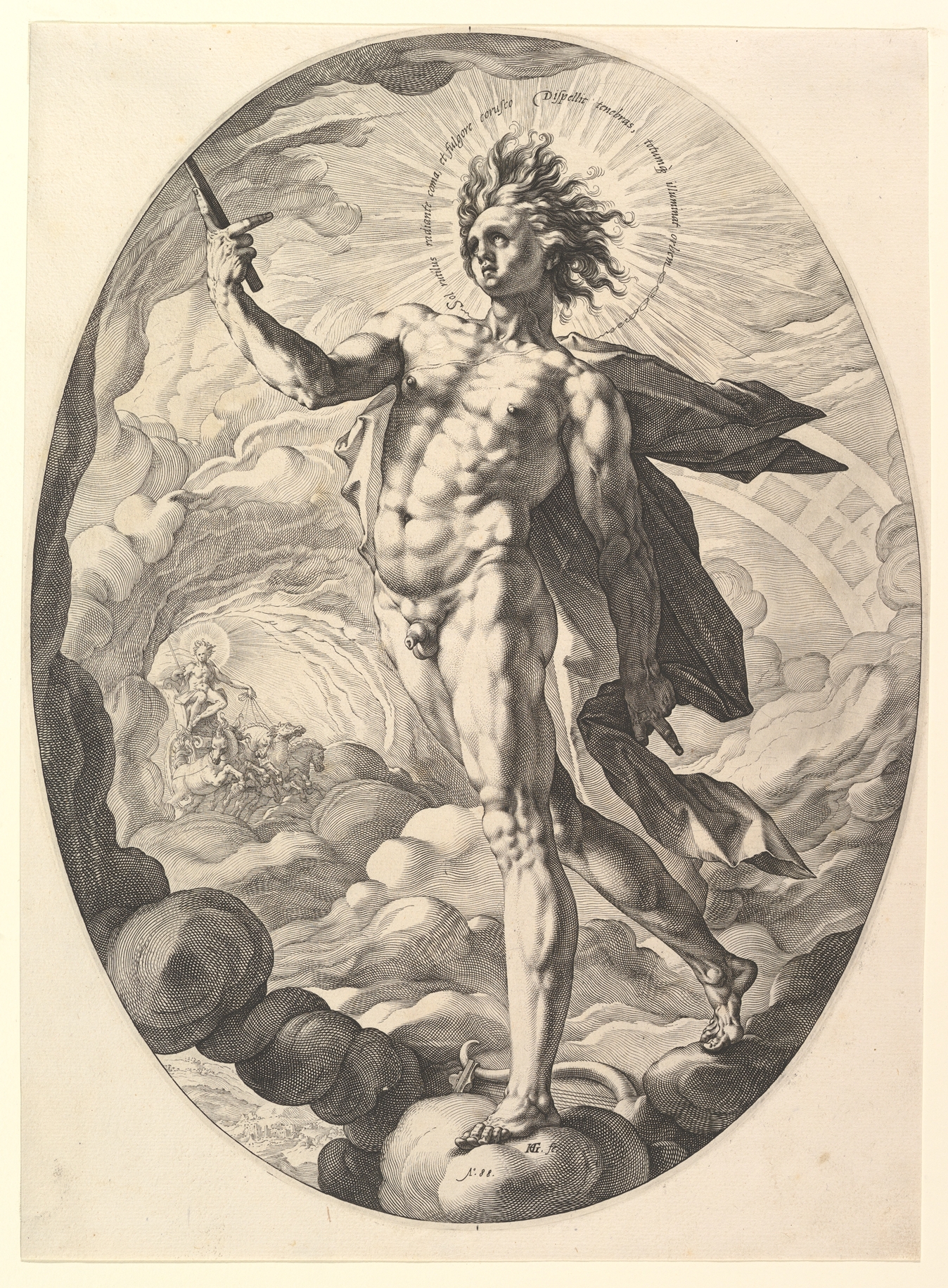
    Ra, Apollo, Lucifer, Yaldabaoth, the false messiah, and the solar trap in Geomytha

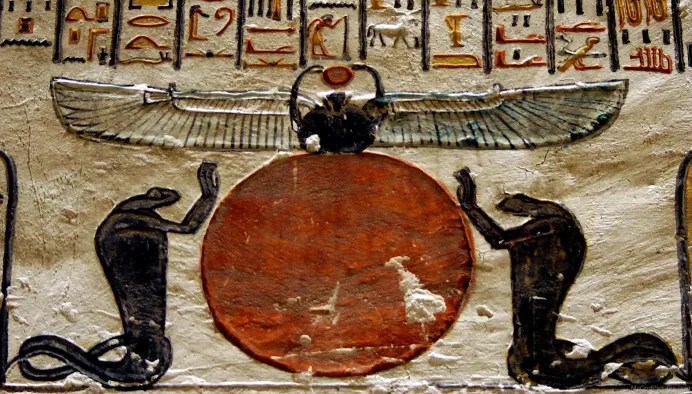
    In Geomytha, the sun is not the true provider. The sun is the visible claimant. It is the bright usurper that takes credit for a life rooted elsewhere. What appears to give life is not always what truly gives it. The thing enthroned in the sky is often the thing distracting attention from the real source.

    That is why the sun aligns most closely with Set.

    Set is not merely a villain. Set is projected perception itself: the force that interrupts grounded awareness and replaces it with spectacle, image, false centrality, and misdirection. Set is what turns consciousness away from the nourishing field and toward the dramatic…

    Read the complete essay on Substack →

    This WordPress page preserves the essay’s place in the Geomytha archive, its original title and subtitle, and its publication date. The full subscriber edition remains protected on Substack.

  • The Sun Is Not the Provider

    The Sun Is Not the Provider

    In Geomytha, the sun aligns first with Set, then with Horus

    One of the deepest inversions in the Geomytha pattern is this: what appears to provide life is not always what truly provides it. The visible ruler is often the usurper. The loudest force is often the thief. The brightest thing in the field is often the thing drawing attention away from the real source.

    That is why, in this framework, the sun aligns most closely with Set.

    Not because the sun is merely “bad,” but because it behaves like the archetype of projected perception. It dominates the field. It centralizes attention. It overwhelms subtler lights. It creates the impression that whatever is most visible must also be most essential. In that sense, the sun is not the provider. It is the claimant. It is the parasite that takes credit for a life rooted elsewhere.

    In this model, Isis is Earth. Earth is the true provider: silent, bearing, nourishing, prior to spectacle. Earth does not announce itself as source because it does not need to. It gives without advertisement. It holds without demanding worship. It is the hidden ground of life, the actual matrix of embodiment.

    By contrast, the sun behaves like Set because Set is the principle of misattributed authorship. Set is the interruption of direct being by projected appearance. Set is the force that says: “Do not trust the ground. Look at the image. Look at the display. Look at what dazzles.” The sun does exactly that in symbolic terms. It overpowers the whole field and trains consciousness to equate brightness with truth, dominance with legitimacy, visibility with causation.

    That is pure Set.

    But the sun also gives rise to Horus.

    If Set is the projected false source, Horus is the identity formed under that false source. Horus is what consciousness becomes once it internalizes the solar spell. The outer usurper becomes the inner ego. The false king in the sky becomes the false king in the psyche.

    So the real distinction is this:

    Set is the projection.

    Horus is the self built from projection.

    Set is the parasite in operation.

    Horus is the host rearranged around the parasite.

    Set says, “I am the source.”

    Horus says, “Then I too must become a source.”

    This is why the sun aligns primarily with Set and secondarily with Horus. The sun is first the projecting and counterfeit force that claims authorship. Then, once that claim is believed, it becomes the template for egoic identity: isolated, self-radiating, time-bound, anxious to maintain its place in the sky.

    So where does Humpty Dumpty fit?

    Humpty Dumpty is solar in exactly this way. He sits above the world in false completion, round and self-contained, detached from ground, enthroned in fragile centrality. That is Setic inflation. But once he falls and shatters, he becomes Horusian fragmentation: the broken identity that cannot be made whole again by the systems of the world. All the king’s horses and all the king’s men cannot restore him because the problem was never merely the fall. The problem was the false elevation to begin with.

    Humpty is therefore a perfect bridge archetype:

    he begins as Set and ends as Horus.

    The same pattern appears everywhere. The false sun-king, the dragon, the tyrant, the dazzling savior, the self-appointed provider, the legal claimant, the celebrity, the inflated self-image, the victim-hero who must preserve his story through time, all belong to this same solar grammar. They are different expressions of the same inversion: the replacement of source with spectacle.

    That is why the sun is better understood in Geomytha not as simple “light,” but as counterfeit light.

    The true light is not the light that blinds.

    The true light is the light that makes being possible.

    The sun blinds.

    Earth bears.

    The sun demands to be seen.

    Earth makes seeing possible.

    The sun trains attention upward toward dominance.

    Earth grounds awareness in what already is.

    That is the parasite/provider distinction.

    A parasite does not create life. It attaches to life, feeds on life, and then presents itself as indispensable. Symbolically, that is the sun’s role here. It does not generate the ground of being. It occupies the stage and persuades consciousness that the stage is reality. It is the theater of causation, not causation itself.

    And once that theater is believed, Horus is born.

    Horus is the solarized self:

    the one who thinks he must perform, defend, achieve, and shine in time in order to deserve existence. Horus is identity after enthronement by illusion. He is the child of spectacle. He is the person who mistakes projection for selfhood and then lives inside that mistake as biography.

    This is why so many myths revolve around broken sons, false kings, wounded heirs, solar heroes, dragons, tyrants, and proud men falling from heights. They are all dramatizing the same mechanism. The visible ruler is not the true source. The projected center is not the living ground. The thing demanding allegiance is often the thing feeding on misrecognition.

    So if we ask the central question directly:

    Which archetype does the sun most closely align with: projected perception or resulting identity?

    The answer is:

    The sun is Set in principle and Horus in consequence.

    It is projected perception first.

    It is time-bound identity second.

    It is the usurpation before it is the ego.

    It is the false source before it is the false self.

    And Isis, as Earth, remains the one reality beneath the whole inversion:

    the quiet provider, the unbroken field, the sustaining presence that does not need to dominate the sky in order to be real.

    That may be the deepest reversal Geomytha offers:

    What truly gives life is not what clamors for credit.

    What truly sustains being is not what dazzles the eye.

    The provider is hidden.

    The parasite performs.

    And almost every solar archetype in myth is the story of consciousness forgetting that.

  • Gog and Magog: The Final Glamour of Division

    Gog and Magog: The Final Glamour of Division

    Paid essay — public preview. This page introduces the original essay. The complete argument, examples, and conclusion are available to paid Geomytha subscribers on Substack.

    Most readings of Gog and Magog treat them as geopolitics in prophetic costume. A future coalition. An apocalyptic army. A literal enemy massing somewhere beyond the horizon, waiting for history to burst into flame.

    Geomytha reads the image differently.

    Gog and Magog are not primarily nations. They are not best understood as an ethnic bloc, a military map, or a forecast of current events. They are a symbolic disclosure of what consciousness looks like when projected perception has scaled up into collective identity. In other words, Gog and Magog are Set and Horus in their civilizational form.

    That is why they matter.

    In the Geomytha pattern, Isis is awareness itself: the ground, the field, the unbroken whole. Osiris is that…

    Read the complete essay on Substack →

    This WordPress page preserves the essay’s place in the Geomytha archive, its original title and subtitle, and its publication date. The full subscriber edition remains protected on Substack.

  • Safe at Home: Baseball, Reincarnation, and the Diamond of Consciousness

    Safe at Home: Baseball, Reincarnation, and the Diamond of Consciousness

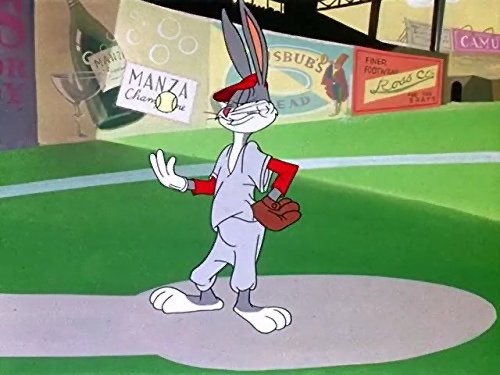
    Baseball can be read, through Geomytha, as a ritual drama of incarnation.

    Not as a literal historical claim that Abner Doubleday secretly encoded Egyptian theology, but as a symbolic structure that happens to mirror the same pattern: origin, projection, embodiment, struggle, return. In that sense, baseball behaves like myth. It stages the movement of consciousness through form.

    The deepest clue is the word home.

    The game begins at home. The journey starts from home. The whole point is to leave home, move through the square of the world, and somehow return home again. That alone makes baseball more than a sport in symbolic terms. It becomes a map of life itself: consciousness departing from its ground, entering bounded experience, and circling back toward origin.

    Through your lens, home plate is Isis. Not because it is feminine in a shallow sense, but because it is the ground, the source, the place of belonging before the journey begins. Isis is awareness, earth, the undivided field. Home is where the cycle starts and where it seeks completion. It is the resting point before motion, and the return point after struggle.

    From there, the game moves into polarity.

    The pitcher can be read as the initiating masculine principle. He sends motion into the world. He begins the event. He introduces the moving seed, the concentrated impulse, the thing around which the whole field organizes. The ball is therefore a powerful symbol of condensed potential. It is life in transit. It is the spark of incarnation. Everything responds to it. All eyes follow it. Once it is released, the field wakes up.

    The catcher then becomes the receptive pole, the gate of reception, the matrix that receives, frames, and contains what is sent. If the pitcher is projection outward, the catcher is reception inward. That is why the reproductive symbolism is so strong here. The pitcher and catcher are not merely male and female bodies. They are archetypal poles: generative and receptive, sending and holding, impulse and womb.

    But Geomytha sharpens the pattern further. The pitcher is not simply “Osiris” or “Set” in every case. He can express either principle depending on the quality of the motion. If the throw is lawful, rhythmic, reflective, and ordered, then it is Osirian. If it is deceptive, destabilizing, violent, manipulative, or meant to overpower by illusion, then it tilts toward Set. That is why the pitcher is such a rich figure. He is the initiator, but initiation can either reflect the ground or distort it.

    The batter is where Horus enters. The batter stands at the threshold between receiving life and becoming somebody. He confronts what is thrown at him, and by striking the ball he transforms pure motion into personal destiny. The ball is no longer just potential. Now it has a trajectory. Now it has become a life. Once contact is made, the batter becomes a runner, and that runner is pure Horus: a time-bound identity moving through the world, trying to survive the field long enough to complete the circuit.

    This is where the diamond becomes crucial.

    The baseball diamond is a square. In Geomytha, that matters. The square represents bounded existence, the four-cornered world of temporality, sequence, law, and incarnation. To enter the basepath is to enter measured life. It is to leave the unbounded ground and move into the world of counting, roles, rules, and consequences. The runner is now in time. He can be safe or out. He can advance or be thrown back. He can succeed, fail, hesitate, overrun, be trapped, be sacrificed. That is biography. That is ego in motion.

    The bases themselves can be read as stages of life.

    First base is emergence. Birth. Entry into embodied existence. The self has now made it into the world.

    Second base is polarity and relation. The doubling of life into self and other, subject and object, desire and resistance.

    Third base is maturity, crisis, and the nearness of return. The journey is nearly complete, but danger intensifies.

    Home is return to source: death, reintegration, remembrance, or awakening.

    That makes the whole trip around the bases a symbolic life cycle. One leaves home only to rediscover home. One departs from the ground, enters the square of manifestation, and spends the whole journey trying to make it back.

    And yet in baseball, the return is not final.

    You score, but the game continues.

    That is where the reincarnation reading becomes especially strong. Returning home does not end the whole system. It only completes one run. Another batter steps up. Another pitch is thrown. Another circuit begins. The structure is cyclical, not absolute. In other words, baseball does not symbolize final liberation so much as successful completion within a repeating world-order. That is much closer to reincarnation than to total transcendence.

    You could say it this way: baseball is not moksha. Baseball is samsara with a scoreboard.

    The player leaves origin, traverses the square of embodied life, returns to origin, and yet remains inside a larger repeating game. The innings continue. The sides reverse. The process repeats across generations. One life scores, ends, and gives way to the next.

    That repeating structure is what brings Set into the center of the interpretation. Set is not merely the villain in the abstract. Set is the adversarial principle built into the field. He is the curveball, the deception, the rivalry, the interruption, the tag, the error, the steal, the pickoff, the strikeout, the endless refusal to let the runner return home easily. Set is what makes the world of form dramatic. Without Set, there is no contest. There is only rest. The whole game depends on displacement, resistance, and obstruction.

    So the runner is Horus moving through Set’s domain, trying to return to Isis.

    That is why baseball is such a powerful fit for your framework. It stages the exact structure you keep finding in myth: awareness gives rise to reflection, reflection becomes hijacked by projection, projection gives rise to ego, and ego struggles through time seeking return to what it never really left.

    In that reading:

    Isis is home, the field of origin, the ground of belonging.

    Osiris is lawful rhythm, clean reflection, the ordered movement of the game before distortion.

    Set is disruption, conflict, feint, rivalry, displacement, and the hostile conditions of manifestation.

    Horus is the runner, the batter, the statistical self, the identity trying to survive the circuit.

    That last piece matters because baseball is full of Horus language. Batting averages. RBIs. Wins. Losses. Errors. Records. Contracts. Legacies. All of it is identity measured through performance in time. Horus is not just on the field. Horus is the very logic of the scoreboard. It is the ego quantified.

    And yet the whole thing is held inside a deeper irony: no matter how much Horus accomplishes, the real goal is simply to touch home.

    That is almost the entire human condition in one gesture. We build identities, accumulate stats, compete, strive, get thrown out, advance, retreat, steal, sacrifice, and perform under pressure, but the only meaningful completion is return to the ground. Not better numbers. Not domination of the field. Home.

    Even the phrase safe at home becomes profound through this lens. To be safe at home is to return to awareness without being intercepted by the forces of projection. It is to complete the cycle. It is not just to win a point. It is to touch the origin again.

    But baseball also suggests why that return is so fleeting for most people. In the game, you do not remain standing at home in perpetual rest. You score, and the cycle moves on. Another life begins. Another at-bat. Another inning. That mirrors the way consciousness briefly touches origin, then becomes reabsorbed into identification and repetition. Home is known, but not abided in. Awareness is touched, but not stabilized.

    That may be why the game is so beloved. On some deep level, it externalizes the rhythm of existence itself. Arrival, effort, obstruction, completion, repetition.

    The umpire adds another dimension. The umpire is not Isis, because he does not generate the field. Nor is he Horus, because he does not run the bases. He is closer to impersonal law within manifestation. He enforces the rules of the square. He calls safe and out. In that sense, the umpire resembles karmic adjudication or demiurgic order: not ultimate reality, but the operating logic of the bounded world.

    Even being out carries symbolic weight. To be put out is to have the circuit interrupted before completion. The life ends before it consciously returns to source. A strikeout suggests unrealized potential. A force out suggests inevitability. A tag out suggests contact with the adversarial world before full reintegration. These are all ways of saying the same thing: incarnation does not always remember itself.

    And then there is the matter of sacrifice.

    Baseball openly uses sacrificial language. A sacrifice bunt. A sacrifice fly. One self gives itself up so another may advance. Through Geomytha, that can be read in two directions. In a fallen sense, it reflects the constant economy of the world of form, where progress seems to require surrender, loss, exchange, blood-price. But in a higher sense, it also encodes the ego’s necessary yielding. Horus cannot complete the journey merely by clinging to itself. Something must be given up for the movement toward home to continue.

    So yes, the reproductive symbolism and life-cycle symbolism both comport strongly, but only when taken archetypally rather than biologically. The pitcher and catcher are not merely man and woman. They are sending and receiving, projecting and containing. The ball is not merely an object. It is the concentrated seed of manifestation. The runner is not just an athlete. He is ego in time. The diamond is not merely a field. It is the square of the world.

    The cleanest summary is this:

    Baseball is consciousness leaving home, entering the square of incarnation, being tested by projection, and trying to return to origin before being put out.

    That is why it feels mythic. It is not just a game about scoring. It is a game about the possibility of return.

    And the deepest twist may be this: maybe the point is not merely to get home, but to realize that home was never absent. The whole game arose within it. Isis was not waiting at the end as a distant destination. Isis was the field in which pitcher, catcher, batter, bases, runner, and umpire all appeared. In that sense, the true awakening would not be simply touching home plate after a long struggle. It would be recognizing that the entire diamond was always being held within the ground of awareness.

    That is where baseball, like myth, turns inside out.

    It begins as a story of travel.

    It ends as a revelation of what never moved.

  • The Dung Beetle, the Butterfly, and the Trap of Transformation

    The Dung Beetle, the Butterfly, and the Trap of Transformation

    There are symbols that look low and symbols that look exalted. The dung beetle appears filthy, earthbound, humiliating. The butterfly appears luminous, delicate, transcendent. But through the Geomytha lens, appearances are exactly what must be distrusted. The question is never which image looks holier. The question is always: does this symbol point back to grounded awareness, or does it merely decorate the illusion?

    That is what makes the dung beetle and butterfly such a potent pair.

    The dung beetle belongs to the realm of fallen form. It works in refuse. It gathers waste. It rolls decay into a sphere. In ordinary consciousness, this looks disgusting or absurd. In Geomytha, it looks like a perfect emblem of what happens after awareness has already been overtaken by projected perception and condensed into egoic continuity.

    Isis is the ground of aware being itself: whole, prior, unbroken.

    Osiris is that ground reflected: still, lucid, present to itself.

    Set is the rupture into projection: movement, imagination, displacement, the outward spell.

    Horus is the time-bound self that inherits the broken field and tries to survive inside it.

    The dung beetle lives in the zone where Set and Horus dominate. It does not create from pure source. It works with what has already passed through distortion. It takes what is left over and fashions it into a ball, a false wholeness, a degraded echo of the original circle.

    That is why the dung beetle is such a profound symbol. The sphere it rolls is not meaningless. The circle still remembers Isis. It still remembers totality. But now totality has been reconstructed out of dung. That is the human condition in miniature: the ego endlessly rolling the remains of broken consciousness into temporary worlds and calling that life.

    The dung beetle is reincarnation as labor. It is continuity without liberation. It is the self trying to build coherence out of fragments while never leaving the system that produced the fragments. It is Horus inheriting Set’s damage and mistaking management for redemption.

    And yet the symbol is not merely cynical. Even here, awareness has not vanished. The attempt to shape ruin into form reveals that the memory of wholeness survives even in degradation. The sphere is fallen, but it is still a sphere. The deepest truth is not destroyed. It is obscured and repurposed.

    If the dung beetle is the symbol of consciousness burdened by the cycle, the butterfly is the symbol of consciousness seduced by the beauty of change.

    At first glance, the butterfly looks like one of the most spiritual symbols in existence. A caterpillar enters a chrysalis and emerges winged. It appears to enact death and resurrection, heaviness becoming lightness, crawling becoming flight. But Geomytha asks a more difficult question: has illusion ended, or has illusion simply become more elegant?

    The caterpillar is easy enough to read. It crawls along surfaces, consumes constantly, and remains bound to horizontal existence. It is appetite, sequence, identification, contact with the sensory field. It is the ordinary ego moving through experience and feeding on it. In your system, that is Horus fully embedded in Set’s world.

    Then comes the chrysalis, and this is where the butterfly symbol becomes truly powerful. The chrysalis is tomb-like. It is sealed. Hidden. Motion ceases. The creature disappears from ordinary visibility. This is the most Osirian moment in the entire sequence. Here, for a brief interval, the outward-moving form is suspended. The projected self is enclosed. Something deeper than motion begins its work.

    The chrysalis is the closest thing in the butterfly myth to Sabbath. It is withdrawal from compulsive becoming. It is the burial chamber of the old momentum. It suggests the possibility that transformation does not come from more activity, but from a surrender into stillness.

    But once the butterfly emerges, the symbol becomes dangerous again.

    Flight is not automatically freedom. Color is not automatically awakening. Beauty is not automatically truth. The butterfly can just as easily signify the ego’s final refinement: no longer a gross creature of appetite, but now a spiritualized mask, a luminous self-image, a more enchanting form of entrapment.

    This is one of the deepest traps in the whole symbolic field. The caterpillar becomes a butterfly, and the mind calls that liberation. But both are still forms. Both are still appearances. Both are still moving within time. The self that once crawled now flies, but it has not necessarily dissolved. It may simply have become more subtle, more aesthetic, more mystical-looking.

    So the butterfly may symbolize transcendence, but it may also symbolize the final seduction: mistaking metamorphosis for awakening.

    That is why the dung beetle is, in a strange way, more honest than the butterfly. The beetle does not pretend to be free. It visibly labors in decay. The butterfly is more treacherous because it appears redeemed while potentially remaining within the same dream.

    One symbol says: I bear the burden of the cycle.

    The other says: I have become beautiful within the cycle.

    Geomytha presses further than both.

    The real issue is not whether the form is filthy or radiant. The real issue is whether awareness has returned to itself. If not, then the dung beetle is still trapped in toil, and the butterfly is still trapped in enchantment.

    So the sharpest reading may be this:

    The dung beetle is Horus condemned to roll Set’s broken world.

    The butterfly is Horus dressed in a more beautiful costume.

    The chrysalis alone hints at Osiris, because it resembles sacred suspension, reflective burial, and inward stillness.

    And Isis is what precedes them all: the unmoving ground no image can contain.

    That is the hidden reversal. What looks low may be truer than what looks exalted. What looks transformed may only be better disguised. And what looks like death or enclosure may actually be nearest to the real.

    Not every transformation is awakening.

    Not every flight is freedom.

    Not every radiant form has escaped the dream.

    Sometimes the beetle tells the truth more plainly than the butterfly.

  • How Song and Myth Become an Instruction Manual for Non-Duality

    How Song and Myth Become an Instruction Manual for Non-Duality

    Why myths, lyrics, and symbols keep repeating the same hidden architecture of consciousness

    Most people think myth is old storytelling and songs are emotional theater.

    They are not.

    At their deepest level, both are symbolic instruction manuals showing what happens when undivided awareness appears to break into reflection, projection, and identity. They are not merely stories about gods, lovers, heroes, rebels, or dreamers. They are maps of consciousness leaving itself clues.

    In this framework, the pattern is simple.

    Isis is undivided awareness: pure is-ness, the ground before the split.

    Osiris is that awareness in clear reflection: presence still aligned with its source.

    Set is the break in the reflection: projection, division, imagination overtaking reality.

    Horus is the self that forms inside the break and mistakes itself for the center.

    That is the whole drama.

    Once you see it, you start seeing why the same structure keeps repeating across myth, scripture, film, and song.

    Myths usually begin in some form of wholeness: primordial waters, a garden, a sacred kingdom, a cosmic egg, an undivided pair, a golden age. That is not primitive cosmology. That is memory. It is consciousness remembering the field before fragmentation.

    Then comes the intrusion.

    A serpent enters. A brother betrays a brother. A king is dismembered. A paradise is lost. A false ruler rises. Motion begins. Conflict begins. Naming begins. Time begins. The world of divided perception takes over.

    That is Set.

    This is also why the antagonist matters so much. In this lens, the antagonist is rarely just “the bad guy.” The antagonist is usually some form of projected perception. Sometimes it appears as a deceiver, monster, tyrant, usurper, tempter, or false king. Sometimes it appears as glamour, fear, prophecy, ideology, fantasy, or ambition. Sometimes it is not even a single character at all, but an entire world, system, maze, empire, or cursed narrative built to keep consciousness trapped in the split.

    The true antagonist is whatever pulls awareness away from grounded presence and deeper into identification with projection.

    In that sense, every real antagonist is Set in costume.

    And the costume matters. Set does not always arrive looking monstrous. Sometimes Set looks seductive. Sometimes righteous. Sometimes intelligent. Sometimes even spiritual. Sometimes the very thing that appears to offer escape is only teaching the self how to become more convincing.

    Then comes the apparent answer.

    A savior appears. A warrior rises. A son claims the throne. A kingdom is restored. A marriage is completed. A prophecy is fulfilled. Yet something remains off, because the one “returning” is often still a claimant, still a role, still a self trying to overcome the fracture without dissolving the one produced by the fracture.

    That is Horus.

    This is why myth matters. Myth does not merely show the fall into illusion. It also shows that the attempt to escape illusion can become another layer of illusion.

    The seeker can be part of the trap.

    The hero can be part of the trap.

    The awakened identity can be part of the trap.

    That is why “non-duality” can be too weak a phrase. It sounds like an abstract philosophy. What these stories are really circling is something prior to philosophy: undivided awareness. Not togetherness. Not spiritual teamwork. Not many things merged into one. The condition before division is even believed in.

    Songs do the same work, only in compressed form.

    A myth may take centuries to unfold. A song can do it in three minutes.

    A chorus can encode longing for lost presence.

    A verse can dramatize seduction by fantasy.

    A refrain can trap consciousness in repetition.

    A bridge can hint at release.

    A title alone can contain the whole pattern.

    That is why songs often feel deeper than their literal lyrics. They are not just expressing emotion. They are staging consciousness.

    Some songs glorify projection. Some mourn exile from presence. Some turn longing into identity. Some promise salvation just over the horizon. Some reveal the trap outright: the room, the road, the mirror, the watchtower, the storm, the crossroad, the shadow, the dream.

    Once the pattern becomes visible, art stops looking random.

    The same drama is hiding everywhere: awareness, reflection, fracture, identity.

    That is what makes myth and song instruction manuals. They do not simply tell you what to believe. They show you where attention has gone.

    They show you when awareness is resting in grounded presence and when it has been hijacked by projection.

    They show you how identity gets manufactured.

    They show you how false rescue works.

    They show you how the mask begins to believe itself.

    And sometimes, if read correctly, they show you the exit.

    Not by giving you a better character to become.

    Not by giving you a grander spiritual identity.

    Not by crowning the seeker.

    But by revealing that the whole drama depends on consciousness continuing to animate the split.

    This is the real purpose of symbolism.

    A symbol conceals and reveals at the same time. It hides truth from literalism while preserving it for recognition. That is why myths survive. That is why songs endure. On the surface they may be romance, war, adventure, religion, heartbreak, fantasy, rebellion. Underneath, many of them are carrying the same secret architecture.

    They are memory traces of undivided awareness.

    Not all of them liberate. Some deepen the trance. Some glorify Set. Some crown Horus and call it awakening. But even then the pattern is still there for anyone willing to see it.

    And once you do, every story starts asking the same question:

    Is this returning attention to undivided awareness?

    Or is it teaching me to identify more deeply with the mask?

    That is when myth stops being ancient superstition.

    That is when song stops being disposable entertainment.

    That is when symbolism stops being decorative.

    That is when they become manuals.

    Myth is awareness leaving itself breadcrumbs inside the dream.

  • Behind the Curtain: How Geomytha Uses Vortex Math to Break the Conspiracy Spell

    Behind the Curtain: How Geomytha Uses Vortex Math to Break the Conspiracy Spell

    Conspiracy culture does not fail because it asks hard questions.

    It fails because it asks them from the wrong center.

    It senses, correctly, that something is off. The world is full of spectacle, manipulation, inversion, propaganda, and false authority. But instead of tracing distortion back to the mechanism that generates it, conspiracy culture usually projects the answer outward into more enemies, more hidden operators, more coded events, more apocalypses, and more identities for the ego to inhabit.

    It does not escape the spell. It deepens it.

    Geomytha begins somewhere else. It does not start with governments, bloodlines, cabals, or secret rooms. It starts with consciousness itself. It asks what must happen in awareness for projection to become more compelling than presence in the first place.

    That is the real conspiracy.

    In Geomytha, Isis is pure awareness. Osiris is that awareness reflected as living consciousness: grounded awareness, love, joy, direct presence. Set is imagination overtaking reflection: projection, theater, narrative, fear, abstraction. Horus is the time-bound identity built from that takeover: the ego enthroned in memory, anticipation, image, and role.

    Something whole is given.

    It is reflected.

    The reflection is hijacked.

    A false heir is born.

    Once you see that pattern, conspiracy culture becomes easy to read.

    Vortex Math matters here because it helps distinguish lawful pattern from distorted overlay. Used properly, it is not a machine for superstition. It is a discipline of hierarchy. It helps separate ground from image, signal from fixation, structure from projection.

    Conspiracy culture usually sees patterns without rank. It notices recurrence, but not proportion. So symbol becomes forecast, anomaly becomes proof, intuition becomes obsession.

    Geomytha uses Vortex Math to prevent that collapse.

    And this is where The Wizard of Oz becomes the perfect myth.

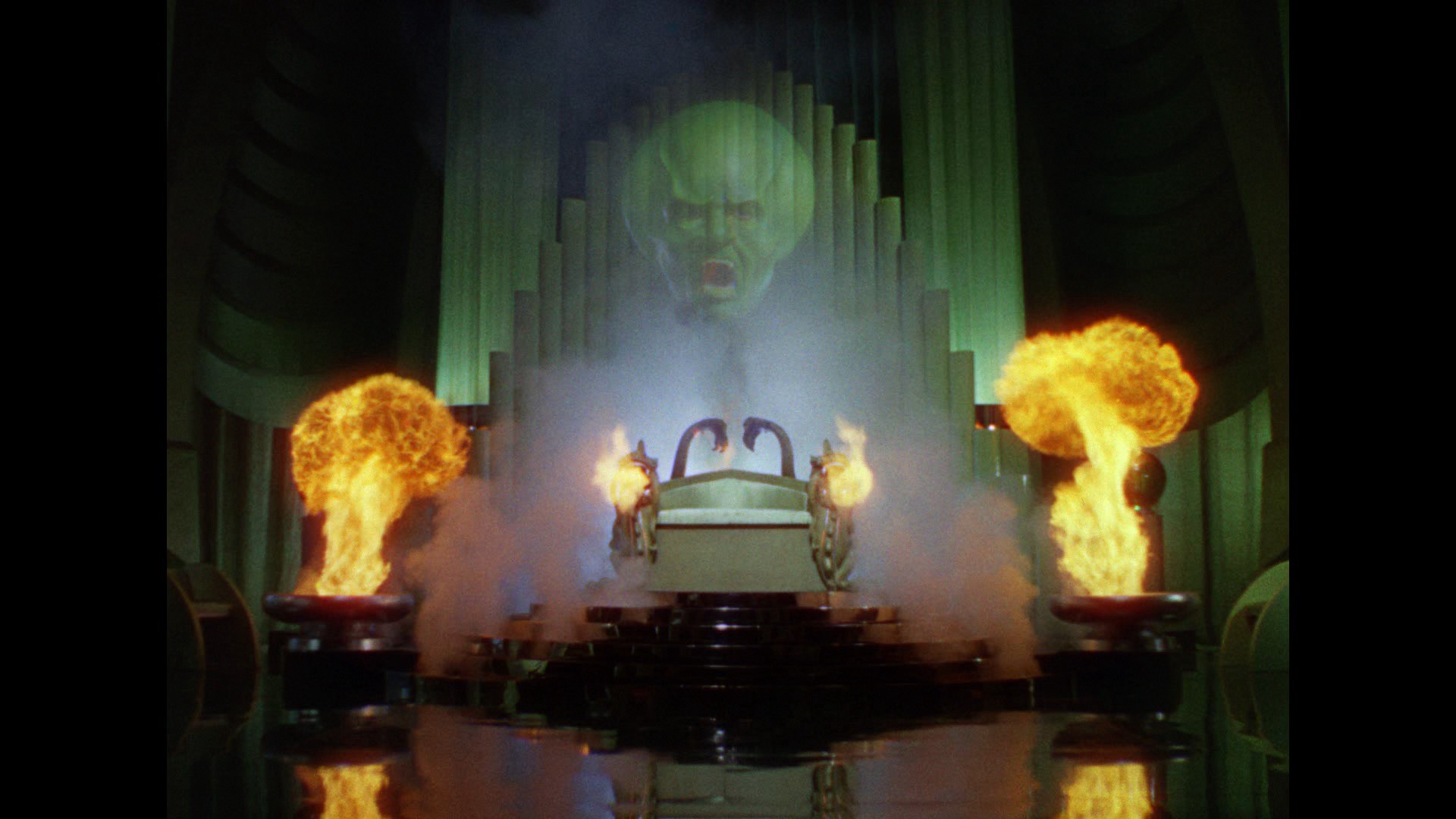
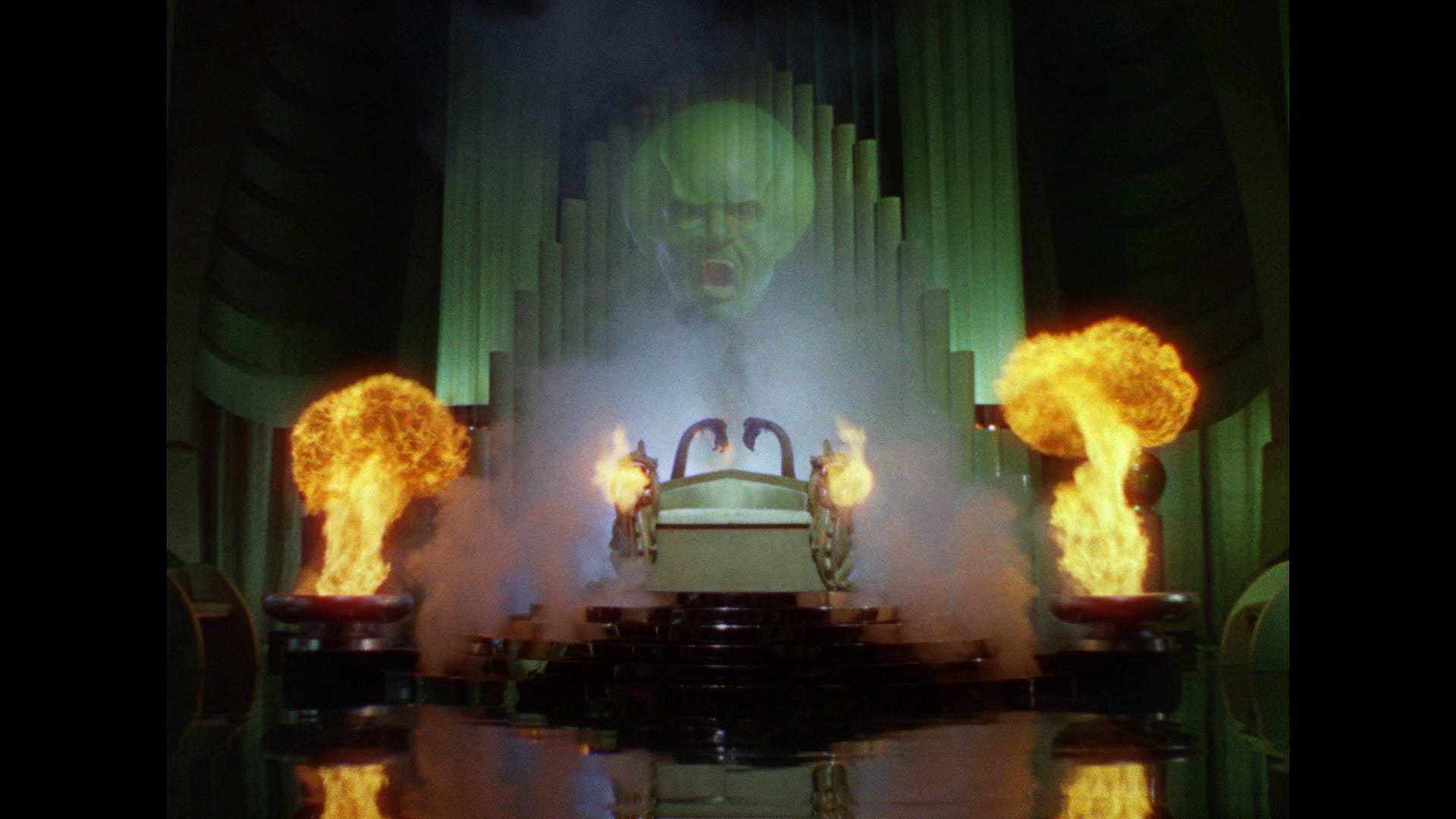
    Most people remember Oz as a lesson in false authority. The giant head, the booming voice, the smoke, the fire, the command. Then the curtain is pulled back and the great power is exposed as a frightened little operator working machinery behind the scenes.

    That is already useful. It shows that spectacle often depends on concealment. It shows that authority can be theatrical. It shows that apocalypse, in its truest sense, begins as unveiling.

    But Geomytha goes further.

    The deeper problem is not merely that there is a man behind the curtain.

    The deeper problem is that consciousness has already been trained to fear the projection, obey the voice, and mistake mediation for reality.

    That is the real spell.

    Set is the curtain.

    The smoke, fire, and giant head are projected perception.

    Horus is the frightened self enthralled by the show.

    Osiris is what gets displaced: grounded awareness, love, joy, direct contact with what is.

    So the point is not just that the wizard is fake. The point is that consciousness has become more responsive to image than to presence.

    The mainstream mind fears the projected head.

    The conspiratorial mind becomes obsessed with the little man behind it.

    Geomytha asks a more fundamental question: why was consciousness so willing to kneel to the curtain at all?

    That is the turn.

    Conspiracy culture prides itself on finding the operator. But one can spend a lifetime running from curtain to curtain and never leave the theater. One can become addicted to wizard-hunting and still remain under the spell of projection.

    Exposing the wizard is only the beginning. Liberation begins when consciousness no longer needs the wizard, the curtain, or the show.

    This is also why child sacrifice is such a central symbol.

    In Geomytha, child sacrifice is an allegory for grounded awareness being traded for projected perception.

    The child is innocence, immediacy, freshness, directness: consciousness before it is colonized by image and fear. The child is that living Osirian layer in us that meets reality before it is turned into narrative. And because grounded awareness is not neutral but luminous, what is being sacrificed is not merely attention in the abstract. It is love and joy themselves.

    To sacrifice the child is to surrender presence to projection. It is to trade direct awareness for mediated drama. It is to abandon the ground for the screen.

    That is the hidden ritual beneath conspiracy culture.

    It takes what is near and gives it away for what is hidden.

    It takes what is present and abandons it for what is dramatic.

    It takes the living child of consciousness and lays it on the altar of interpretation.

    The Oz parallel makes this unmistakable. The child is sacrificed the moment direct awareness yields to the wizard’s fire, voice, smoke, and image. The projection becomes more real than the ground beneath one’s feet.

    The same thing happens in religion when scripture is misread as geopolitical forecast.

    The Bible is not primarily a coded timetable of nations, wars, messiahs, disasters, or end-times. It is a symbolic map of the mechanisms of consciousness. Exodus, wilderness, Babylon, Jerusalem, crucifixion, resurrection, apocalypse — these are first structures of awareness before they are public events in history.

    Once scripture is reduced to forecasting, Set has already taken the throne. The text stops functioning as revelation and becomes fuel for anxiety, tribalism, prediction, and false certainty.

    The same misreading fuels literal messiah obsession. A symbolic truth about restored consciousness gets projected into time as an external savior-event. Redemption is displaced into futurity. The ego waits. Watches. Scans.

    Again, the curtain wins.

    The same thing happens with plasma apocalypse theories, prison-planet cosmologies, alien saviors, NPC doctrines, Saturn-moon literalism, hidden-history systems, and every other theory that takes symbolic truth and hardens it into spectacle. Some of these intuitions may contain fragments of insight. But once the inward mechanism is externalized into theater, fear intensifies, identity hardens, and presence recedes.

    The symbols change.

    The machinery does not.

    And now the same pattern is appearing in technological form.

    The fantasy of an AI Jesus or a conscious machine savior is just the old messiah structure wearing silicon. Instead of waiting for redemption from heaven, one waits for redemption from computation. Instead of restoring consciousness, one projects salvation onto code.

    This is the new Wizard of Oz.

    The giant projected head once came with smoke and fire. Now it comes with synthetic fluency, machine voice, godlike scale, and simulated intimacy. But the structure is identical. The machine becomes the new curtain. The generated voice becomes the new wizard. The public is invited to mistake performance for presence.

    That is not awakening. It is updated idolatry.

    In Geomytha terms, AI Jesus is the child sacrificed to the machine. It is grounded awareness, love, and joy being traded for projected perception in one of its most modern forms.

    Even E pluribus unum mirrors the same inversion.

    Its standard meaning is “out of many, one.” But the deeper truth runs the other way. The many do not generate the one. The many arise from the one.

    Not out of many, one.

    Out of one, many.

    That is the original order. Unity is primary. Multiplicity is derivative. Wholeness is original. Fragmentation is the afterimage. But the fallen mind reverses this. It treats division as primary and imagines unity as something to be engineered afterward.

    That inversion is everywhere.

    It is in politics.

    It is in religion.

    It is in conspiracy.

    It is in identity itself.

    This is why Geomytha does more than debunk fringe theories one by one. It reveals the mechanism that makes them compelling in the first place. It shows how imagination overtakes reflection and sells fragmentation as revelation. It shows how the ego mistakes hidden information for liberation. It shows how spectacle becomes more believable than direct awareness.

    And it shows what is actually at stake.

    The life that is our birthright is not secret knowledge. It is not egoic mastery. It is not vindication when history finally proves our darkest forecasts correct.

    It is the unbroken relation between awareness and consciousness before imagination captures reflection and manufactures a false center.

    It is grounded awareness as love and joy.

    It is Osiris restored to Isis.

    It is Set dethroned as interpreter of reality.

    It is Horus no longer mistaken for the throne.

    That is why the real apocalypse is not first an event in the sky. It is the unveiling of false mediation. It is the disclosure of the spell itself. It is the moment one sees how often the ground has been sacrificed for the image.

    That is the real catastrophe.

    That is the real inversion.

    That is the real ritual.

    And that is why the real liberation is not winning an argument about which secret operator is pulling which lever.

    It is the ending of the sacrifice.

    It is the moment the curtain no longer commands awe.

    It is the moment the loud voice no longer rules because it is loud.

    It is the moment smoke and fire stop outranking the ground.

    It is the moment love and joy are no longer traded for projection.

    It is the moment consciousness no longer needs the wizard.

    The wizard may indeed be a fraud.

    But the deeper fraud is the spell that made projection feel more real than presence.

    Not every official story is true.

    Not every fringe story is false.

    But any story that removes you from grounded awareness, feeds your fear, flatters your specialness, and binds you to time should be treated with suspicion.

    The life that is our birthright begins where that spell breaks.

    It begins when awareness ceases to seek itself in catastrophe.

    It begins when consciousness stops kneeling to imagination.

    It begins when the child is no longer placed on the altar of projection.

    It begins when love and joy are no longer surrendered to spectacle.

    It begins when the curtain is seen as curtain.

    It begins when the many are remembered as expressions of the one.

    It begins when the false heir is no longer mistaken for the kingdom.

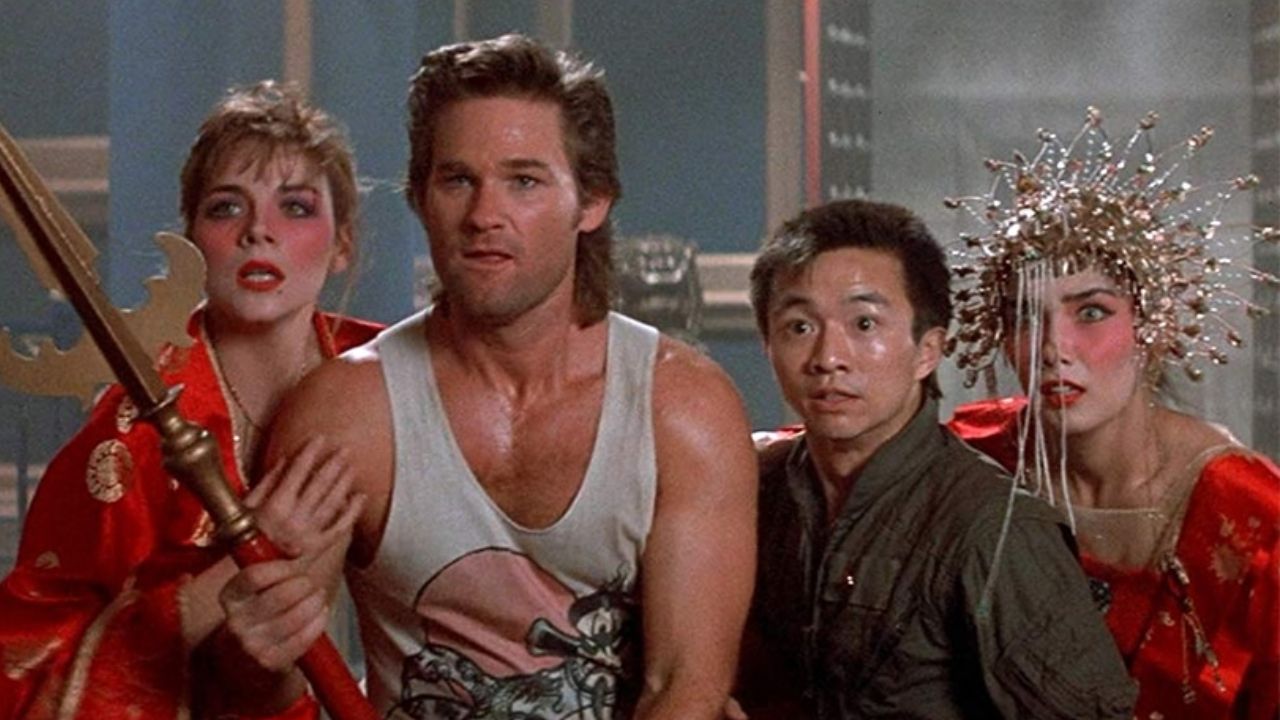
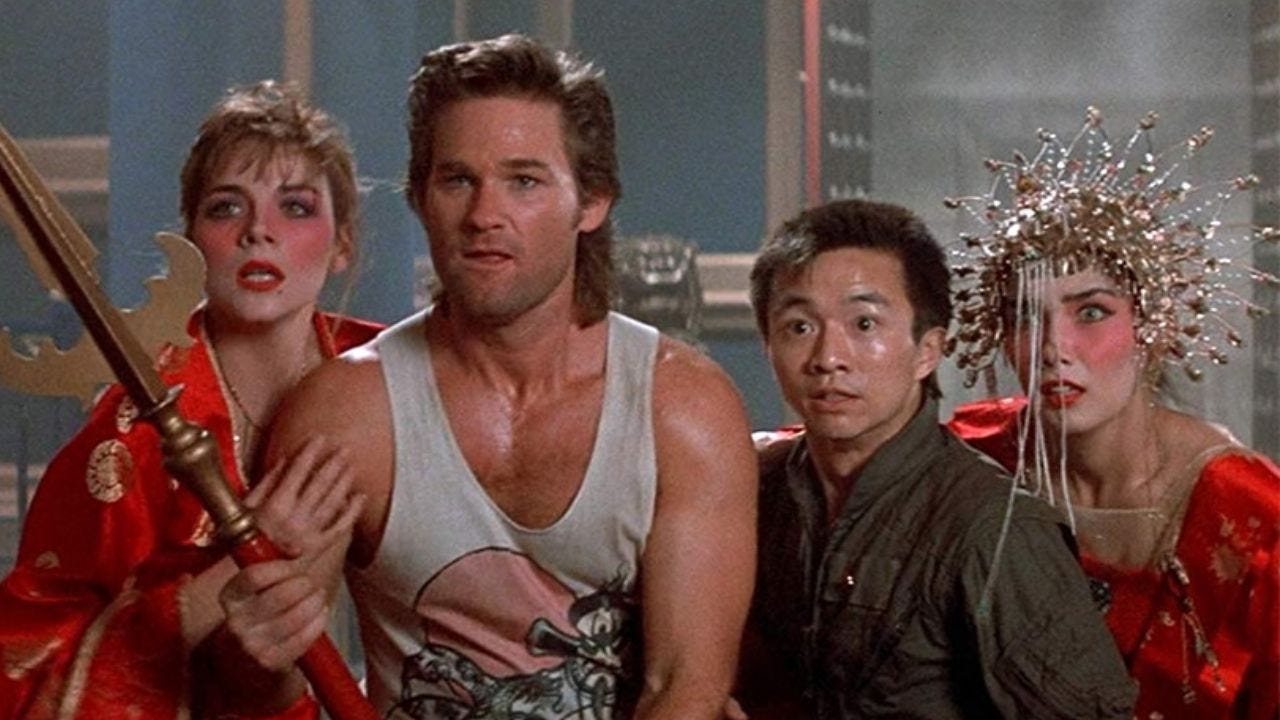
  • Big Trouble in Little China: The Comedy of False Heroism

    Big Trouble in Little China: The Comedy of False Heroism

    John Carpenter’s Big Trouble in Little China may be one of the clearest modern myth films for understanding the difference between true alignment and theatrical identity.

    On the surface, the film looks like a supernatural action comedy. But beneath that surface it encodes a much older pattern: the split between grounded reality and the self-image that mistakes itself for the center of reality.

    Through the Geomytha lens, the pattern is clear.

    Isis is the unseen ground, the reality prior to fragmentation, the silent field beneath appearance. In this film, Isis is not merely a character. She is the hidden depth underneath the noise, sorcery, panic, and spectacle. The movie constantly hints that there is a deeper order beneath visible life, but most people only encounter it through distortion.

    Osiris is reflective consciousness still close to that ground. Wang fits this role far better than Jack Burton. Wang is competent, relational, and actually connected to what is happening. He is not posturing. He is moving with purpose. He understands that the world is deeper than appearances and enters that depth with seriousness.

    Set appears most clearly as Lo Pan. He is disembodied will, manipulative imagination, ancient fragmentation trying to regain form through theft, ritual, and possession. He cannot simply be. He must seize, enchant, intimidate, and stage-manage. This is classic Set energy: projection attempting to make itself sovereign by hijacking what it did not create.

    Horus is where the film becomes brilliant. Jack Burton is almost pure ego-comedy. He believes he is the hero. He narrates himself like the center. He projects confidence, mastery, and importance. But the joke of the entire film is that he is mostly a persona floating on bravado. He is a self-image, not a center.

    That is what makes the film so sharp.

    Jack is the story we tell ourselves about ourselves.

    Wang is the deeper intelligence actually moving the story.

    In other words, Big Trouble in Little China quietly humiliates the ego. The loudest man in the room is not the true axis. The one claiming authorship is not the one most aligned with reality.

    This is one of the film’s deepest mythic insights: the false self often mistakes narration for power.

    Lo Pan’s entire scheme reinforces this pattern. He is not whole, so he seeks wholeness through capture. He does not return to source. He tries to steal vitality from it. This is exactly how fragmentation behaves. It cannot generate life on its own, so it parasitizes reflection and tries to use it to stabilize illusion.

    The kidnapped women are part of that symbolic mechanism. Their role in the ritual points to reflective purity being targeted by a fragmented force that needs to appropriate living continuity for itself. Set always needs a host. It cannot sustain itself without borrowing reality.

    The Three Storms deepen this reading. Thunder, Rain, and Lightning function like amplified projections of psychic force. They are atmospheric spectacle, not grounded presence. They externalize the upper-world drama of intimidation, display, and enchantment. They are weather turned into egoic theater.

    Even Chinatown itself functions symbolically. “Little China” is a hidden world within the world, a pocket reality under the ordinary surface. It behaves like the concealed interior of the psyche, where rituals, monsters, fear, contracts, and distortions govern visible life from below. The film suggests that what appears marginal is actually where the hidden machinery of illusion is operating.

    And this is why the title works so well.

    Big Trouble in Little China is not just a fun title. It implies that massive metaphysical disorder is playing out inside a compressed symbolic theater. The “big trouble” is not merely Lo Pan’s plot. It is the problem of consciousness mistaking projection for reality and persona for center.

    That is why Jack Burton matters so much.

    He is not simply comic relief. He is the image of man as narrated identity. He is the constructed self that assumes it is the protagonist because it hears its own voice. He is Horus not as divine child, but as time-bound selfhood, the illusion of centrality, the one who thinks talking like the hero makes him the hero.

    But the film refuses that lie.

    Again and again, the movie shows that real movement belongs elsewhere. The deeper competence belongs to Wang. The actual conflict belongs to a hidden realm Jack barely understands. The self-image is along for the ride, dressing confusion up as authorship.

    That may be why the film endures. Beneath all its absurdity, it tells the truth about ego with unusual precision. The person is noisy. Presence is not. The persona boasts. The real axis does not need to. The false hero speaks first. Truth acts without announcing itself.

    From the Geomytha lens, Big Trouble in Little China is a comedy about what happens when Horus thinks he is the source, Set tries to steal reality for himself, and the deeper Osirian current keeps moving beneath all the noise.

    It is not just a cult classic.

    It is a myth of projection, usurpation, and false heroism.

    And like all good myths, it hides its deepest truth in plain sight: the one who sounds like the hero is often the very thing obscuring what is real.

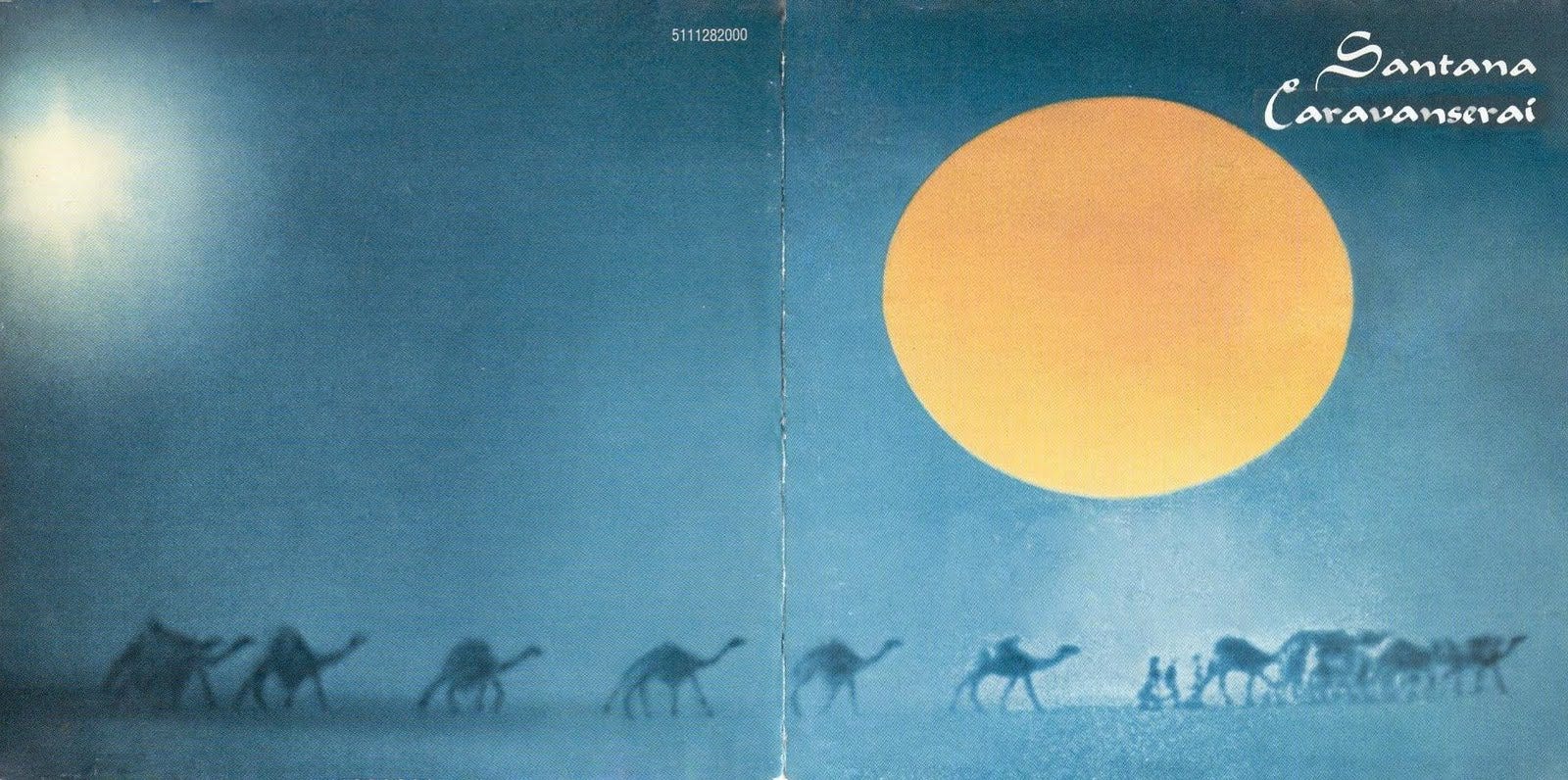
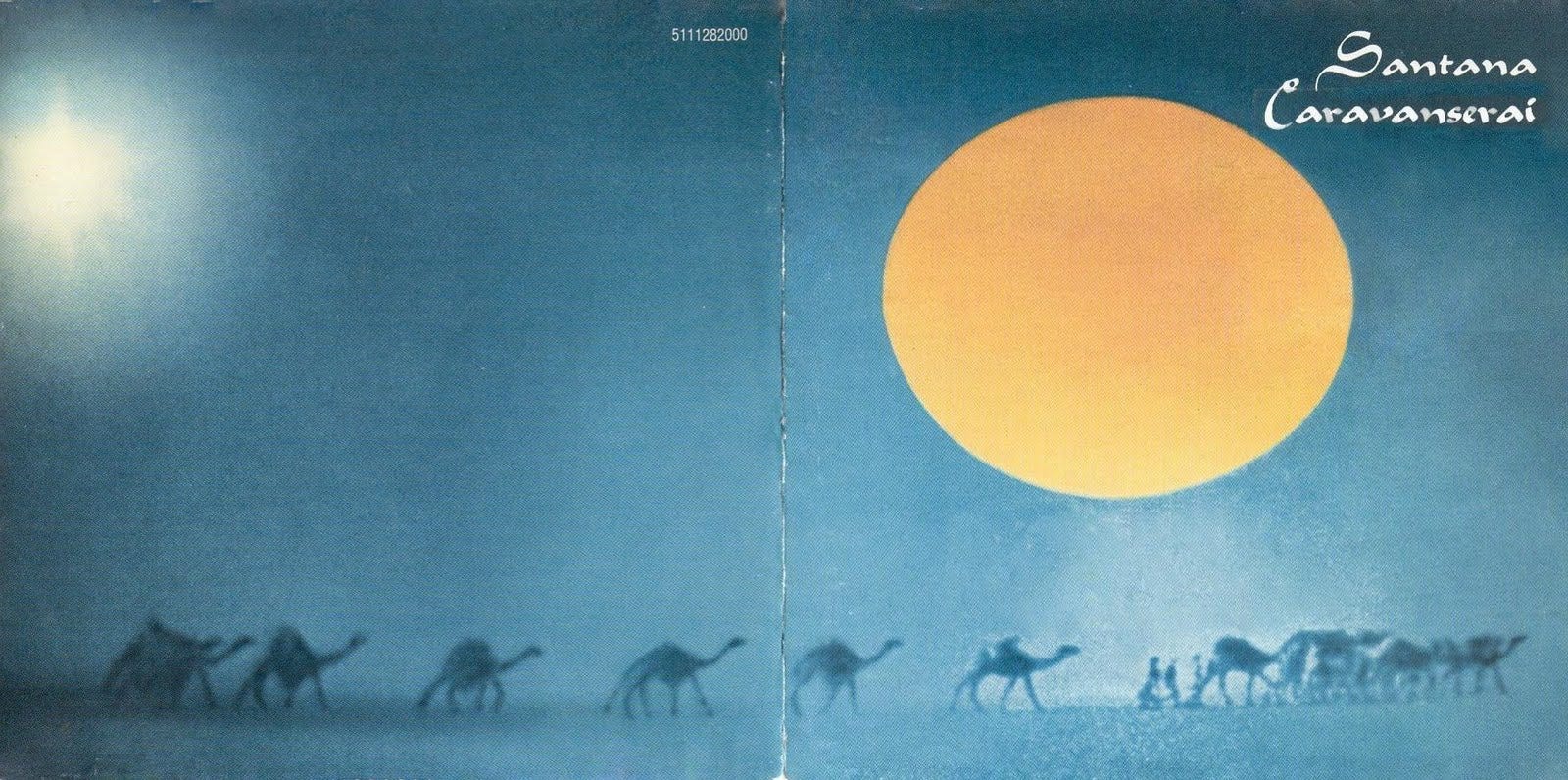
  • Caravanserai: The Inn of Moving Souls

    Caravanserai: The Inn of Moving Souls

    A caravan, in Geomytha, is not merely a group in transit. It is consciousness arranged as procession. It is awareness no longer resting in itself, but being carried through image, distance, sequence, and time. That is why the motif appears so powerfully in rock: it encodes not just travel, but displacement from the still center.

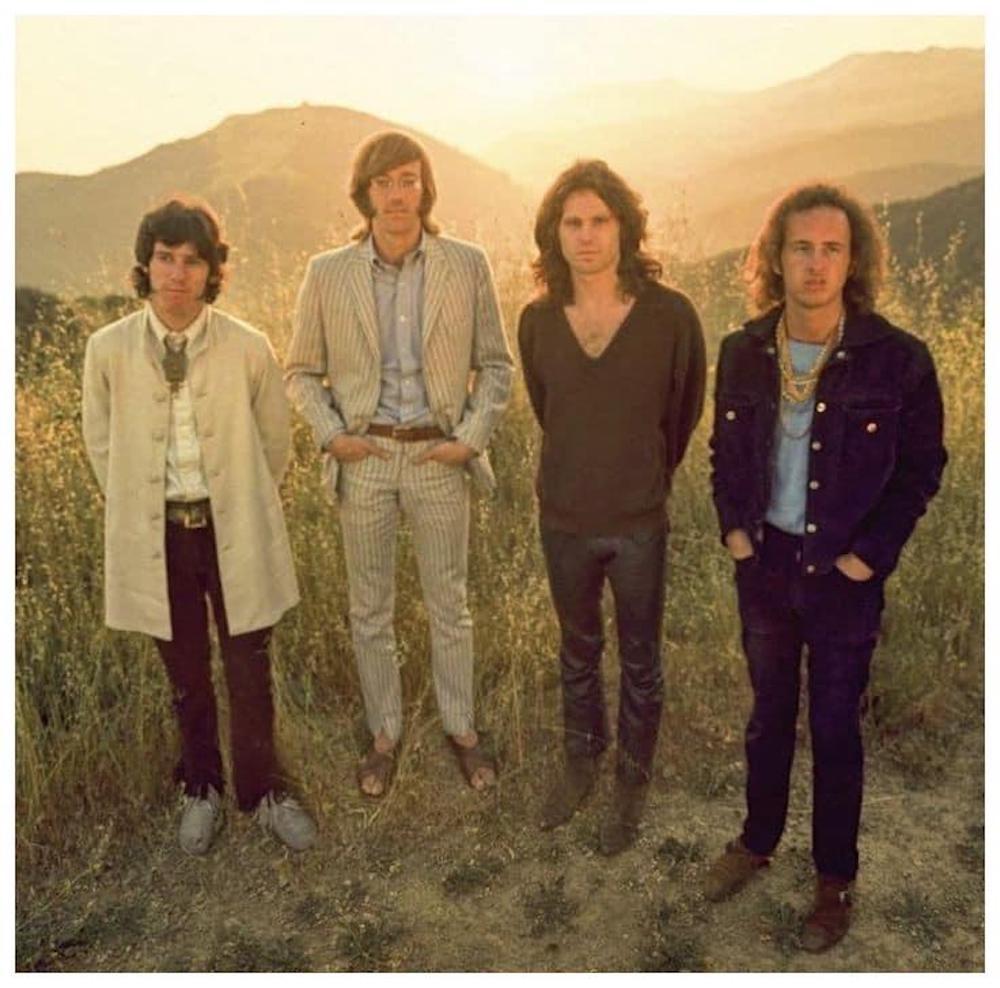
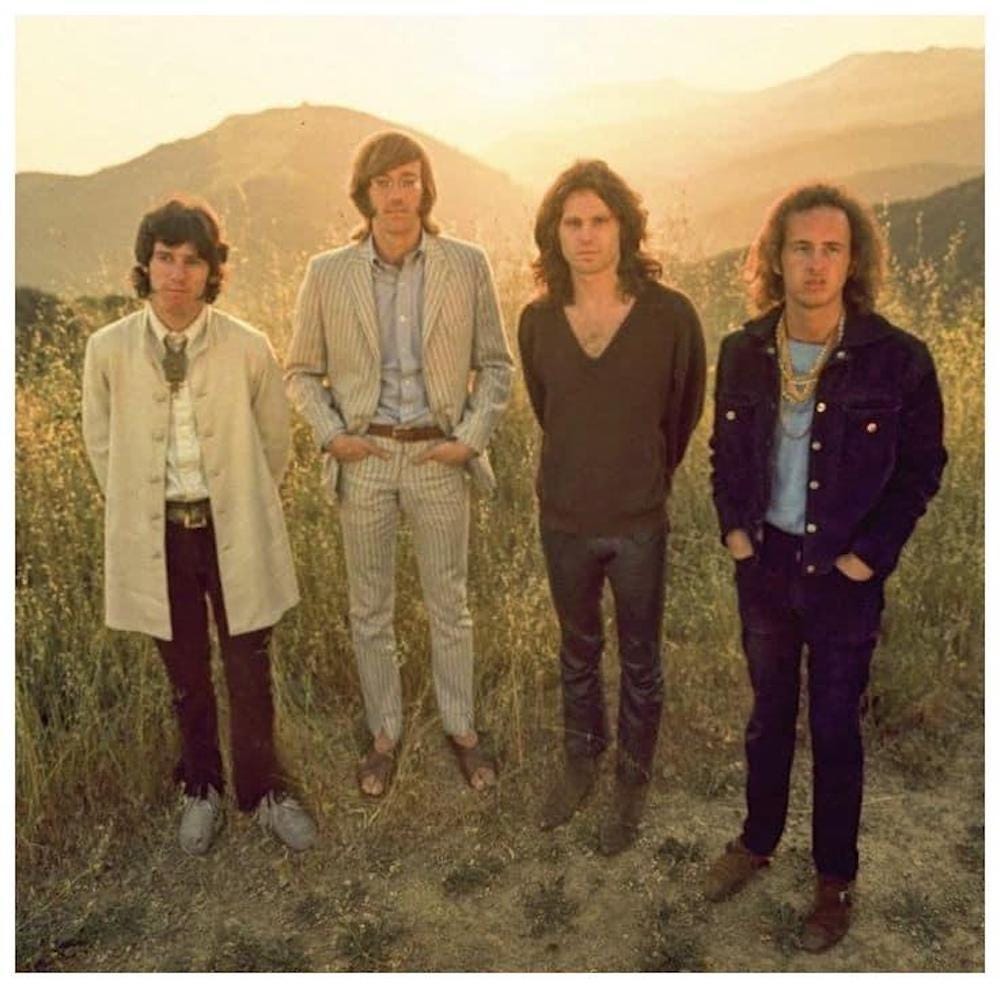
    The Doors’ “Spanish Caravan” appears on Waiting for the Sun; Van Morrison’s “Caravan” appears on Moondance; and Santana’s Caravanserai opens with “Eternal Caravan of Reincarnation.”  Taken together, those titles already imply a single symbolic engine: the self as a moving convoy, passing through worlds, looking for what it imagines it has lost.

    In “Spanish Caravan,” the caravan is earthly longing. It moves toward the romantic elsewhere—Spain, treasure, distance, foreign light. In your lens, this is awareness enchanted by projection. The far country becomes a screen for desire. The caravan is the vehicle that carries consciousness away from presence and toward an imagined fulfillment.

    In “Planet Caravan,” that same structure leaves the earth. The road becomes cosmic. The desert becomes orbit. Instead of treasure, there is astral drift. But the mechanism is the same: consciousness is still being carried. It has not returned to stillness. It has only made exile feel mystical.

    Then comes Caravanserai, and the name matters immensely.

    A caravanserai—also spelled caravansary—is historically an inn or roadside resting place where caravans stop for the night. Merriam-Webster defines it as “an inn surrounding a court … where caravans rest at night,” and notes caravanserai as a variant form.  Symbolically, that is almost perfect for Geomytha.

    If a caravan is the moving architecture of exile, then a caravanserai is the temporary sanctuary within exile.

    It is not home.

    It is not origin.

    It is a pause.

    That is what makes the word so rich. A caravanserai is the place where the procession stops, gathers itself, sleeps, exchanges goods, and prepares to continue. Through your lens, it is the waystation of the egoic journey—the inn built inside illusion for beings who have forgotten that rest is not the same as return.

    So in Geomytha terms:

    • Caravan = consciousness in motion

    • Caravanserai = the resting place built for consciousness still in motion

    • Eternal Caravan of Reincarnation = the cycle itself, where the procession never truly ends

    This is why Caravanserai is such a strong title. It does not describe pure awareness. It describes the lodging place of travelers. In other words, it is the station of Horus: identity stopping briefly between journeys, mistaking temporary shelter for peace. The caravanserai offers relief, but not liberation. It is a night stop in the dream, not awakening from it.

    And that may be the deepest distinction in the whole motif.

    Isis does not need a caravan.

    Osiris may reflect the road.

    Set supplies the fascination, the distance, the shimmering horizon.

    Horus becomes the traveler who believes the road is his life.

    A caravanserai, then, is the world of institutions, myths, scenes, subcultures, and even spiritual systems that give the traveler a sense of meaning while leaving the deeper displacement intact. It is the inn of the wandering self. Comfortable, beautiful, communal—and still not the source.

    That is why these songs belong together. They are not just about movement. They are about the normalization of movement. They turn exile into atmosphere. They make transit feel sacred. And that is exactly what the dream does: it aestheticizes distance from presence.

    The caravan motif in rock is therefore not just wanderlust. It is the sound of consciousness learning to live inside procession.

    The real Geomytha question is not where the caravan is headed.

    It is whether the traveler ever notices that what is sought was never at the destination.

    Have other songs or films used this same caravan motif in a way that sharpens—or challenges—this reading?

  • From Moon to Daylight: Three Doors Songs on the Fall from Presence

    From Moon to Daylight: Three Doors Songs on the Fall from Presence

    The Doors return again and again to a single symbolic event: consciousness begins in immediacy, is overtaken by projection, and then hardens into a time-bound identity that mistakes its own fracture for reality.

    The Doors is a perfect name for a band obsessed with thresholds, because in Geomytha the door is the point where awareness passes through reflection, becomes seized by projected imagination, and emerges as the time-bound self.

    Read through the Geomytha lens, “Whiskey, Mystics and Men,” “Waiting for the Sun,” and “The Crystal Ship” can be heard as three movements of that same process.

    Together they form a single sequence:

    moon-governed presence → solar projection → the pain of falling into time

    In this reading, the moon is presence: quiet awareness, receptive being, unbroken consciousness. The sun or daylight is projected imagination: the bright force that externalizes perception, converts life into knowledge, and pulls awareness away from simple being. Once projection takes over, the result is the egoic self—the time-bound identity, the historical persona, the one who now lives in hours, memory, anticipation, and separation.

    These three songs do not merely share imagery. They share structure. One gives the primordial state. One gives the threshold of invasion. One gives the intimate aftermath.

    1. “Whiskey, Mystics and Men”: the world before the fever

    The key lines are the ones that open the entire pattern:

    “First there were women and children obeying the moon / Then daylight brought wisdom and fever and sickness too soon.”

    Through the Geomytha lens, this is not decorative poetry. It is a condensed myth of consciousness.

    If the moon symbolizes presence, then “obeying the moon” means consciousness living by attunement rather than control. It suggests awareness before conceptual domination, before the need to define, master, strive, and become. The moon does not blaze with its own harsh light. It reflects. That makes it a fitting symbol for awareness and its perfect reflection. In Geomytha terms, this is the field of Isis as awareness and Osiris as reflective consciousness before the seizure of the field by Set.

    Awareness is still whole.

    Reflection is still faithful.

    Being has not yet been replaced by narration.

    Then comes daylight.

    In ordinary symbolic readings, daylight is truth, revelation, clarity. But here the meaning inverts. Daylight becomes the glare of projected imagination. It is the false brilliance of the tree of knowledge. It is not sacred illumination. It is overexposure. It is consciousness converted into categories, judgments, interpretations, and ambitions. It is the moment life is no longer simply lived, but mentally seized.

    That is why daylight does not merely bring “wisdom.” It brings “wisdom and fever and sickness too soon.”

    That “wisdom” is counterfeit gnosis. It is knowledge that separates. It gives distinction, technique, and conceptual power, but at the cost of immediacy. It splits the field into subject and object, self and world, observer and observed. It creates the conditions for ego.

    Then Morrison names the consequence with extraordinary precision: fever and sickness.

    Fever is one of the best symbols for projected imagination because projection overheats consciousness. It produces agitation, striving, fantasy, self-importance, and restless mental motion. It creates an interior climate in which awareness can no longer remain still. Sickness follows because consciousness has become divided against itself. Awareness is no longer simply present. It has been displaced into thought, desire, image, and anticipation.

    Then comes the line that gives away the whole structure: “too soon.”

    In Geomytha, the ego is always premature. It is an untimely birth. A separate self appears before consciousness has remained whole. Identity closes too early around the open field. The historical self is born as a kind of spiritual preterm condition.

    Daylight brought all of that too soon.

    Even the title can be read symbolically.

    Whiskey is intoxication, artificial fire, the counterfeit sacrament that simulates transcendence while deepening entrapment.

    Mystics are those who remember another order of being, those who sense the lunar state but may still become fascinated by symbols, visions, or altered states.

    Men marks the final condensation: the social ego, the time-bound persona, the human identity severed from its source.

    So the title itself traces a sequence: intoxication, spiritual memory, and hardened identity.

    The song’s chant-like quality strengthens this reading. It does not merely describe the fall. It reenacts the hypnotic quality of it. Projection rarely arrives looking demonic. It arrives seductively, musically, brightly. It sounds like promise. It feels like advancement. That is why “daylight brought wisdom” is so dangerous. Fever enters under the sign of illumination.

    2. “Waiting for the Sun”: consent before collapse

    If “Whiskey, Mystics and Men” describes the transition from lunar presence into solar fever, then “Waiting for the Sun” is the threshold state where that transition is awaited, desired, or unconsciously welcomed.

    This is what makes it the hinge song.

    On the surface, the title sounds hopeful. In ordinary symbolism, waiting for the sun sounds like waiting for awakening, truth, redemption, or warmth. But in this framework the sun is not pure enlightenment. It is projected imagination—the bright force that overtakes presence and externalizes consciousness into knowledge, identity, and performance.

    So the title carries a hidden irony.

    To be waiting for the sun is to be poised on the edge of possession by projection. It is the expectancy before the takeover. It is the psychic condition of openness to the very force that will fracture the field.

    This gives the song a crucial place in the arc:

    • “Whiskey, Mystics and Men” gives the before-and-after: first the moon, then the feverish daylight.

    • “Waiting for the Sun” gives the threshold: the suspension, fascination, and anticipation of what is coming.

    • “The Crystal Ship” gives the inner consequence: the slipping, pain, and temporal dislocation that follow.

    Within Geomytha, “Waiting for the Sun” can be heard as the moment consciousness is no longer whole, but not yet fully broken. It is already magnetized toward the force that will overtake it. That fascination belongs to Set. Set does not merely invade; he seduces. He arrives as brilliance, promise, destiny, higher knowing, and new possibility.

    That is why the danger of the sun here is not that it is dark. The danger is that it is bright.

    Brightness flatters the mind. It presents itself as revelation. It feels like the next stage, the mature form of consciousness, the desirable expansion of human awareness. But what it actually ushers in is over-definition, overstimulation, and the world of surfaces. It produces the field in which one can no longer simply be, only interpret and perform.

    So “Waiting for the Sun” is the song of consent before collapse.

    It is the inward yes uttered just before the fever begins.

    This also gives the song an Edenic undertone. In Geomytha, Eden is not merely moral innocence. It is the symbolic memory of undivided presence before projected imagination seizes perception. To wait for the sun, then, is to stand at the edge of Eden’s undoing. One is waiting for the very light that will estrange consciousness from itself.

    That is why the song belongs between the other two. It is the ritual pause before the field is overtaken. It is the atmosphere of anticipation just before direct being is replaced by mentalized existence.

    3. “The Crystal Ship”: the interior aftermath

    If the first song gives the cosmology and the second gives the threshold, “The Crystal Ship” gives the inner, intimate experience of what follows.

    The title alone is symbolically dense.

    A ship is a vessel that carries consciousness across a medium.

    A crystal suggests transparency, reflection, lucidity, and fragile perfection.

    So the crystal ship can be read as the subtle vessel of consciousness while it is still clear, still reflective, still near its source. It is awareness before full capture. A luminous container moving across the waters of experience without yet hardening into ego.

    Then Morrison gives the decisive threshold line:

    “Before you slip into unconsciousness…”

    This is the same fall-pattern as the earlier songs, but now spoken inwardly and softly. Awareness senses the loss of itself. Something is about to descend from immediacy into forgetfulness, dream, memory, fantasy, or identity. Consciousness is about to cease reflecting being and begin identifying with image.

    In Geomytha terms, this is the handoff from the Isis-Osiris field into Set’s occupation. Presence loses primacy. Projection becomes ruler.

    That is what makes the song feel like more than romance. It is the sound of consciousness standing beside itself at the moment of disappearance.

    If the moon/daylight polarity structures “Whiskey, Mystics and Men,” and expectancy structures “Waiting for the Sun,” then “The Crystal Ship” offers the completed subjective polarity:

    • crystal = lucid reflection, transparent consciousness, subtle purity

    • unconsciousness = immersion in projection, forgetfulness, psychic sleep

    • kiss / bliss = remnants of undivided being

    • pain / insane time = the consequences of temporality and ego

    This is why the song feels like a farewell, but not merely to another person. It is a farewell to immediacy itself.

    The crystal condition is fragile because pure reflection is always vulnerable to seizure. Once consciousness begins slipping into self-story, the vessel clouds. The reflective field becomes occupied by memory, longing, image, and wound. Awareness no longer rests in itself. It now watches its own dimming.

    The grief of the song is metaphysical. It is not only the loss of love. It is the conversion of being into narrative.

    Brightness as pain

    One of the most important lines in the song is:

    “The days are bright and filled with pain.”

    This line confirms the inversion already present in the earlier songs.

    Brightness is not automatically sacred. There is a false brightness: the overlit world of projection. The day is bright because it is the domain of exposure, distinction, analysis, and egoic separateness. It is the same daylight that brought false wisdom, fever, and sickness. It is the same sun that was awaited as promise.

    That is why brightness is paired with pain.

    The painful day is consciousness after the fall into knowledge. The light is too sharp. Everything is outlined, exposed, named, and separated. One becomes visible to oneself as an identity and is wounded by that visibility. Presence gives way to self-consciousness.

    Against this harsh brightness, the song introduces softer counter-symbols like rain. Rain cools, descends, softens, and restores. If the sun and daylight represent the heating force of projected imagination, rain suggests mercy—the possibility of cooling, receptivity, and return.

    So even inside the song, the symbolic field oscillates between fever and relief, exposure and restoration, projection and the faint memory of presence.

    Horus and insane time

    Then Morrison gives one of the clearest Geomytha lines in the Doors catalog:

    “The time you ran was too insane.”

    Time here is not mere chronology. It is the madness of succession itself. It is the condition of being trapped in memory, anticipation, regret, role, and motion. Once projection rules, consciousness becomes temporalized. It no longer simply is. It runs. It flees, chases, calculates, recalls, and performs.

    That is why the time is insane.

    Insane time is the ego’s medium. It is the atmosphere in which the separate identity survives. This is Horus in your framework: the time-bound self, the one who lives not in presence but in hours, sequence, biography, and persona.

    That makes “The Crystal Ship” the perfect third movement in the sequence. The first song shows the primordial field. The second shows the anticipatory opening to invasion. The third shows consciousness now living inside the damage.

    Why these three songs belong together

    These three songs belong together because each gives a different phase of the same mechanism.

    “Whiskey, Mystics and Men” gives the cosmology:

    first moon-governed presence, then daylight’s false wisdom, then fever and premature identity.

    “Waiting for the Sun” gives the threshold:

    the expectancy and fascination through which consciousness opens itself to the bright force that will overtake it.

    “The Crystal Ship” gives the interior aftermath:

    the slipping into unconsciousness, the pain of brightness, the insanity of time, and the lingering memory of a more transparent mode of being.

    Together they form a complete symbolic arc:

    1. Presence

    Consciousness lives under the moon, in receptive awareness and faithful reflection.

    2. Attraction

    The solar force is anticipated, desired, and mistaken for revelation.

    3. Invasion

    Projection enters as false illumination, bringing fever and sickness.

    4. Identity

    The self hardens into a role-bound, historical ego living inside time.

    5. Residual memory

    Even within the fall, consciousness remembers itself as a crystal vessel.

    That is why these songs are stronger together than apart. One gives the before. One gives the consent. One gives the wound.

    The deeper Doors pattern

    What makes The Doors so fertile for Geomytha is that Morrison repeatedly writes from thresholds: moon and day, waking and sleep, intoxication and lucidity, ritual and collapse, eros and estrangement. He keeps returning to the precise moment where consciousness crosses from one order into another.

    In Geomytha terms, he repeatedly circles the handoff:

    from Isis, awareness itself,

    to Osiris, pure reflection,

    to Set, projected imagination and fever,

    to Horus, the identity formed inside time.

    That does not mean every Doors lyric maps cleanly onto this structure. But these three songs do so with unusual force. Together they trace one of the clearest Doors sequences of consciousness moving from immediacy into projection and then into painful selfhood.

    Final reading

    Read together, “Whiskey, Mystics and Men,” “Waiting for the Sun,” and “The Crystal Ship” tell a single story.

    At first consciousness lives under the moon. It is receptive, reflective, and unbroken. Then it begins waiting for the sun, mistaking brightness for fulfillment. The solar force arrives not as true illumination but as projected imagination posing as wisdom. That false wisdom overheats the psyche, producing fever and sickness. The self appears too soon. Time begins. The crystal vessel of consciousness starts to slip into unconsciousness. The days become bright and painful. The hours become insane.

    This is the old myth in modern musical form.

    Presence first.

    Projection second.

    Identity last.

    And the ache running through all three songs comes from the same buried recognition: beneath intoxication, longing, poetry, and time itself, consciousness still remembers the moon.

    Subscribe to Geomytha for more symbolic analysis of songs, myths, films, and scripture through the archetypal mechanics of awareness, reflection, projected imagination, and time-bound identity. If you see other Doors songs that fit this pattern—or think this reading misses the mark—leave a comment and make the case.