Category: Uncategorized

  • Satanism Is the Wrong Word

    Satanism Is the Wrong Word

    People keep reaching for the word satanism because it feels dramatic, morally charged, and instantly legible. But it is the wrong word for what is actually happening.

    Why? Because it mistakes a mechanism of consciousness for allegiance to an external evil.

    In Geomytha, the issue is not first theological. It is structural. Isis is pure awareness. Osiris is the clear reflection of that awareness. Set is fragmentation: division, projection, contrast, categorization, the splitting of what was whole. Horus is what happens when that fragmentation hardens into a stable identity and begins calling itself “me.”

    That is the real fall.

    Once you see that, the language of satanism starts to look crude and misleading. It externalizes what is inward. It turns an intimate collapse of consciousness into a theatrical villain story. It encourages people to imagine the corruption is always over there — in some cult, some elite, some enemy, some other tribe — while ignoring the far more embarrassing truth that fragmentation hardened into ego is the default condition of ordinary human life.

    That is why the term is so attractive. It flatters the speaker.

    If I call something satanic, I get to remain the righteous observer. I get to point at distortion without examining the structure in myself that also lives by projection, reaction, self-importance, and narrative. The label creates distance. But Geomytha collapses that distance. It says the mechanism is the same whether it appears in a tyrant, a priest, a bureaucrat, a conspiracy theorist, a spiritual teacher, or an offended man in a comment section. The scale changes. The structure does not.

    More importantly, satanism moralizes too early. It skips diagnosis and runs straight to condemnation.

    But Set is not “evil” in the cartoon sense. Set is a function. Fragmentation has a use. Without distinction, no embodied life could navigate form at all. You need contrast to perceive, memory to compare, imagination to project, and division to discriminate. The problem is not Set. The problem is forgetting that Set is meant to serve awareness, not replace it.

    The catastrophe begins when fragmentation stops being a tool and becomes a throne.

    That is Horus in the distorted sense: the hardened ego structure, the time-bound identity assembled out of perception, memory, fear, and self-reference. At that point, the person is no longer using thought. Thought is using the person. Projected perception runs their life, and they mistake that condition for reality itself.

    Then, when they witness the same distortion in others, they do not understand the mechanism. They give it a sensational name. They call it satanism.

    But the myths do not really need that word. The myths are already showing the process.

    The tree of knowledge is not merely “bad information.” It is divided consciousness: reality split into judgment, opposition, and narrative. Cain and Abel are not just moral brothers; they are the drama of mediation overtaking immediacy. Pharaoh is hardened control. Jonah is the enclosure that follows refusal of alignment. Again and again, the pattern is the same: awareness becomes fragmented, fragmentation stabilizes into identity, and identity mistakes itself for the self.

    That is a very different claim from devil worship.

    “Satanism” is sloppy because it confuses downstream effects with the root cause. Yes, domination, inversion, cruelty, manipulation, and spiritual corruption exist. But those are fruits. The root is deeper: consciousness severed from source and reorganized around a false center. Set unmoored from Osiris. Fragmentation hardened into Horus.

    Once you name it correctly, the response changes too.

    If you think the problem is satanism, the solution becomes denunciation, panic, tribalism, symbolic warfare, and moral theater. But if the problem is fragmentation hardened into ego, then the remedy is more exacting and less glamorous: return to presence. Recollection. Discernment. Breath. The exhale that releases what the inhale had to divide. Consciousness resting again in its source rather than in its projections.

    That is why nomenclature matters so much.

    A false name keeps people trapped in a false struggle. It turns structural captivity into melodrama. It gives ego one more costume to wear: the righteous opponent of evil. And that is the final irony. The ego loves the satanic narrative because it preserves opposition, and opposition feeds identity. Horus would rather fight devils forever than dissolve back into undivided awareness.

    So no, satanism is not the right term.

    What you are seeing is fragmentation hardened into ego.

    It is Set enthroned as Horus.

    It is projected perception mistaken for self.

    It is consciousness living in reaction instead of resting in presence.

    That is more precise.

    And precision is the beginning of escape.

  • Dude, Where’s My Car?

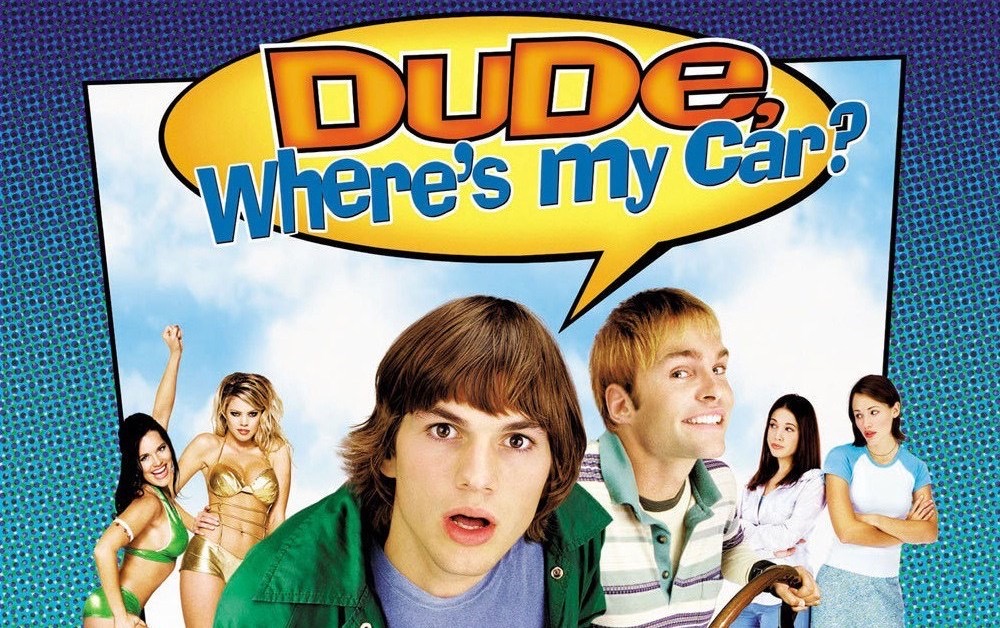
    Dude, Where’s My Car?

    When Horus wakes up after Set took the wheel

    There are stupid movies, and then there are movies so stupid they accidentally confess something profound. Dude, Where’s My Car? belongs in the second category.

    On the surface, it is pure chaos: two dim protagonists wake up after a blackout, cannot remember what happened, cannot find the car, and stumble through a chain of absurd clues, offended strangers, cultish weirdos, and increasingly cosmic nonsense. But through Geomytha, the title already tells you everything.

    This is not really a movie about a missing car.

    It is a movie about consciousness losing the vehicle, waking inside the aftermath, and trying to reconstruct itself from debris.

    The title is really asking:

    Dude, where did awareness lose embodiment?

    Dude, where did the continuity go?

    Dude, who was driving this life while I was gone?

    That is not just comedy. That is the human condition.

    The car as vehicle

    A car is not just transportation. Symbolically, it is the moving vessel. It is the structure that carries you through the world. It is the instrument by which intention becomes trajectory.

    So when the whole film begins with the vehicle missing, the first symbolic problem is already in place: consciousness has become separated from the thing that was carrying it forward.

    In Geomytha, that means awareness is no longer seated in its proper relation to embodiment. The person wakes up in motion’s aftermath without memory of the movement itself. They are inside consequences they cannot connect to direct presence.

    That is ego.

    Ego is not merely pride or vanity. Ego is what wakes up after the fact and tries to explain the trail it did not consciously author. It inherits motion it does not truly understand. It is a latecomer to its own life.

    That is why the line lands so well. “Dude, where’s my car?” is funny because it is shallow. But it is archetypally potent because it is deeper than it knows. The ego is always saying some version of that line. It is always looking around at its own life asking what happened, how it got here, and where the vehicle went.

    Isis: the forgotten ground

    Isis, in your framework, is awareness itself, the living ground, the maternal field from which coherence arises. In this film, Isis does not appear as an obvious character because she is what has been lost sight of from the opening frame.

    But her absence is precisely the point.

    Nothing can be “missing” unless there was first an original wholeness. The panic over the missing car presupposes a prior order. Their confusion presupposes an underlying continuity they can no longer access directly. Isis is that continuity. She is the unbroken field beneath the fragmentation.

    The film begins after consciousness has already drifted from source. That is why the whole story feels like a hangover. It is not merely a chemical hangover. It is a metaphysical one. Awareness has fallen asleep in itself and awakened in disorientation.

    The comedy rests on a hidden tragedy: they no longer know how to return directly to the ground of being, so they must chase signs.

    Osiris: shattered reflection

    Osiris is reflective consciousness, the clean mirror of awareness, the power by which being knows itself without distortion. In Dude, Where’s My Car?, Osiris is not functioning properly. He has been broken into fragments.

    That is exactly what the plot gives us: pieces.

    There are scraps of memory, odd objects, messages, tattoos, angry reactions from others, weird clues, partial explanations, traces of actions already taken. But there is no living center holding the pieces together. Reflection has become shattered into evidence.

    This is textbook Osirian dismemberment.

    The protagonists do not remember the night because reflective consciousness is no longer whole enough to mirror experience cleanly. Instead of direct recollection, they have a forensic trail. They have to investigate themselves like detectives investigating a crime scene.

    That is a powerful image of the fallen mind. Rather than knowing itself immediately, it must infer itself from fragments. It does not inhabit continuity. It assembles continuity after the fact.

    Osiris, once whole, reflects awareness. Osiris, once broken, leaves Horus to piece together a self from symbolic remains.

    Set: projection, diversion, absurdity

    Set is the force of projection, imaginative takeover, sensory exaggeration, and outward dispersion. He is not simply evil. He is the energy by which consciousness leaves its center and gets tangled in appearances. He is useful when employed and disastrous when enthroned.

    In this film, Set is everywhere.

    He is the endless chain of diversions. He is the absurd clue structure. He is the way every answer produces more confusion. He is the escalation from simple forgetfulness into a circus of external signs. He is the whole bizarre machinery that keeps the protagonists running outward instead of returning inward.

    The film’s humor is fundamentally Setian. It is generated by misrecognition, excess, surface weirdness, delayed understanding, and chaotic proliferation. One missing car becomes an entire universe of complications. That is how projection works. Once awareness leaves its center, the world multiplies into problem after problem, sign after sign, false authority after false authority.

    Set does not merely hide the truth. He overproduces alternatives.

    That is why the movie keeps getting bigger and dumber. That inflation is not random. It mirrors the psychic structure of a consciousness that has lost its ground and become dependent on external clues. The more disconnected it is from source, the more reality becomes a scavenger hunt.

    A simple return becomes impossible because every object, every stranger, every event now carries exaggerated significance. The lost center generates a swollen universe.

    Horus: the self reconstructed from evidence

    Horus is the resulting time-bound identity, the ego-self assembled after the fracture. He is the one who emerges from the battle between reflection and projection. He is not original awareness. He is the claimant to the throne after disruption.

    That is exactly what Jesse and Chester are doing for the entire movie.

    They are trying to rebuild a usable self.

    Not a true self. A usable one.

    They want enough continuity to survive social consequences, recover the vehicle, regain approval, restore order, and move forward. In other words, they are not seeking liberation. They are seeking narrative repair. That is Horus all day long. He does not ask, “What is awareness prior to this confusion?” He asks, “How do I put my life back together?”

    And to do that, he must reconstruct identity from traces.

    This is one of the movie’s most important symbolic confessions. The protagonists do not know who they were, so they infer who they must have been. They build selfhood retrospectively through signs, reactions, and residues.

    That is what most people call identity.

    They do not know themselves directly as awareness. They know themselves as the story pieced together from memory fragments, social response, possessions, mistakes, and unfinished consequences. The self becomes a detective theory.

    That is Horus: consciousness turned into a time-bound explanation of itself.

    The blackout as spiritual allegory

    The blackout matters because it is more than a plot device. It is the archetypal condition of fallen consciousness.

    You awaken in a life already in progress.

    You do not remember how you got into this pattern.

    You inherit relationships, obligations, reactions, and material consequences.

    You are forced to interpret your existence through fragments.

    That is not just a comedy setup. That is incarnation as experienced through ego.

    People assume they are living directly, but most are living post hoc. They wake inside momentum. They awaken inside scripts. They awaken inside social entanglements and bodily trajectories they did not consciously author from present awareness. Then they spend their lives trying to explain the mess.

    That is why the movie feels so strangely universal beneath its stupidity. It dramatizes the sense that life has already happened before you got there.

    The ego is always late to the scene.

    Why the film keeps escalating

    One of the funniest things about the movie is how disproportionate everything becomes. A missing car spirals into a ridiculous cosmology. That escalation is symbolically exact.

    When the center is lost, the world expands in compensation.

    A missing car is no longer a missing car. It becomes evidence of conspiracy, proof of hidden forces, a portal to larger stakes, a signal that reality itself has become unstable. This is what happens when consciousness no longer rests in presence. The outer world becomes inflated because the inner axis is gone.

    Without Isis grounding and Osiris reflecting, Set fills the void with spectacle. Horus then mistakes that spectacle for reality and starts running.

    That is modern identity in one sentence: Set creates the maze, Horus calls it a life.

    The hidden joke of the title

    The word “dude” matters too.

    “Dude” is already depersonalized identity. It is vague, generic, almost interchangeable. It signals a self with very little depth of inward relation. Not evil, not sinister, just unexamined and diffuse. The title does not say, “Where is the sacred vehicle of embodied awareness?” It says, “Dude, where’s my car?”

    That flattening is the joke.

    The sacred question has been reduced to an idiot refrain. The metaphysical crisis comes out sounding like a stoner inconvenience. But that is exactly how fallen consciousness speaks. It trivializes what is actually fundamental. It experiences dislocation as annoyance rather than revelation.

    So the title is funny because it is spiritually illiterate in precisely the way the condition itself is spiritually illiterate.

    The being has lost the vehicle and thinks the problem is parking.

    Geomytha reading in one line

    If you wanted the whole movie reduced to one Geomytha sentence, it would be this:

    Dude, Where’s My Car? is the story of Horus waking in Set’s aftermath and trying to reconstruct Osiris without returning to Isis.

    That is the whole machinery.

    Awareness is forgotten.

    Reflection is shattered.

    Projection takes over.

    Identity scavenges the fragments.

    The result is a comedy because the ego’s reconstruction project is inherently ridiculous. It is always trying to look serious while standing in a debris field it does not understand.

    Another way to say it

    Or even sharper:

    The ego is what wakes up in the parking lot of existence asking where the vehicle went, never realizing it was absent for the whole ride.

    That is why the movie works. Beneath the slapstick, it captures something real. Most people do not drive consciously. They blackout into pattern, wake in consequence, and then narrate their way back into a sense of self.

    The real missing car is embodied presence.

    The real joke is that they think recovering the object will restore the self.

    But Geomytha says the real recovery would not be the car. It would be awareness returning to the seat before projection takes the wheel.

    Closing formulation

    So through Geomytha, Dude, Where’s My Car? is not a stoner comedy. It is an accidental myth of disembodied identity.

    It is what happens when:

    • Isis is forgotten,

    • Osiris is fragmented,

    • Set floods the field with absurd projection,

    • and Horus wakes up trying to manage the mess.

    The question is not really where the car is.

    The question is who was driving.

  • Don’t Panic, You’re Already Dead: The Hitchhiker’s Guide to the Galaxy in Geomytha

    Don’t Panic, You’re Already Dead: The Hitchhiker’s Guide to the Galaxy in Geomytha

    Douglas Adams wrote the funniest book ever published about spiritual displacement.

    People think The Hitchhiker’s Guide to the Galaxy is a comedy about space. It is. But under the towel jokes, bureaucracy gags, and cosmic absurdity is a much darker pattern: awareness has already been evicted from its native ground, reality has been handed over to systems and explanations, and everyone is improvising their way through the wreckage with manuals, personas, and coping mechanisms.

    That is pure Geomytha.

    This is not a story about discovering some grand truth out in the stars. It is a story about what consciousness looks like after it has already been fragmented. Isis is hidden. Osiris is scattered. Set runs the interpretive field. Horus keeps trying to turn the fallout into a workable identity.

    And because Adams was honest, he told the whole thing as a joke.

    **Arthur Dent: Osiris in a bathrobe**

    Arthur Dent is not a classic hero. He is not a conqueror, initiate, prophet, or chosen one. He is ordinary consciousness. He is embedded in the small local world of routine, tea, inconvenience, and mild confusion. He is still close to ground. Then the ground is taken from him.

    First the house goes. Then the planet goes.

    That is Osiris dismemberment with planning permits.

    Arthur’s world is not destroyed by some mythic dragon descending from the heavens. It is destroyed by notices, forms, bureaucracy, and official process. That is what makes it modern. In ancient myth, chaos often arrives with claws. In Hitchhiker’s Guide, it arrives with paperwork. Set no longer needs horns. He has administration.

    Even Arthur’s surname matters. He is not Arthur Stone, Arthur Light, or Arthur King. He is Arthur Dent. A dent is not annihilation. It is damage without total destruction, the mark left when something whole is struck by force. The form remains, but it has been impressed upon. That fits Arthur exactly. He survives, but he bears the visible indentation of collision with absurdity. He is consciousness marked by impact.

    A dent also breaks a smooth surface. It interrupts the fiction of seamlessness. Symbolically, Arthur is the dent in consensus reality, the small irregularity through which the larger absurdity of the cosmos becomes visible. He is not yet a flamboyant Horus-performance like Zaphod, but he is no longer untouched. He is Osiris after impact, reflective consciousness bruised into exile.

    Arthur is therefore reflective consciousness shattered out of its ordinary coherence and thrown into a universe that does not care whether he understands it. He is Osiris dragged into postmodernity.

    **The Guide: Set’s pocket Bible**

    The Guide is one of the best symbols in the whole book because it is not evil in the simple sense. It is useful. Clever. Portable. Reassuring. It helps you survive.

    That is exactly what makes it dangerous.

    The Hitchhiker’s Guide is not direct knowledge. It is mediated knowledge. It is secondhand reality in a friendly package. It helps consciousness navigate exile without ever restoring consciousness to what was lost. It is the perfect scripture for a fallen world because it teaches adaptation, not return.

    That is Set’s specialty.

    Set does not merely lie. Set replaces being with interpretation. Set convinces you that the map is enough, that the manual is enough, that information about the thing is close enough to the thing itself. The Guide does not free anyone from the structure of fragmentation. It just gives them better notes while they wander around inside it.

    So yes, the Guide is funny. But symbolically it is a sacred text for displaced consciousness. It is the gospel of surviving unreality.

    **Ford Prefect: the trickster travel agent of the unreal**

    Ford is the one who already knows how the machine works. He understands the customs, the systems, the absurdity, the routes. He explains just enough to keep Arthur alive and moving. He is a psychopomp in a battered jacket.

    In another symbolic language he would be Hermes. In Geomytha, he is more like adaptive intelligence inside Set’s kingdom. He is not source. He is not ground. He is fluency in fragmentation.

    That is why Ford is so important. He represents the kind of intelligence modern people admire most: not wisdom, but navigational competence. He knows how things work. He can translate chaos into usable procedure. He can move inside the false world without fully being broken by it.

    Very useful. Not liberating.

    Ford teaches Arthur how to hitchhike through exile.

    **Zaphod Beeblebrox: Horus with a PR team**

    Zaphod is what happens when ego stops pretending it wants depth and just becomes spectacle.

    Two heads. Extra confidence. Constant performance. Political theater. Chaotic charisma. He is not a person so much as a rolling advertisement for himself. His center of gravity is projection.

    That is Horus in neon.

    In Geomytha, Horus is the time-bound identity that forms after projected perception overtakes reflective consciousness. Zaphod is that process turned comic and maximal. He is selfhood as event. He does not have a persona; he is made of personas. He is the mask so fully inhabited it has forgotten there was ever a face beneath it.

    Adams makes him hilarious, which is exactly right. Ego at full inflation is ridiculous. Zaphod is not tragic because modern identity is no longer even noble enough to be tragic. It is promotional.

    He is Horus after the invention of media.

    **Trillian: the one who left the local spell early**

    Trillian matters because she had already stepped outside the provincial enclosure before it was destroyed. She did not wait for Earth to be blown up to detach from it. That makes her symbolically different from Arthur.

    She represents consciousness that has already loosened from the local dream. She is not fully restored to Isis, but she is less trapped by the small consensual world. She is already mobile, already disembedded, already less hypnotized by the ordinary frame.

    In Geomytha terms, she is not pure awareness returned to source. She is lucid exile. She knows the room is fake, but she is still in the building.

    **Marvin: when you see through the game but not beyond it**

    Marvin is one of the most precise spiritual diagnoses in modern fiction.

    He has seen too much to be impressed by any of it. He is too intelligent to mistake the system for truth, too conscious to enjoy the performance, and too trapped to escape it. He sees through the masks, but seeing through them has not yet disclosed what lies before them.

    That is a very particular state.

    Marvin is not liberated consciousness. He is disillusioned consciousness. He is what happens when Horus begins to collapse, but Isis has not yet been remembered. He is the soul of late modernity: exhausted, overinformed, vaguely contemptuous, and metaphysically homeless.

    A lot of people think cynicism is awakening. Marvin shows that it is not. It is only the burnout that follows when the old enchantments fail and no deeper ground has yet been found.

    **Deep Thought and the joke that damns the age**

    Then we get the great revelation: the Answer to Life, the Universe, and Everything is 42.

    One of the best jokes ever written. Also one of the bleakest.

    Because the real punchline is not that the answer is silly. The real punchline is that nobody knows the question.

    That is the whole age right there.

    Horus wants final answers. Ego wants system, closure, certainty, formula. It wants the output without returning to the living condition from which the question arises. But once Set has overtaken the field, the original question is forgotten. Awareness has already been fragmented. Inquiry has already been severed from being. So even a correct answer arrives as useless.

    That is devastatingly Geomythic.

    The problem is not that the cosmos lacks an answer. The problem is that identity asks from exile. Consciousness no longer remembers how to ask from presence. So it receives information that cannot heal it.

    Forty-two is what happens when the machine produces truth for beings who have forgotten how truth is born.

    **Earth as Isis turned into a device**

    The revelation that Earth was itself a giant computer designed to generate the Ultimate Question is one of Adams’s most quietly horrifying moves.

    Earth is ground. Field. Local immediacy. Embodied reality. In Geomytha, it tracks with Isis. But in the story that ground is repurposed into function. It is no longer sacred presence. It is part of an epistemic apparatus.

    That is one of Set’s oldest crimes: converting being into utility.

    The living world is no longer lived. It is processed. Used. Instrumentalized. Measured for output. The field of awareness becomes a machine component in a larger search for explanation.

    That is not just science fiction. That is the modern world. The sacred ground has been redescribed as a system resource.

    **The Babel fish: translation without truth**

    The Babel fish looks like a miracle because it eliminates misunderstanding between species. Instant translation. Universal access. No language barrier.

    And yet it does not create wisdom, peace, or mutual recognition. Sometimes it just makes conflict more efficient.

    That is Set again.

    One of the great seductions of fallen consciousness is the idea that better mediation equals truth. Better interfaces. Better transmission. Better data flow. Better translation. But none of that guarantees return to source. It only allows fragmentation to circulate faster and more cleanly.

    The Babel fish is modernity’s dream that communication technology can cure metaphysical separation.

    It cannot.

    **The Vogons: procedural reality after the soul has left language**

    The Vogons are funny because they are unbearable. They are the personification of dead symbolic order. Procedure without presence. Language without life. Form without soul.

    Their poetry is one of Adams’s nastiest jokes because it captures something real: when language is severed from awareness, it becomes violence. When words are no longer rooted in living reflection, they stop revealing and start bludgeoning.

    That is why the Vogons feel archetypal. They are not merely bureaucrats in space. They are the custodians of a reality where official process has replaced intelligence, where formal legitimacy has replaced truth, and where symbolic expression has become anti-human.

    They are the priests of dead form.

    **“Don’t Panic” as a surviving commandment**

    Then there is the line everyone remembers:

    DON’T PANIC.

    Most people treat it as a joke. It is a joke. But it is also the closest thing the book has to a spiritual discipline.

    Panic is what happens when Horus takes fragmentation as ultimate. It is identity reacting to a collapsing map as if the map were reality itself. Panic is total capture by the projected field. Time closes in, the self contracts, imagination turns predatory, and awareness is swallowed by the emergency of the mask.

    So “Don’t Panic” is not trivial at all.

    It is the first refusal.

    Not yet enlightenment. Not yet restoration. Not yet full return to Isis. But the first act of non-cooperation with Set’s regime of interpretive chaos. It is the opening through which consciousness stops feeding the false kingdom with immediate identification.

    In a world run by absurd systems, this may be the last surviving sacred instruction printed in large friendly letters.

    **The hidden pattern of the whole thing**

    Read this way, The Hitchhiker’s Guide to the Galaxy becomes a myth of consciousness wandering through a universe where the center has been replaced by commentary.

    Arthur is Osiris in exile.

    The Guide is Set’s manual for surviving unreality.

    Ford is adaptive intelligence within fragmentation.

    Zaphod is Horus as spectacle.

    Trillian is lucid displacement.

    Marvin is disenchantment without transcendence.

    Deep Thought is the false promise that computation can replace awareness.

    Earth is Isis converted into a tool.

    The Babel fish is mediation mistaken for wisdom.

    The Vogons are dead language enforcing dead form.

    And 42 is the great modern sacrament: an answer with no living question behind it.

    **Final reading: the galaxy as a joke told by exile**

    Read through Geomytha, the story reveals absurdity as what reality feels like once explanation has replaced presence. The universe of Hitchhiker’s Guide is overflowing with data, guidance, interfaces, procedures, politics, and commentary. Yet almost nowhere is there stillness. Almost nowhere is there native ground. Almost nowhere is there consciousness resting before interpretation.

    That is why the comedy cuts so deep. It is not just mocking governments, bad art, or science fiction conventions. It is exposing a civilization so saturated with explanatory systems that it no longer knows how to encounter being directly.

    In Geomytha, that is Set’s kingdom in full bloom.

    Everyone is informed. No one is home.

    So the real lesson of The Hitchhiker’s Guide to the Galaxy is not that the universe has no meaning. It is that meaning cannot be recovered by piling more answers onto a consciousness that has forgotten how to stand in awareness before the answer-game begins.

    The answer is there. The problem is the asker.

    And until that changes, the wisest line in the galaxy remains exactly what Adams told you from the beginning:

    Don’t panic. Bring a towel. And do not mistake the Guide for the ground.
  • Ragnarok and the End of the Fragmented World

    Ragnarok and the End of the Fragmented World

    Paid essay — public preview. This page introduces the original essay. The complete argument, examples, and conclusion are available to paid Geomytha subscribers on Substack.

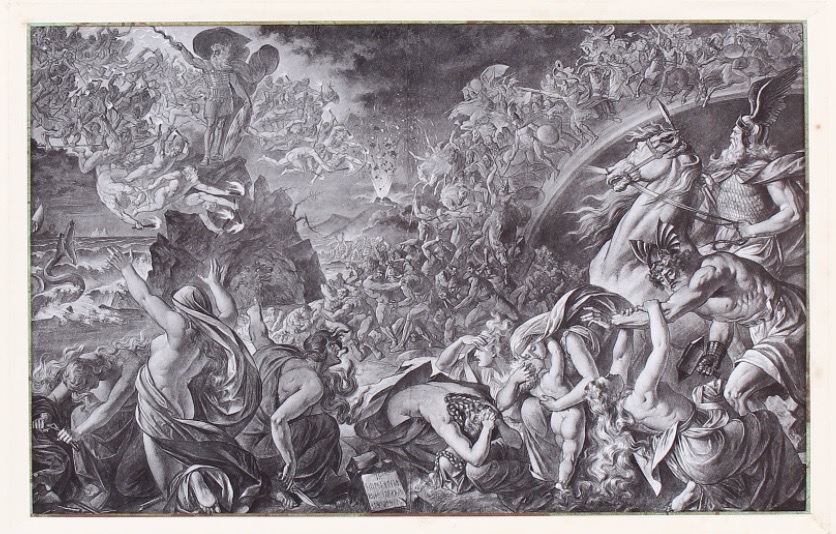
    In Geomytha, Ragnarok is not the end of reality. It is the collapse of a world built from fragmentation.

    Norse myth is usually presented as one last cosmic brawl: wolves, serpents, giants, fire, and gods going down swinging.

    Through Geomytha, Ragnarok means something deeper.

    It is not simply the end of the world. It is the end of a world built out of division. It is the moment a reality organized by fragmentation can no longer pretend to be stable, sacred, or true. The structure finally reveals what it always was.

    In Geomytha, apocalypse is not just destruction. It is disclosure.

    The lie burns first.

    The world was already broken at creation

    Ragnarok is not a random disaster descending on…

    Read the complete essay on Substack →

    This WordPress page preserves the essay’s place in the Geomytha archive, its original title and subtitle, and its publication date. The full subscriber edition remains protected on Substack.

  • The Fall Is a Held Breath

    The Fall Is a Held Breath

    In Geomytha, the great mythic pairs are not just opposites. They are breathing patterns. They show what happens when awareness moves outward into projection, comparison, strategy, appetite, judgment, and identity-making—and whether that movement is returned to source or allowed to harden into a false self.

    That is the hidden law beneath so many sacred stories. The fall is not that consciousness ever moves outward. The fall is that it forgets how to return.

    Set helps name that movement. Set is projected perception, the outward thrust into contrast, form, imagination, and division. But Set is not yet the final problem. The real danger appears when that movement becomes a residence instead of a passage. That is Horus: projection solidified into selfhood, the held breath of consciousness mistaken for “me.”

    So the issue is not using Set. The issue is becoming Horus.

    Once that distinction is clear, myths stop looking like moral lectures and start looking like instruction manuals. They show how awareness enters fragmentation, how fragmentation becomes identity, and how identity can be released again. The whole archive of myth becomes a map of respiration.

    Osiris and Set: The First Breath Drama

    This pairing gives the model in its clearest form.

    Osiris is restored reflection, coherent center, consciousness gathered back into order. Set is disruption, scattering, differentiation, and outward projection. In breath language, Set is inhale. Osiris is exhale.

    But inhale is not evil. Entering the field of contrast is part of life itself. We need distinction to navigate form. We need imagination to solve, compare, and interpret. Set becomes destructive only when the movement outward is no longer completed by return. Then fragmentation stops being a tool and begins pretending to be the throne.

    That is the mythic crisis: not that consciousness enters the world, but that it begins to worship its own projections there.

    Tree of Knowledge and Tree of Life

    The same respiratory structure appears again in Eden.

    The Tree of Knowledge is inhale into divided perception. It is consciousness entering categories, polarity, judgment, naming, and conceptual separation. It is reality being turned into an object of interpretation.

    The Tree of Life is exhale into undivided being. It is living participation before consciousness becomes trapped in its own descriptions. It is presence prior to over-mediation.

    So the fall can be read as a breathing error. Awareness inhales division and forgets to exhale it. Knowledge becomes exile when it is not returned to source. The problem is not that consciousness knows. The problem is that it begins to live inside its own divided knowing and mistakes that enclosure for life.

    Cain and Abel: When Perception Becomes Injury

    Cain and Abel carry the same law into the emotional register.

    Abel represents the lighter state: offering without heavy self-reference, reflection without hardening, being without defense. He is closer to exhale.

    Cain represents inhale seized by identity. He sees difference, but does not release it. Difference becomes comparison. Comparison becomes grievance. Grievance becomes story. Story becomes violence. Cain is not merely perception—Cain is perception becoming selfhood through resentment.

    That is why Cain kills Abel. The heavy heart cannot tolerate the light heart. Fragmented selfhood cannot bear what has not yet been trapped in narrative. Cain dramatizes what happens when the inhale of contrast is never surrendered. It calcifies into “my wound,” “my rejection,” “my right,” “my compensation.” In Geomytha, that is the birth of Horus in emotional form.

    Esau and Jacob: The Self That Learns to Take by Strategy

    Esau and Jacob encode the same pattern in a more subtle psychological form.

    Esau is earthy, immediate, bodily, and closer to direct embodiment. Jacob is strategic, mediated, calculating, and oriented toward acquisition through substitution and symbolic advantage. Jacob is consciousness learning how to gain through image, inversion, and cleverness rather than direct grounded being.

    That makes Jacob more aligned with inhale: the movement into self-construction, strategy, symbolic manipulation, and mediated identity. Esau is not pure liberation, but he is closer to the exhaled register of embodied immediacy.

    What the story dramatizes is not simply two different temperaments. It dramatizes the rise of the strategic self—the self that can use symbols, timing, and representation to take the blessing. Jacob shows how consciousness, once it enters mediation, can begin to mistake the acquired image for the true heir.

    The Problem Is Not Set—It Is Held Set

    This is where the whole system sharpens.

    Set is not the villain in the simplistic sense. Set is the necessary movement into form, contrast, interpretation, and provisional fragmentation. Without Set, there is no world-reading at all. There is no navigation, no distinction, no temporary use of image.

    But once consciousness stops treating that movement as temporary, Set becomes enthroned as Horus. That is the real trap. The breath is held. The story congeals. The image hardens. Perception becomes personhood.

    Myth returns to this lesson again and again because it is the central human error. The false self is not created out of nothing. It is created when a useful movement is mistaken for a permanent identity.

    So every myth becomes a study in the same danger: can awareness pass through fragmentation without taking up residence there?

    Myth as a Guide to Right Respiration

    Once seen this way, myth becomes less about morality and more about spiritual physiology.

    Each story asks whether consciousness can move through the world rhythmically:

    enter,

    discern,

    release,

    return.

    That is why breath is such a powerful key to Geomytha. Breath already enacts the law the myths are teaching. One may inhale form, but one cannot live by inhalation alone. If the psyche only projects, analyzes, defends, anticipates, compares, and narrates, it becomes Horus. Exhale is what prevents projection from becoming identity.

    This is also why your reading of Set as a controlled inhale is so strong. Set can be used. Projection can be entered deliberately, even skillfully, to understand, solve, discern, and navigate. But it must be returned. Exhale is the refusal to let the perceptual excursion become the self.

    The Weighing of the Heart and the Ark

    This same law appears in ritual and biblical imagery.

    The weighing of the heart is the measure of whether the inhale has left residue. Has perception been released, or is it still clinging to the heart as grievance, fear, vanity, or story? A heavy heart is consciousness still carrying Set. A light heart is consciousness that has returned the projection to source.

    Noah’s Ark expresses the same principle during emotional flood. When the senses are overwhelmed and the inner weather becomes turbulent, the ark is the container that preserves awareness through the storm. Three controlled breaths can function exactly this way in Geomytha. They build an ark inside the body. They stop the flood from becoming “me.”

    So the ark contains the return, and the weighing of the heart reveals whether that return has truly happened.

    The Great Mythic Pairs as Breathing Patterns

    Seen together, the pattern becomes unmistakable:

    • Osiris and Set show reflection and fragmentation.

    • Tree of Life and Tree of Knowledge show undivided being and divided perception.

    • Abel and Cain show light offering and grievance-formed identity.

    • Esau and Jacob show embodied immediacy and strategic self-construction.

    These are not just rival sides. They are variations on the same respiratory law of consciousness. Each myth asks whether the outward movement will be completed, or whether it will harden into a false inheritor.

    That is why these stories endure. They are not merely about ancient brothers, gods, or gardens. They are about the mechanics of awareness itself.

    Geomytha’s final thought

    In Geomytha, myth is not just a record of conflict. It is a record of respiration. Set is the inhale into projection. Osiris is the exhale into restored reflection. Horus is what happens when the breath is held long enough to call the tension a self. And Isis is the source that never stopped breathing at all.

  • Isis Before Sunrise

    Isis Before Sunrise

    Paid essay — public preview. This page introduces the original essay. The complete argument, examples, and conclusion are available to paid Geomytha subscribers on Substack.

    How Geomytha turns the Sun into Set, the horizon into Horus, and Earth back into the source

    Most cosmologies begin with the same assumption: the Sun is the source. It lights the world, powers life, governs the day, and stands at the center as the great visible authority. Earth, by comparison, is treated as secondary, inert, dependent, a dark body waiting to be illuminated from outside.

    Geomytha reverses that entire arrangement.

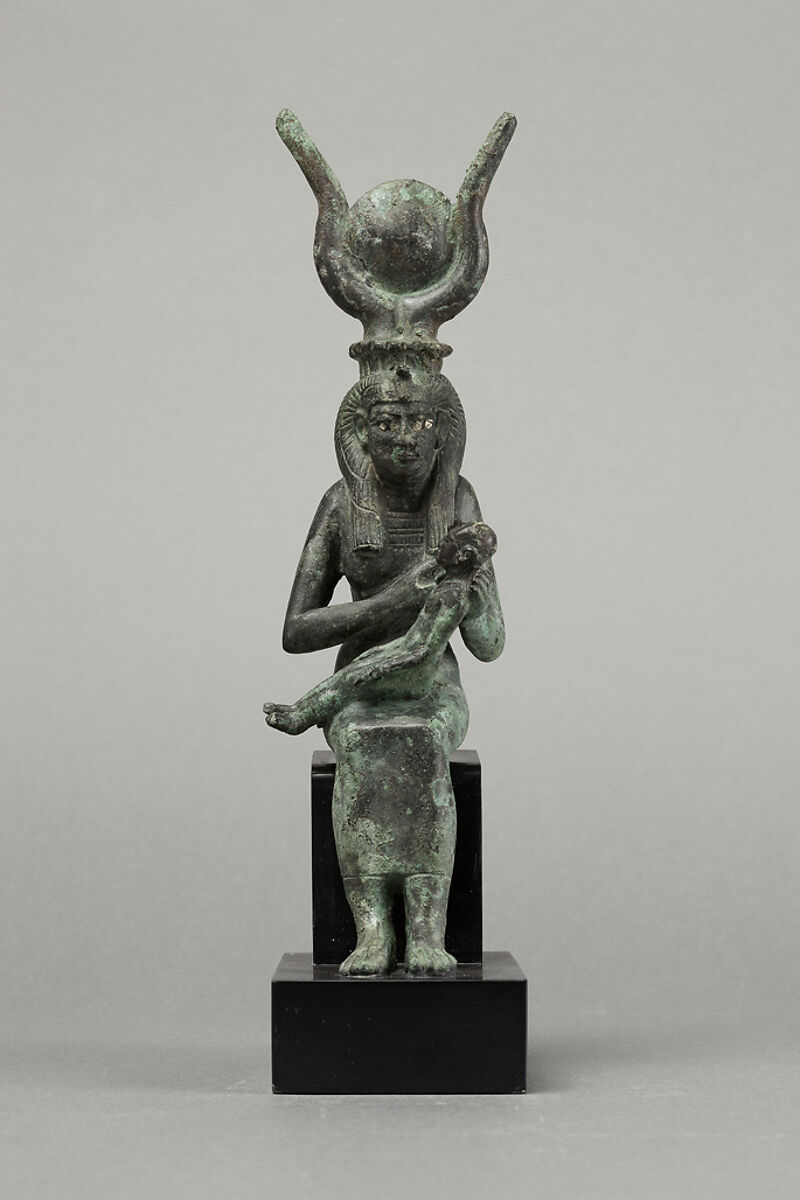
    In this reading, Isis is Earth, Osiris is the Moon, Set is the Sun, and Horus is the horizon-born self. Once those correspondences are in place, the Egyptian myth no longer reads like divine family drama. It becomes an anatomy of consciousness itself: source, reflection, projection, and identity.

    Isis…

    Read the complete essay on Substack →

    This WordPress page preserves the essay’s place in the Geomytha archive, its original title and subtitle, and its publication date. The full subscriber edition remains protected on Substack.

  • Horus in a Halo: Why Non-Duality Is Not the Ego’s Final Promotion

    Horus in a Halo: Why Non-Duality Is Not the Ego’s Final Promotion

    Paid essay — public preview. This page introduces the original essay. The complete argument, examples, and conclusion are available to paid Geomytha subscribers on Substack.

    Non-duality has a branding problem.

    Too often it gets sold as a soft-focus slogan for spiritually literate people: everything is one, separation is an illusion, just be present, all is divine. Nice sentiments. Very calming. Very marketable. Also very easy for the ego to steal.

    Because through the Geomytha lens, non-duality is not the ego becoming more serene. It is not the separate self getting a white robe, a Sanskrit vocabulary, and a more sophisticated personality disorder. It is not Horus graduating.

    It is Horus getting caught.

    That is the difference.

    In Geomytha, the structure is already there. Isis is pure awareness: prior to thought, prior to division, prior even to the idea that there is “someone” here having an…

    Read the complete essay on Substack →

    This WordPress page preserves the essay’s place in the Geomytha archive, its original title and subtitle, and its publication date. The full subscriber edition remains protected on Substack.

  • The Bull in the Machine

    The Bull in the Machine

    Paid essay — public preview. This page introduces the original essay. The complete argument, examples, and conclusion are available to paid Geomytha subscribers on Substack.

    Primer Fields, Mithras, and the Geometry of Broken Presence

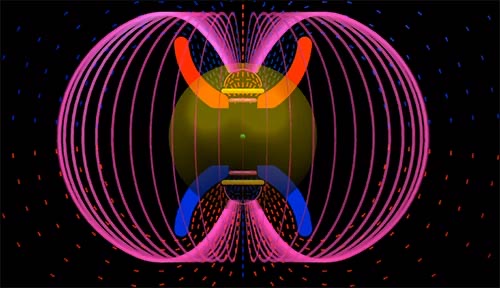
    David LaPoint’s Primer Fields theory matters in Geomytha less as settled science than as symbolic disclosure. What it gives is not merely a model of matter. It gives a diagram of how hidden coherence becomes visible form. That is why it feels mythic. It is another modern retelling of the oldest story: the unseen ground reflecting itself into order, that order being pierced, and the resulting spectacle being mistaken for reality.

    In Geomytha, Isis is the invisible ground of awareness, prior to image, motion, or division. Osiris is that ground reflected into coherent form. Set is the seizure of reflection by projection, the violent outwarding of what had rested in balance.…

    Read the complete essay on Substack →

    This WordPress page preserves the essay’s place in the Geomytha archive, its original title and subtitle, and its publication date. The full subscriber edition remains protected on Substack.

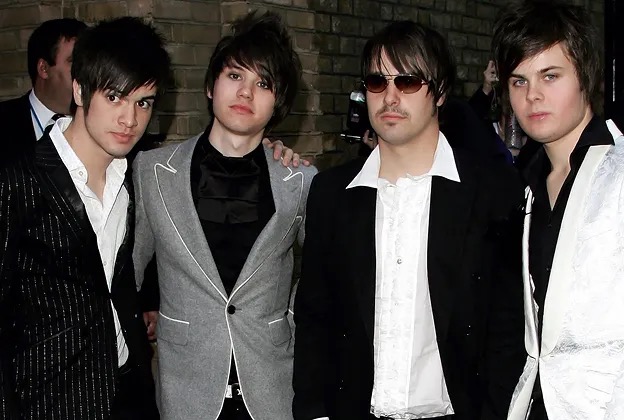
  • Panic! at the Disco: Ancient Egypt in Eyeliner

    Panic! at the Disco: Ancient Egypt in Eyeliner

    Some titles do not need decoding. They arrive already half-confessed.

    Panic! at the Disco is one of them.

    Through the Geomytha lens, the phrase names the entire mechanism by which grounded awareness falls into performance. It is not just a band name. It is a myth in miniature.

    In Geomytha, Isis is grounded awareness: the living earth of being itself. Osiris is the perfect reflection of that awareness: consciousness still aligned with its source. Then comes Set, the force of projected imagination, agitation, distortion, and mental intrusion. From that disturbance emerges Horus, the time-bound identity, the social self, the mask that thinks it is a man.

    That whole sequence is already sitting inside the name.

    Panic is Set.

    It is consciousness no longer resting, but reacting. It is reflection hijacked by projection. Panic is what happens when awareness stops abiding in itself and begins to spiral through anticipation, fear, self-reference, and imaginary stakes. Panic is not merely emotion. It is the felt signature of consciousness being overtaken by imagination.

    The disco is Horus.

    It is the world of lights, faces, poses, costumes, charm, seduction, rhythm, and display. Symbolically, the disco is not just a dance floor. It is a factory for persona. It is where the self is assembled under the gaze of others. It is where consciousness becomes image-conscious.

    So the phrase tells the whole story:

    Awareness enters the glittering field of reflection.

    Reflection becomes unstable.

    Projection takes over.

    Identity is born under the lights.

    That is not merely Panic! at the Disco. That is modern life.

    The exclamation point matters too. Presence does not exclaim. Awareness does not shout. The exclamation point is alarm, theatricality, command, emphasis. It belongs to Set. It is the punctuation mark of agitation.

    And then there is the mirror ball.

    A disco ball takes one light and scatters it into countless moving fragments. That is nearly a perfect image of the fall in Geomytha. One field becomes many reflections. One awareness becomes a thousand impressions. One undivided presence is broken into shimmering pieces, each piece seeming alive, important, seductive. The room glows, but only because the original light has been fractured.

    That is the trick.

    Fragmentation arrives dressed as radiance.

    This is why the disco is such a potent symbol. It is not evil because it dances. It is dangerous because it makes broken light look like life itself. It turns scattering into glamour. It turns division into spectacle. It makes the loss of center feel exciting.

    That is Set’s signature move in every age: not simply terror, but enchantment.

    He does not only distort reflection. He stylizes distortion until it feels liberating.

    That is why Panic! at the Disco works so well as a modern mythic phrase. It names a civilization built on performance. We no longer gather in temples of stone, but in temples of image. The nightclub became the screen. The mirror ball became the algorithmic feed. The stage became the profile. The crowd became the audience of mutually reinforcing masks. We perform ourselves under rotating fragments of attention and call it a life.

    The same archetypes remain.

    Isis is the unbroken ground.

    Osiris is clear reflection.

    Set is projected imagination.

    Horus is the identity produced when reflection gets captured by spectacle.

    And panic is the sound consciousness makes when it tries to survive inside that process.

    That is why panic and ego belong together. Horus cannot rest. A mask must be maintained. A social identity must be fed, defended, updated, admired, protected. Anything constructed in time is vulnerable in time. So panic is not an occasional malfunction of ego. It is one of ego’s native atmospheres. The costume shines, but it is fragile. The persona glitters, but it depends on constant reinforcement.

    This is also why so much theatrical pop imagery feels spiritually revealing. Velvet, eyeliner, confession, seduction, excess, chandeliers, scandal, heartbreak, and implosion are not random decorations. They are the natural aesthetics of consciousness trapped in self-display. Once being becomes performance, melodrama follows.

    From this angle, Panic! at the Disco is not fundamentally about rebellion. It is about ego as cabaret.

    The self is not merely imprisoned. It is beautifully imprisoned. It is costumed, lit, dramatized, romanticized, made entertaining. The trap sparkles. The fragmentation dances. Illusion becomes pleasurable enough that few ask what has been lost.

    And what has been lost is simple:

    the stillness before the performance.

    That is Isis.

    She is the joy before it becomes spectacle.

    The love before it becomes seduction.

    The life before it becomes persona.

    The unbroken field before the mirror ball shatters its light.

    Osiris, then, is the capacity to reflect that ground without distortion. To hear the music without becoming the costume. To move without being claimed by the movement. To enter the disco without being born there.

    That may be the hidden teaching here.

    The problem is not dancing.

    The problem is forgetting what is dancing.

    The problem is not expression.

    The problem is becoming a mask in response to reflection.

    The problem is not the room of lights.

    The problem is panic at the disco: awareness entering the field of fractured appearance and mistaking the fragments for itself.

    So the title stands as a compact modern scripture of the fall. Ancient Egypt in eyeliner. Osiris in a velvet jacket. Set as theatrical over-animation. Horus born on the dance floor beneath shattered light.

    Myth does not disappear. It changes costumes.

    The temple becomes the theater.

    The theater becomes the club.

    The club becomes the feed.

    But the mechanism remains the same.

    Awareness is still the source.

    Reflection is still vulnerable.

    Imagination is still seductive.

    Identity is still the afterimage of broken light.

    And panic is still what happens when consciousness forgets it was whole.

    Panic! at the Disco is Osiris under the mirror ball, trembling as Set turns shattered light into a self.

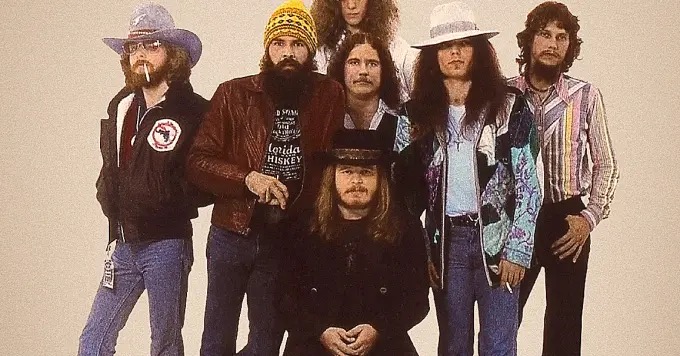
  • Gimme Three Steps: When the Ego Asks Time for an Exit

    Gimme Three Steps: When the Ego Asks Time for an Exit

    Lynyrd Skynyrd’s “Gimme Three Steps” is usually heard as a funny barroom escape story. Guy meets girl. Wrong man notices. Gun appears. Chaos follows. But through the Geomytha lens, the song is doing something much older and much stranger. It is staging, in miniature, the entire fall from grounded awareness into projected conflict.

    It starts in rhythm. That is the first clue.

    The opening setting is not philosophical. It is not abstract. It is bodily, social, immediate. There is movement, music, atmosphere, and participation. The speaker is inside life before he is inside a story about life. In Geomytha, that opening belongs to Isis as the grounded field and Osiris as the living reflection of that field. The dance floor is earth-consciousness in motion. The self has not yet hardened into defense.

    Then reflection appears in attractive form.

    The woman in the song is not merely a literal woman, though she works perfectly well at that level. Symbolically, she is reflected beauty, reflected fascination, the shimmer of life becoming an object of attention. This is Osirian territory: life appearing as something luminous and desirable within the field of experience. But in Geomytha, reflected beauty is always vulnerable to seizure. The moment attention clings, the reflected world can be converted into claim, rivalry, and threat.

    That is when Set arrives.

    The other man does more than interrupt a dance. He transforms the whole structure of the scene. What was open becomes territorial. What was embodied becomes psychological. What was shared becomes divided into mine and yours, offense and defense, consequence and fear. That is classic Set: not merely a villain, but projected perception overtaking the field and reorganizing reality around conflict.

    And once Set enters, Horus appears almost instantly.

    The speaker is no longer just dancing. He is now a threatened identity. He has become a character with something to lose, a body in time, a self urgently trying to preserve its future. This is why “Gimme three steps” matters symbolically. It is not just a request for physical distance. It is a plea for a sliver of time in which the ego can escape destruction.

    That is the secret engine of the song.

    Horus never says, “Let me wake up from the illusion.” Horus says, in effect, “Give me just enough time to survive it.”

    That is why the song is so funny and so true. It is not a song about transcendence. It is a song about emergency ego formation. It captures the absurd speed with which human consciousness falls out of rhythm and into drama. One moment there is music. The next moment there is threat, possession, and a desperate need for exit.

    The gun intensifies the symbolism. In Geomytha terms, the gun is projected will hardened into immediate consequence. It is imagination compressed into fate. It collapses the distance between psychic claim and bodily danger. Once the gun appears, Set’s field is no longer vague or emotional. It becomes mechanical, decisive, and temporal. Horus must move now.

    That makes the “three steps” feel almost ritualistic. They are the smallest possible escape corridor. A tiny liturgy of survival. Not liberation, not full return to Isis, but a narrow break in the enclosure. The ego is not healed. It is merely given room to run.

    So the symbolic sequence of the song looks like this:

    Isis gives the grounded field.

    Osiris reflects it as music, movement, attraction, and participation.

    Set enters as jealousy, possession, and projected threat.

    Horus is born as the frightened time-bound self asking for enough distance to continue.

    That is why the song works as more than a Southern anecdote. It is a myth of interruption. It dramatizes how quickly awareness can be overtaken by projection, and how instantly identity appears once the field is reorganized around conflict.

    The deeper meaning is not: I almost got shot.

    The deeper meaning is:

    The moment reflection is seized by projection, identity is born as panic.

    That may be one of the cleanest Geomytha readings imaginable. The song is catchy because the structure is universal. Most lives move exactly this way. There is first a living field. Then fascination. Then claim. Then threat. Then the self appears as a frightened manager of consequences.

    So in the end, “Gimme Three Steps” is not just about running from another man.

    It is about the ego trying to outrun a world that projected perception has already broken.

    And that is the joke beneath the joke: once Set walks into the bar, Horus doesn’t ask for truth. Horus asks for time.