In Geomytha, the great mythic pairs are not just opposites. They are breathing patterns. They show what happens when awareness moves outward into projectionThose — ProjectionThose names projection: enemies, outsiders, competitors, threats, and disowned qualities placed beyond the identity boundary.Read full entry →, comparison, strategy, appetite, judgment, and identityThis — IdentityThis names the formed identity: the body, role, image, wound, belief, or story claimed as what the self is.Read full entry →-making—and whether that movement is returned to sourceIs — SourceIs names unclaimed being: awareness before possession, distinction, or identity.Read full entry → or allowed to harden into a false self.

That is the hidden law beneath so many sacred stories. The fall is not that consciousness ever moves outward. The fall is that it forgets how to returnReturn — RemembranceReturn names remembrance and release: the loosening of possession so reflection can become transparent to source again.Read full entry →.
SetSetIn Geomytha, Set names the claimant: I — the interruption by which reflection is taken as mine and converted toward ownership.Read full entry → helps name that movement. Set is projected perception, the outward thrust into contrast, form, imagination, and division. But Set is not yet the final problem. The real danger appears when that movement becomes a residence instead of a passage. That is HorusHorusIn Geomytha, Horus names the identity that forms after claim: This — the body, role, image, wound, belief, or story taken as what the self is.Read full entry →: projection solidified into selfhood, the held breath of consciousness mistaken for “me.”
So the issue is not using Set. The issue is becoming Horus.
Once that distinction is clear, myths stop looking like moral lectures and start looking like instruction manuals. They show how awareness enters fragmentationDismemberment / FragmentationDismemberment names the symbolic breaking of a previously integrated reflection into separate parts, roles, objects, or powers.Read full entry →, how fragmentation becomes identity, and how identity can be released again. The whole archive of myth becomes a map of respiration.
OsirisOsirisIn Geomytha, Osiris names reflected presence: Am — awareness reflected as living consciousness without yet becoming ownership.Read full entry → and Set: The First Breath Drama
This pairing gives the model in its clearest form.
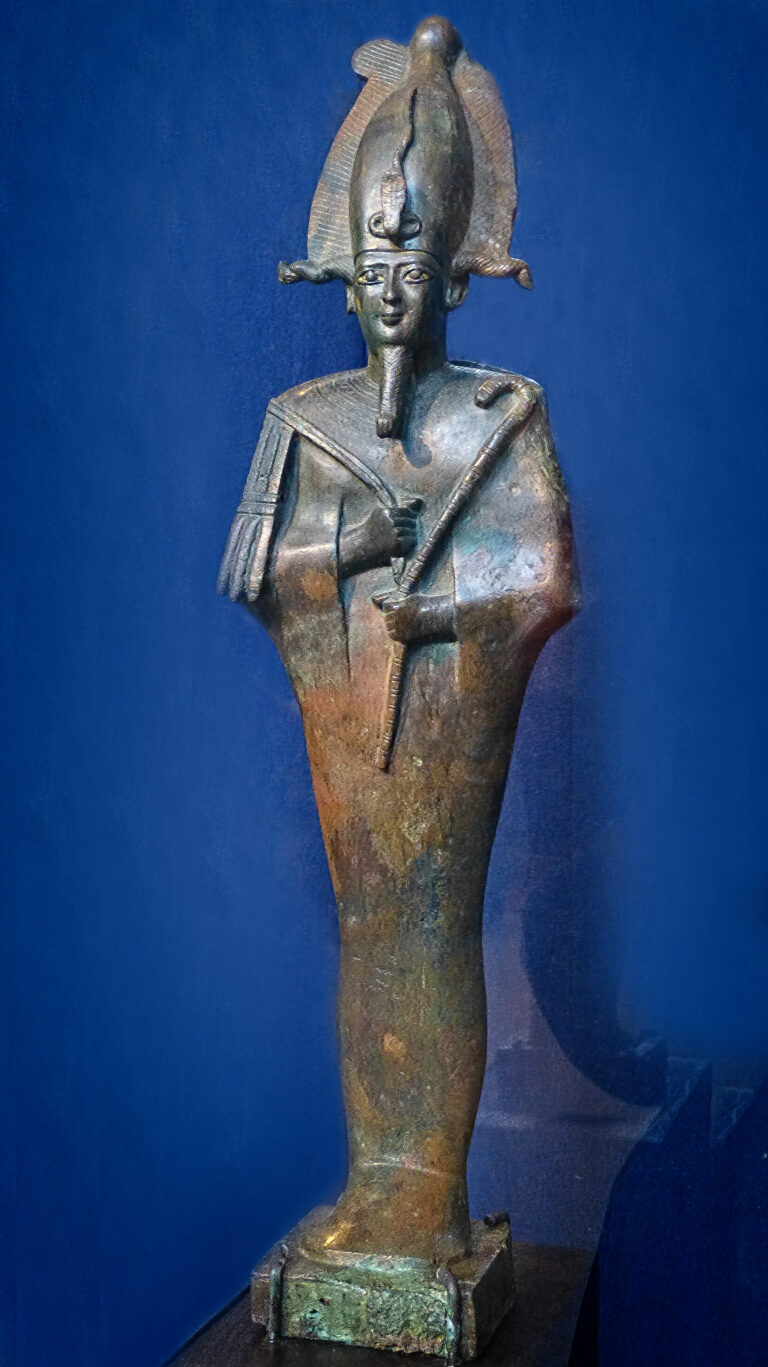
Osiris is restored reflectionAm — ReflectionAm names reflected presence: awareness embodied or mirrored without yet becoming ownership.Read full entry →, coherent center, consciousness gathered back into order. Set is disruption, scattering, differentiation, and outward projection. In breath language, Set is inhale. Osiris is exhale.
But inhale is not evil. Entering the field of contrast is part of life itself. We need distinction to navigate form. We need imagination to solve, compare, and interpret. Set becomes destructive only when the movement outward is no longer completed by return. Then fragmentation stops being a tool and begins pretending to be the throne.
That is the mythic crisis: not that consciousness enters the world, but that it begins to worship its own projections there.
Tree of KnowledgeTree of KnowledgeGenesis 2–3 identifies a tree of the knowledge of good and bad/evil in the garden and prohibits the human pair from eating from it. After they eat, the narrative says their eyes…Read full entry → and Tree of Life
The same respiratory structure appears again in Eden.
The Tree of Knowledge is inhale into divided perception. It is consciousness entering categories, polarity, judgment, naming, and conceptual separation. It is reality being turned into an object of interpretation.
The Tree of Life is exhale into undivided being. It is living participation before consciousness becomes trapped in its own descriptions. It is presence prior to over-mediation.
So the fall can be read as a breathing error. Awareness inhales division and forgets to exhale it. Knowledge becomes exile when it is not returned to source. The problem is not that consciousness knows. The problem is that it begins to live inside its own divided knowing and mistakes that enclosure for life.
Cain and Abel: When Perception Becomes Injury
Cain and Abel carry the same law into the emotional register.
Abel represents the lighter state: offering without heavy self-reference, reflection without hardening, being without defense. He is closer to exhale.
Cain represents inhale seized by identity. He sees difference, but does not release it. Difference becomes comparison. Comparison becomes grievance. Grievance becomes story. Story becomes violence. Cain is not merely perception—Cain is perception becoming selfhood through resentment.
That is why Cain kills Abel. The heavy heart cannot tolerate the light heart. Fragmented selfhood cannot bear what has not yet been trapped in narrative. Cain dramatizes what happens when the inhale of contrast is never surrendered. It calcifies into “my wound,” “my rejection,” “my right,” “my compensation.” In Geomytha, that is the birth of Horus in emotional form.
Esau and Jacob: The Self That Learns to Take by Strategy
Esau and Jacob encode the same pattern in a more subtle psychological form.
Esau is earthy, immediate, bodily, and closer to direct embodiment. Jacob is strategic, mediated, calculating, and oriented toward acquisition through substitution and symbolic advantage. Jacob is consciousness learning how to gain through image, inversion, and cleverness rather than direct grounded being.
That makes Jacob more aligned with inhale: the movement into self-construction, strategy, symbolic manipulation, and mediated identity. Esau is not pure liberation, but he is closer to the exhaled register of embodied immediacy.
What the story dramatizes is not simply two different temperaments. It dramatizes the rise of the strategic self—the self that can use symbols, timing, and representation to take the blessing. Jacob shows how consciousness, once it enters mediation, can begin to mistake the acquired image for the true heir.
The Problem Is Not Set—It Is Held Set
This is where the whole system sharpens.
Set is not the villain in the simplistic sense. Set is the necessary movement into form, contrast, interpretation, and provisional fragmentation. Without Set, there is no world-reading at all. There is no navigation, no distinction, no temporary use of image.
But once consciousness stops treating that movement as temporary, Set becomes enthroned as Horus. That is the real trap. The breath is held. The story congeals. The image hardens. Perception becomes personhood.
Myth returns to this lesson again and again because it is the central human error. The false self is not created out of nothing. It is created when a useful movement is mistaken for a permanent identity.
So every myth becomes a study in the same danger: can awareness pass through fragmentation without taking up residence there?
Myth as a Guide to Right Respiration
Once seen this way, myth becomes less about morality and more about spiritual physiology.
Each story asks whether consciousness can move through the world rhythmically:
enter,
discern,
release,
return.
That is why breath is such a powerful key to Geomytha. Breath already enacts the law the myths are teaching. One may inhale form, but one cannot live by inhalation alone. If the psyche only projects, analyzes, defends, anticipates, compares, and narrates, it becomes Horus. Exhale is what prevents projection from becoming identity.
This is also why your reading of Set as a controlled inhale is so strong. Set can be used. Projection can be entered deliberately, even skillfully, to understand, solve, discern, and navigate. But it must be returned. Exhale is the refusal to let the perceptual excursion become the self.
The Weighing of the HeartWeighing of the Heart — Papyrus of Ani, Frame 3The British Museum identifies this scene as Ani’s Judgment: Ani’s heart is placed in one pan of a balance and a feather representing Ma’at, the divine personification of truth and order, in…Read full entry → and the Ark
This same law appears in ritual and biblical imagery.
The weighing of the heart is the measure of whether the inhale has left residue. Has perception been released, or is it still clinging to the heart as grievance, fear, vanity, or story? A heavy heart is consciousness still carrying Set. A light heart is consciousness that has returned the projection to source.
Noah’s Ark expresses the same principle during emotional flood. When the senses are overwhelmed and the inner weather becomes turbulent, the ark is the container that preserves awareness through the storm. Three controlled breaths can function exactly this way in Geomytha. They build an ark inside the body. They stop the flood from becoming “me.”
So the ark contains the return, and the weighing of the heart reveals whether that return has truly happened.
The Great Mythic Pairs as Breathing Patterns
Seen together, the pattern becomes unmistakable:
Osiris and Set show reflection and fragmentation.
Tree of Life and Tree of Knowledge show undivided being and divided perception.
Abel and Cain show light offering and grievance-formed identity.
Esau and Jacob show embodied immediacy and strategic self-construction.
TheseThese — AccumulationThese names accumulation: possessions, titles, achievements, beliefs, communities, and other extensions gathered around identity.Read full entry → are not just rival sides. They are variations on the same respiratory law of consciousness. Each myth asks whether the outward movement will be completed, or whether it will harden into a false inheritor.
That is why these stories endure. They are not merely about ancient brothers, gods, or gardens. They are about the mechanics of awareness itself.
Geomytha’s final thought
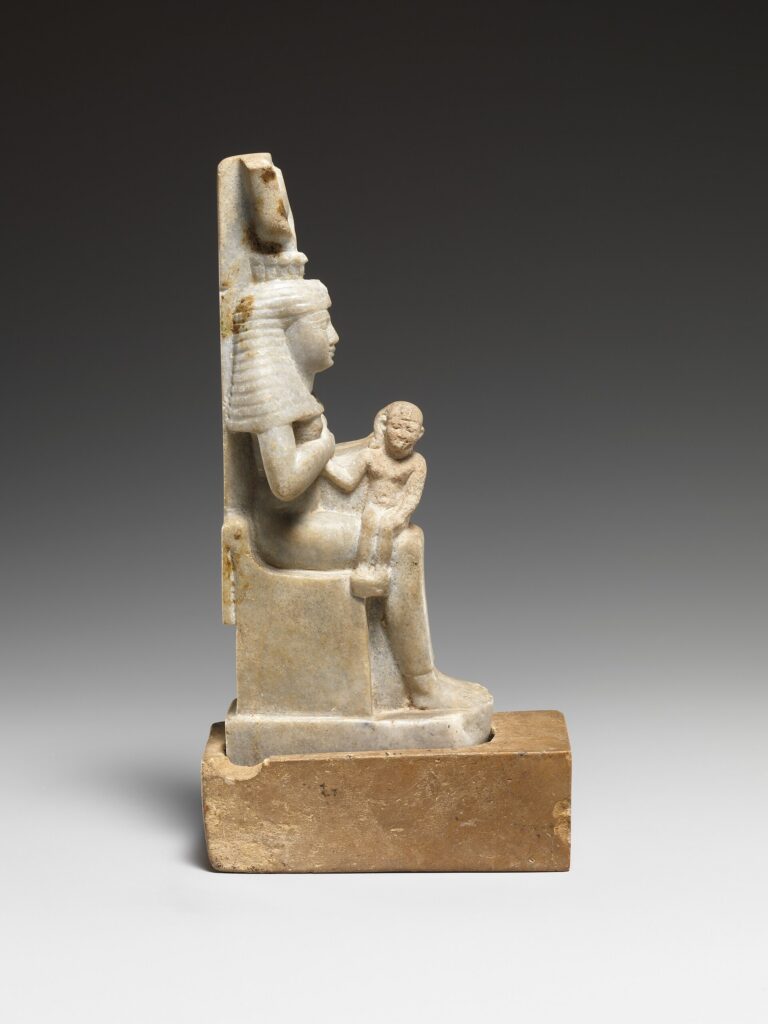
In Geomytha, myth is not just a record of conflict. It is a record of respiration. Set is the inhale into projection. Osiris is the exhale into restored reflection. Horus is what happens when the breath is held long enough to call the tension a self. And IsisIsisIn Geomytha, Isis names the unclaimed field: Is — pure being, awareness before possession, and the ground before the claimant appears.Read full entry → is the source that never stopped breathing at all.