Return — Remembrance
Public references and limits:
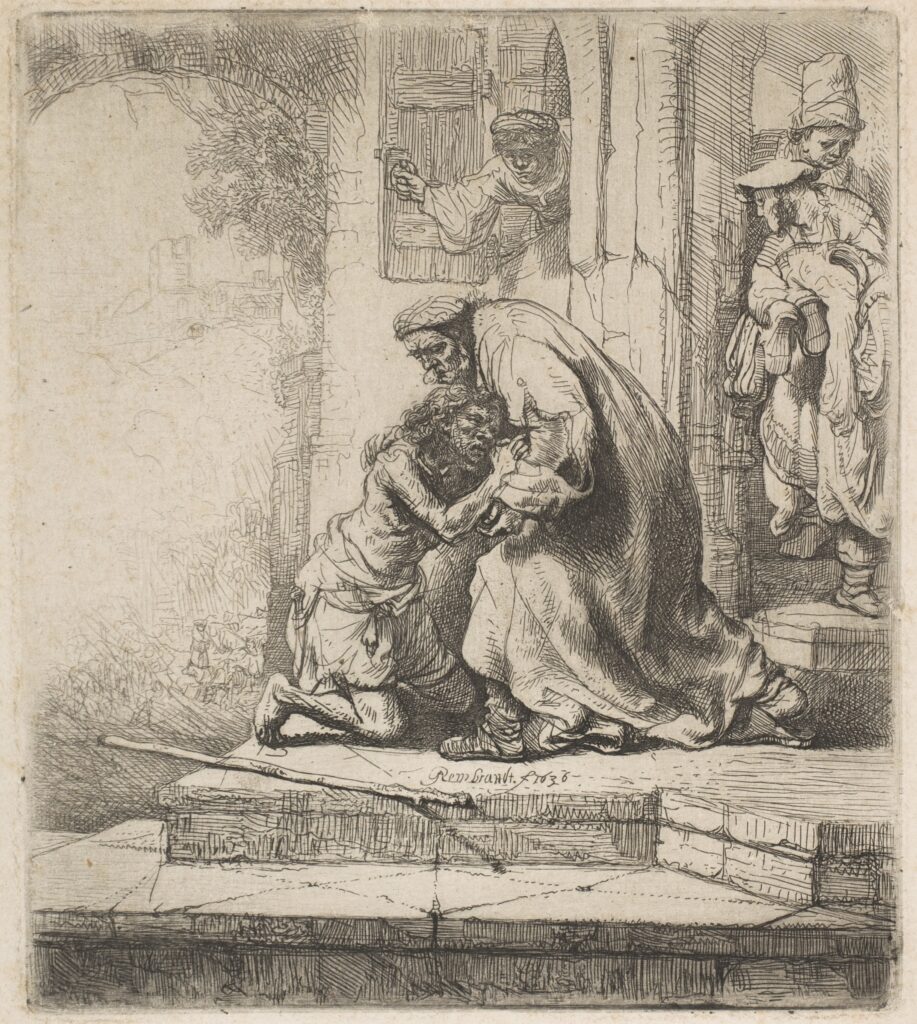
Luke 15 and Augustine’s Letter 55 provide separate return and reopening motifs. Their differences matter: a parable of familial return and Christian resurrection symbolism do not establish a single historical attention cycle.
Return is not regression to an untouched past but renewed visibility of what had been claimed, accumulated, or projected.
Return completes the attention cycle without erasing form.
All This → Return; corrective movements also include This → Am and Am → Is.
Remembrance can become nostalgia or the claim to possess a purer past. A return must reduce fixation in present relation rather than enthrone another identity. Moving backward in a story is not automatically restorative movement.
This entry’s name and mechanism belong to GEOMYTHA’s framework. The linked primary works are independent comparison witnesses, not evidence that the GEOMYTHA term originated in their cultures. Specific comparison references: Luke 15:11–32 — Parable of the Prodigal Son; The Eighth Day and Resurrection — Augustine, Letter 55. The original work, a later translation, a catalogue record and an extant manuscript are different kinds of evidence. The oldest surviving witnesses of the comparison traditions are not established by this entry.
Return is a Geomytha process category, not a universal account of enlightenment or salvation.
Do not make return another achievement identity or excuse for abandoning practical responsibilities.
Where this mechanism appears
Explore the essays and Index entries linked to this mechanism.
 White Room: The Shadow Waiting to Become Someone ElseChanging the image of who you are can leave the same need for an image in charge. A GEOMYTHA reading of Cream's White Room…
 The Beatles Died in 1966—and Became Someone ElseThe Beatles did not die in 1966. Their final ticketed concert ended one public role while their studio experiments continued. How a role can…
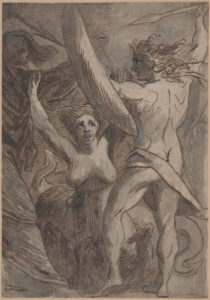 The Rebellion TrapOpposition is not freedom when identity still needs an enemy. A sourced GEOMYTHA reading of Satan, rebellion, inversion, and the claimant that can wear…
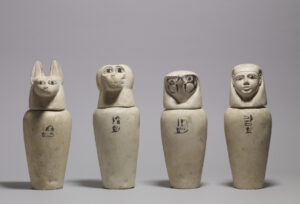 Why the Organs Were Not Thrown AwayAncient Egyptian mummification separated the liver, lungs, stomach, and intestines—but the parts were preserved, guarded, and kept inside a larger funerary order. Division did…
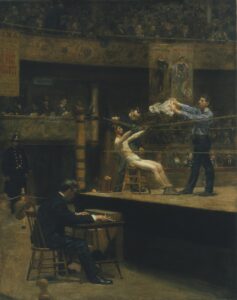 Between Bells: The Ring Is a BoxBoxing makes identity visible under pressure: the ring limits movement, the opponent reveals habits, the guard protects, the bell interrupts, and the corner offers…
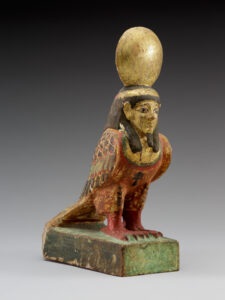 The Person Was Never One ThingKa, Ba, Akh, and Heka do not form a neat four-part soul system. Ancient Egyptian personhood was layered, mobile, relational, and reconstructed through return.
 Purple Haze, Purple Rain, and When Distortion Becomes RuleA haze colors the field. Rain brings the color down. Reign begins when the distortion no longer just affects perception but starts organizing identity…
 I Am Running Until I Become the RunnerA living action can become a defended identity. Flow gives us a way to see the difference between doing the verb and turning the…
Showing 8 most recent linked essays.
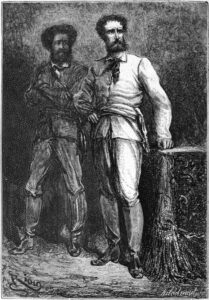 Captain Nemo — Twenty Thousand Leagues Under the SeasCaptain Nemo commands the Nautilus and refuses ordinary national allegiance. He keeps Aronnax and his companions aboard to protect his vessel’s secrecy. His actions include rescuing a pearl diver and identifying with the oppressed,…
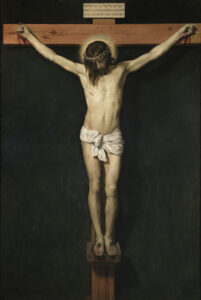 ChristJesus Christ as the central figure of Christianity. Matthew 27 depicts the soldiers' mock coronation with a robe and crown of thorns before crucifixion; Philippians 2 describes Christ humbling himself and becoming obedient unto…
 Dhikr — Sufi Remembrance PracticeDhikr (Arabic: remembrance or mention of God) is a central devotional practice in Sufi traditions. It can involve repetition of divine names or formulas and may be practiced silently or aloud, individually or collectively.…
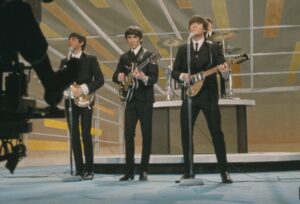 Eight Days a Week — The Beatles“Eight Days a Week” is a Beatles song whose impossible title expresses an amount beyond the ordinary seven-day week.
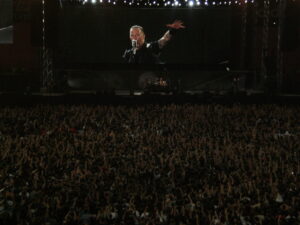 Enter Sandman — Metallica“Enter Sandman” is a Metallica song from the 1991 album Metallica, built around imagery of bedtime, sleep, fear, dreams, and the Sandman.
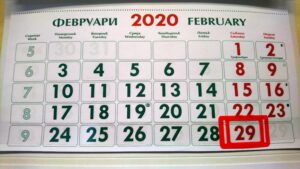 Leap Day / February 29The Gregorian calendar periodically inserts February 29 to keep the civil calendar aligned with the seasonal year because the tropical year is not an integer number of days.
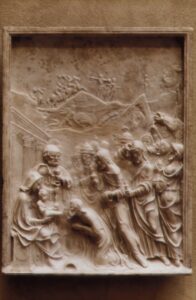 Magi and the Star — Matthew 2Matthew 2 describes Magi who see a star, travel to Judea, encounter Herod, and then find the child Jesus. Christian art developed a long Adoration of the Magi tradition around this episode.
 Moon — Reflection Field / Osirian MirrorWithin Geomytha, the Moon is treated primarily as a reflective image-field rather than defined through satellite language. Wim Carrette’s Crater Earth model is one modern fringe proposal that imagines the Moon as a reflection…
Showing 8 linked Index instances.
Follow the mechanism

See also
 Return by SurrenderReturn occurs when possession loosens: identity, accumulation, projection, and world-system are no longer defended as self, allowing reflection to release back toward source rather than acquiring another form to claim.
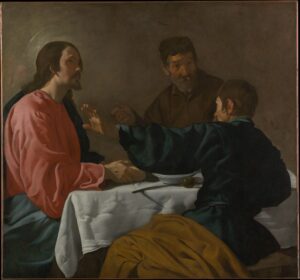 Recovered CenterRecovered Center names the restoration of right relation after fragmentation, when form becomes ordered around source without pretending to be source.
 Direct SeeingDirect Seeing is contact with experience before immediate naming, interpretation, symbolic classification, or self-positioning takes over.
 The Eightfold Attention CycleThe eightfold cycle is Is → Am → I → This → These → Those → All This → Return.