Direct Seeing
Public references and limits:
Korzybski’s map distinction and Plato’s educational sequence can challenge the project as well as support comparison. Seeing alone is not automatically adequate knowledge; accountable interpretation and correction can be necessary.
Geomytha treats 'see first, interpret second—if at all' as a final corrective against turning the system itself into another layer between awareness and experience.
It returns symbols to service by making perception primary and interpretation secondary.
This / I loosen toward Am: the classified object or self-story gives way to immediate reflected experience.
Immediate impressions can be mistaken, biased or incomplete. Direct seeing must remain corrigible by other people and evidence. A claim to see without interpretation is not a license to ignore scholarship or facts.
This entry’s name and mechanism belong to GEOMYTHA’s framework. The linked primary works are independent comparison witnesses, not evidence that the GEOMYTHA term originated in their cultures. Specific comparison references: The Map Is Not the Territory — Korzybski and General Semantics; Plato, Republic VII — Cave and education, primary text. The original work, a later translation, a catalogue record and an extant manuscript are different kinds of evidence. The oldest surviving witnesses of the comparison traditions are not established by this entry.
Direct Seeing does not reject thought, language, evidence, analysis, or interpretation; it changes their order and authority.
Do not turn immediacy into anti-intellectualism or assume first impressions are automatically true.
Where this mechanism appears
Explore the essays and Index entries linked to this mechanism.
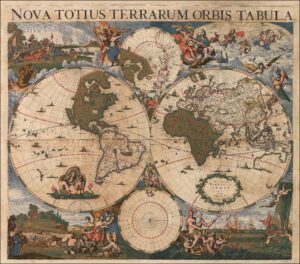 When the Map Replaces the TerritoryA doctor walks into a crowded emergency room and begins sorting the world into symptoms, risks, and priorities. The map is necessary. Without it,…
 Is the Millennium Falcon the Falcon Before the Throne?It is one of the most famous vehicles in modern mythology. Generations of viewers remember its shape immediately. Its battered exterior. Its impossible escapes.…
 Why Toto Is the Real Hero of The Wizard of OzAttention defeats spectacle when instinct notices what identity ignores.
 The Solar Eclipse as the Darkened ClaimThe Sun goes dark in the middle of the day. Not at night.Not at sunset.Not by the ordinary mercy of evening. In the hour…
 Alice and the Demonstrative WorldWonderland is not random. It only pretends to be. The body changes size. Animals talk. Time breaks. Logic loops. Queens shout. Cards become soldiers.…
 The Center That Does Not MoveMovement appears to be the opposite of stillness. Yet without stillness, movement becomes impossible. A wheel turns because something does not. The axle remains.…
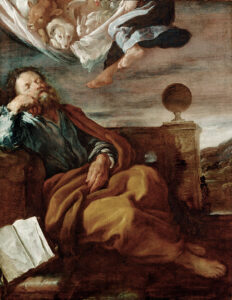 The Body at the GateYou are what you eat. The phrase has become so ordinary that its deeper meaning passes unnoticed. Eating is not the same as seeing,…
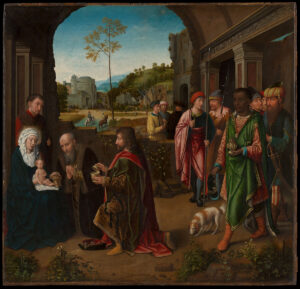 Why the Magi Followed a StarMost people remember the Wise Men. Few remember the thing they were following. The story is usually told as though the kings themselves are…
Showing 8 most recent linked essays.
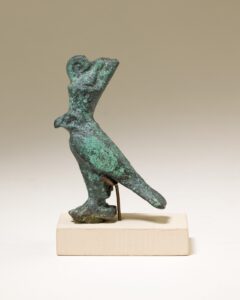 Horus the Elder — The WatcherHaroeris is a named manifestation of Horus, known as Horus the Elder. British Museum EA20654 is a lapis-lazuli amuletic figure identified as Haroeris, represented as a hawk-headed standing god in the double crown. The…
 I Am That — Nisargadatta MaharajI Am That is a published collection of talks by Sri Nisargadatta Maharaj, translated from Marathi by Maurice Frydman and first published by Chetana in 1973.
 Island — Aldous HuxleyIsland (1962), Huxley’s final novel, follows Will Farnaby’s encounter with the fictional society of Pala. The book presents an alternative experiment in living, including practices of attention. Its opening and final chapter use trained…
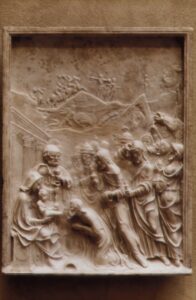 Magi and the Star — Matthew 2Matthew 2 describes Magi who see a star, travel to Judea, encounter Herod, and then find the child Jesus. Christian art developed a long Adoration of the Magi tradition around this episode.
 Oz and the Emerald City — The Wonderful Wizard of OzBaum’s The Wonderful Wizard of Oz sends Dorothy and her companions toward the Emerald City and the Wizard in search of help they believe lies at the destination. The first-edition text and illustrations provide…
 Professor Aronnax — Twenty Thousand Leagues Under the SeasProfessor Pierre Aronnax narrates the voyage. He is a naturalist whose initial explanation of the reported monster proves mistaken when it is revealed as a submarine. Aboard the Nautilus he records marine life, explores…
 The Caterpillar — Alice’s Adventures in WonderlandIn Chapter V, “Advice from a Caterpillar,” of Lewis Carroll’s Alice’s Adventures in Wonderland, the Caterpillar asks Alice who she is. Alice replies that she hardly knows at present, remembers who she was that…
 The Hitchhiker’s Guide to the GalaxyThe Hitchhiker’s Guide to the Galaxy is a 1979 comic science-fiction novel by Douglas Adams. Its protagonist Arthur Dent survives the destruction of Earth and travels through space with Ford Prefect, encountering Zaphod Beeblebrox,…
Showing 8 linked Index instances.
Follow the mechanism
Moves from
 Narrative Self-Maintenance / Story of MeNarrative Self-Maintenance is the continuous work of explaining, rehearsing, defending, projecting, and interpreting experience so that the story of me remains central and coherent.
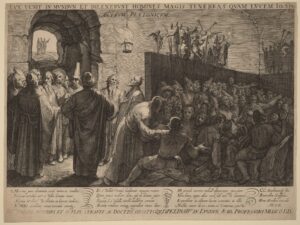 Conceptual CaptureConceptual capture occurs when naming, categorizing, measuring, or explaining stops serving relation and begins enclosing the living field inside fixed terms.
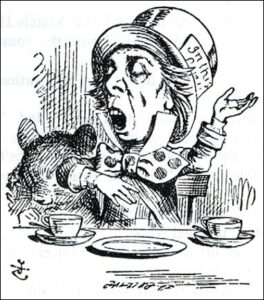 The Right QuestionThe right question interrupts misdirected seeking by asking what is actually sought, who is seeking, and what remains before the seeker-story begins.
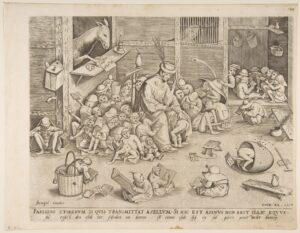 Pattern Without WisdomPattern Without Wisdom is the confusion of fluent pattern-handling, prediction, synthesis, or explanation with embodied judgment, moral depth, and truthful relation.
Moves into
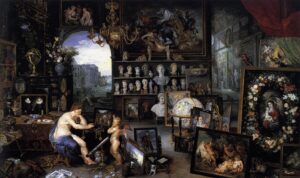 Reflection Without OwnershipReflection without ownership is the condition in which experience can appear, relate, and move without being seized as mine.
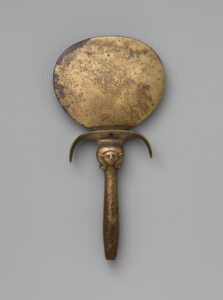 Mirror, Not a ThroneMirror, Not a Throne is the rule that an interpretive system should reveal recurring structures without becoming a new identity, authority, or worldview that replaces direct seeing.
See also
 Reflection Returning to Source — Am → IsAm → Is is reflection releasing back toward source without needing to become possession.
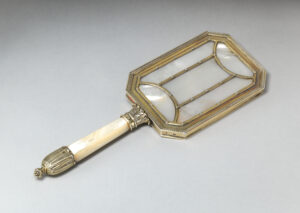 Identity Returning to Reflection — This → AmThis → Am is identity softening back into living reflection and relation.
 Return by SurrenderReturn occurs when possession loosens: identity, accumulation, projection, and world-system are no longer defended as self, allowing reflection to release back toward source rather than acquiring another form to claim.