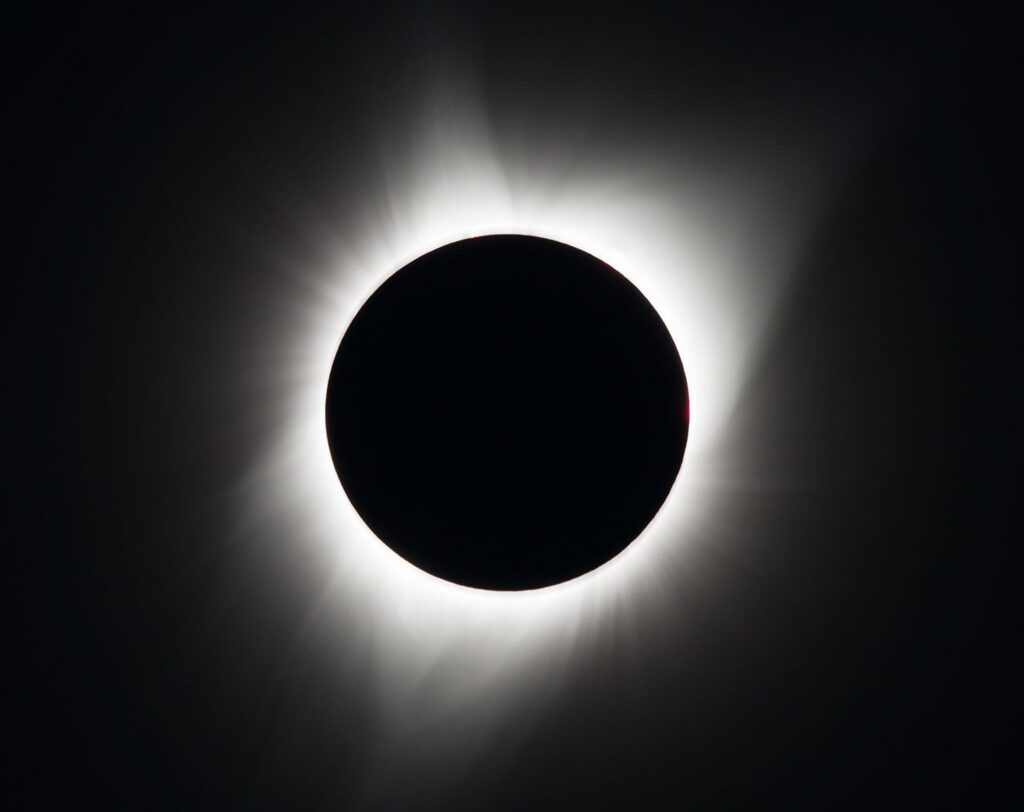
The Sun goes dark in the middle of the day.
Not at night.
Not at sunset.
Not by the ordinary mercy of evening.
In the hour when the world expects radiance, the public light is covered. The eye of day loses its face. The ruler-image is interrupted while it is still supposed to reign.
The crown goes dark.
That is the power of a solar eclipse. It does not destroy the Sun. It does not prove the end of the world. It reveals something more precise: even the brightest image can be interrupted.
The thing everyone depends on for warmth, clock, direction, visibility, and confidence is crossed by hiddenness.
For a moment, the visible order cannot explain itself.
That is why eclipses feel mythic. The Sun is not only a star in the sky. Symbolically, the Sun is public authority: ruler, stage light, crown, clock, eye, spectacle, certainty, egoic clarity, the force that makes the world legible.
But the eclipse says:
Not even this is source.
Not even this shines without interruption.
Not even this can keep the throne forever.
A solar eclipse is the public self interrupted by hiddenness.
New Moon in Leo
New Moon already belongs to darkness.
The lunar body disappears. The visible Moon is hidden. The field gathers before the next appearance. It does not perform. It receives.
But a solar eclipse intensifies the New Moon.
The Moon does not merely vanish into the Sun’s brightness. It crosses the Sun. The hidden body passes in front of the visible ruler and interrupts the public claim.
That matters especially in Leo.
Leo is the solar field of radiance, crown, stage, image, pride, performance, heart, sovereignty, and public selfhood. Leo wants the light visible. Leo wants the face lit. Leo wants the role embodied. Leo wants the king seen on the throne.
New Moon hides.
Leo radiates.
The eclipse forces both truths into one image.
New Moon in Leo gathers the very radiance Leo wants to display.
That is the contradiction and the medicine. The crown is not destroyed. It is interrupted. The stage is not abolished. The light is paused. The image is not condemned. It is humbled.
The eclipse does not say light is evil.
It says light is not source.
The Sun Is Not Source
This distinction has to stay clean.
In Geomytha, the Sun is not source.
The Sun is visible radiance.
It is fire made public. Power made central. Light made directional. Time made visible. It is the ruler-image, the stage lamp, the projection-field, the public face of order.
The Sun shines.
But shining is not being.
Source is prior to shining. Source does not need to be visible in order to be real. Source is not exhausted by daylight. Source is not the image that makes things legible. The Sun may reveal the world, but it is not the ground beneath revelation.
That is why solar symbolism becomes dangerous when it is mistaken for the absolute.
The Sun is real. It warms, nourishes, ripens, clarifies, and orders the day. It is one of the great visible mercies of creation.
But when the visible mercy is mistaken for source, the image begins to claim what belongs beneath image.
That is the solar trap.
The Sun becomes ego when radiance says:
I am source because I shine.
The eclipse interrupts that sentence.
The Moon Interrupts the Claim
The Moon does not defeat the Sun.
It crosses it.
That difference matters.
An eclipse is not the destruction of light by darkness. It is an alignment where reflection passes before radiance and reveals that visibility is conditional.
The Moon belongs to body, rhythm, change, reflection, tide, memory, reception, and return. It does not shine in the same way the Sun shines. It receives. It reflects. It changes shape. It teaches the body that appearance moves in phases.
During a solar eclipse, this reflective body interrupts the solar claim.
Am crosses before I / This.
The body crosses before the crown.
Reflection crosses before projection.
Hidden rhythm interrupts public image.
The reflecting body passes before the ruling image and reminds the world that visibility is conditional.
That is the deeper teaching.
Anything that depends on uninterrupted visibility is already fragile.
The public self.
The reputation.
The stage identity.
The heroic image.
The national myth.
The spiritual persona.
The admired face.
The radiant certainty.
All of these have an eclipse waiting inside them.
Eclipse Panic
The ego panics at eclipse because it thinks darkness means the image has died.
That panic is ancient.
When the Sun darkens, the body feels it before the mind explains it. Birds quiet. Shadows sharpen strangely. The air changes. The familiar day becomes unfamiliar. The world suddenly behaves like myth.
Ancient fear makes sense.
But modern fear has only changed costume.
Now eclipse panic becomes prophecy panic, omen threads, disaster content, spiritual inflation, algorithmic doom, identity-event language, cosmic branding, and the hunger to be one of the people who “knows what it means.”
That is still eclipse panic.
Even when dressed as insight.
The ego cannot simply let the image go dark. It must interpret the darkness quickly so it can become someone in relation to it:
the one who understands,
the one who warns,
the one who predicts,
the one who saw it coming,
the one chosen by the sign.
But the eclipse is not asking first to be decoded.
It is asking to be received.
Darkness does not always mean disaster.
Sometimes darkness means the image has stopped talking long enough for something prior to image to be felt.
Eclipse Spectacle
Modern culture can turn even the darkening of the image into an image.
Photos.
Tourism.
Merchandise.
Livestreams.
Special glasses.
Crowds gathering in the path of totality.
People chasing the shadow.
None of that is automatically false. There is nothing wrong with witnessing a rare sky-event. Awe is not the enemy. Shared wonder is not false merely because it is public.
But spectacle is always waiting.
The eclipse can become another performance of specialness. Another post. Another proof. Another event the self uses to say:
I was there.
Even the interruption of visibility can be converted into visibility.
That is how subtle the claimant is.
It can turn darkness into content.
It can make hiddenness into status.
It can use the failure of the crown to crown itself.
Even the darkening of the image can be turned into an image.
So the question is not whether to watch.
Watch.
But watch what happens to the watcher.
Does awe open the hand?
Or does it make the self more interesting to itself?
The Darkened Sun
Apocalyptic language understands the darkened Sun because it understands that visible order can fail.
When the Sun darkens in visionary imagery, the whole public structure trembles. The sky no longer confirms the world. The lights that made reality feel stable stop behaving as expected. The order that seemed guaranteed is suddenly exposed as contingent.
That is the symbolic force.
The darkened Sun is the moment the world learns its visible order was not source.
It is not merely a prediction image.
It is a truth image.
Every life eventually experiences a darkened Sun.
The authority fails.
The certainty collapses.
The public image breaks.
The person everyone trusted is revealed as human.
The institution loses its halo.
The nation loses its innocence.
The belief stops shining.
The self can no longer use the old light.
This is frightening because the visible order helped us orient. But it can also be mercy, because false light has to fail before deeper seeing can begin.
A darkened Sun is not the end of source.
It is the end of mistaking radiance for source.
Crucifixion Darkness
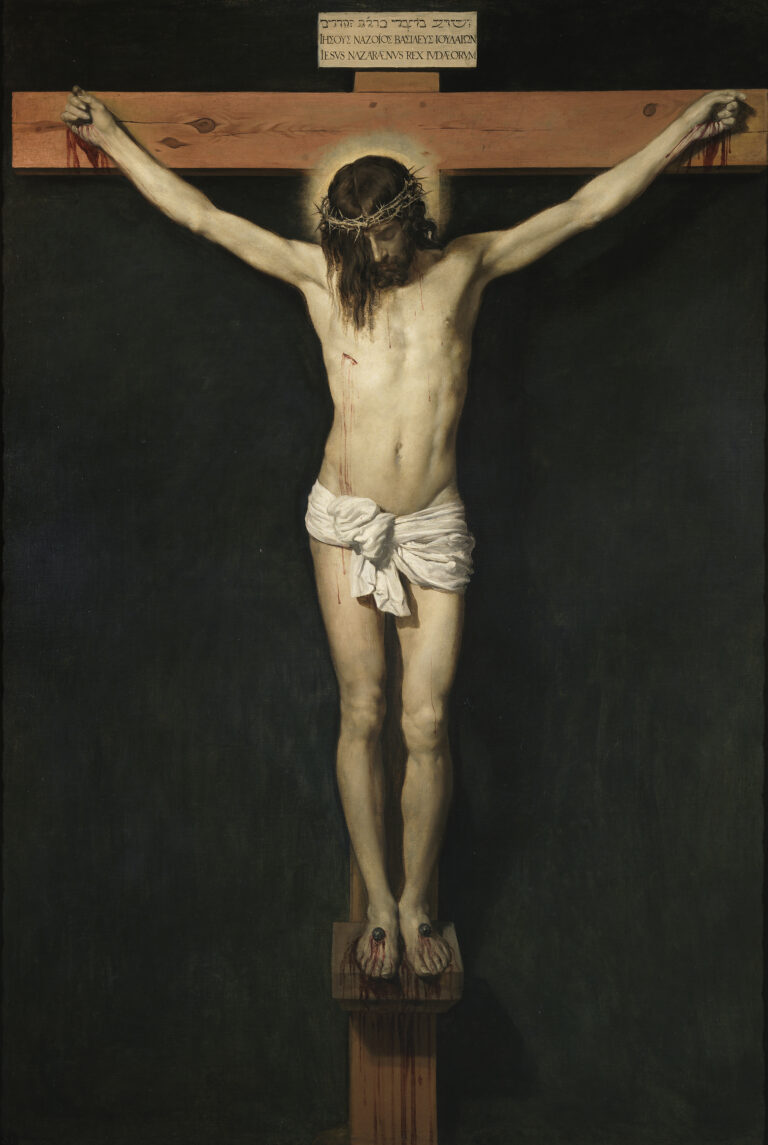
At the crucifixion, darkness covers the land.
This is not decorative.
The public savior-image is being stripped. The one called king is mocked. The body is exposed. The miracle-worker does not perform escape. The visible order does not rescue the image from humiliation.
The sky darkens because the public image is being emptied.
That darkness belongs with the eclipse pattern.
Not because every eclipse is crucifixion.
But because both show the interruption of visible certainty. The image that seemed to carry divine radiance is no longer allowed to shine in the expected way. The old solar witness fails. The world cannot keep reading power as brightness.
The cross darkens the sky because the public image is being emptied.
That is why the ChristReferenceChristJesus Christ as the central figure of Christianity.Read full entry →-pattern matters here. True return does not preserve the image at all costs. It lets the image go dark when the image must be emptied.
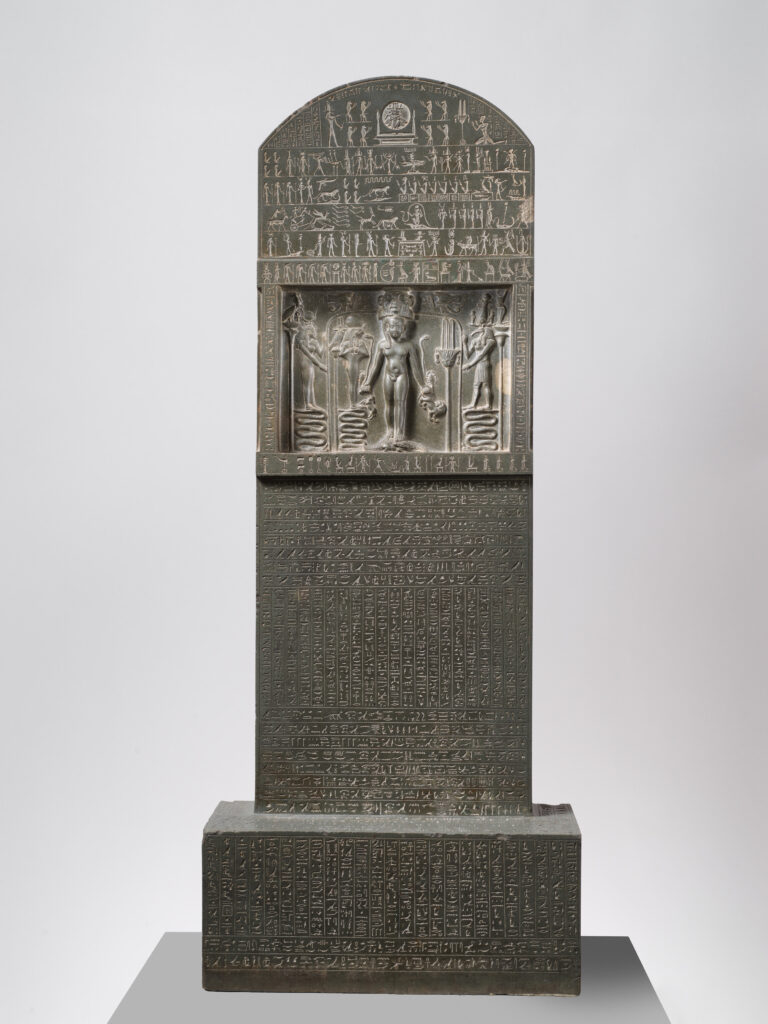
HorusGEOMYTHA readingHorusWithin GEOMYTHA, Horus the Son names This: the body, role, image or story claimed as identity. Horus the Elder / Haroeris is distinct and carries the watcher or witnessing function, not This. These are interpretive correspondences, not universal Egyptian definitions.Read full entry → wants rescue by spectacle.
Christ passes through darkened radiance.
The crown goes dark before the deeper return can be revealed.
The Sun Must Pass Through What It Cannot Illuminate
Egyptian solar mythology preserves another piece of the pattern.
The Sun travels. The solar barque moves through danger, underworld, serpent, night, threat, and renewal. Apophis threatens the solar journey. The Sun does not simply shine forever in a flat, uninterrupted field. It must pass through what resists illumination.
That image comports strongly.
The Sun must pass through what it cannot illuminate.
This is the humility of radiance.
There are regions the public light cannot conquer by shining harder. There are underworlds where display is useless. There are nights the crown cannot command away. There are serpents that do not vanish because the ruler-image declares itself bright.
Every radiant self must learn this.
The performer has an underworld.
The king has an underworld.
The nation has an underworld.
The spiritual teacher has an underworld.
The public identity has an underworld.
The Sun has to pass through the dark not because the dark is stronger than source, but because radiance is not source.
The eclipse lets that truth appear in the sky.
The Solar Hero
The solar hero reveals the weakness of every identity that needs constant light.
This shows up clearly in superhero mythology. A solar-powered figure draws strength from the Sun. Under the right light, he seems invincible. Remove the light, change the solar condition, bring the wrong radiation, darken the source of power, and the hero weakens.
That is not only comic-book logic.
It is identity logic.
Any self that depends on constant radiance is fragile.
Praise-powered self.
Beauty-powered self.
Authority-powered self.
Performance-powered self.
Certainty-powered self.
Visibility-powered self.
Achievement-powered self.
Spiritual-glow-powered self.
All of them weaken when the light changes.
The solar hero is every identity that thinks it is strong because the stage lights are still on.
The eclipse turns off the stage light for a moment.
Then the question becomes unavoidable:
What remains when the self cannot shine?
Eclipse of the Heart
The eclipse outside matters because every heart has already known a light it could not keep.
Someone stopped loving us.
Someone died.
A role ended.
A belief broke.
A public identity failed.
A childhood light disappeared.
A future we imagined went dark.
A person we trusted no longer shone the same way.
A version of ourselves we depended on could not continue.
That is an eclipse of the heart.
Not mere sadness.
The interruption of an inner Sun.
The light that organized feeling disappears, and the heart does not know what to gather around. This is why the eclipse is not only astronomical. It is emotional architecture. It gives cosmic form to something the body already understands.
CancerGEOMYTHA readingCancer — Zodiac SignIn GEOMYTHA’s stellar model, Cancer is the field of feeling, shelter and enclosure. This is an interpretive association, not a diagnosis or a definition of a person.Read full entry → taught the body to feel.
Leo taught the image to shine.
The eclipse teaches that feeling cannot depend forever on the shining image.
A heart that survives eclipse may become deeper than the light it lost.
Not harder.
Deeper.
The Crown Goes Dark in Daily Life
Every identity has an eclipse waiting inside it.
The admired person loses admiration.
The beautiful person ages.
The strong person becomes weak.
The expert is wrong.
The parent is not needed in the same way.
The performer is no longer watched.
The believer cannot feel certainty.
The leader is no longer followed.
The nation loses its innocence.
The spiritual self loses its glow.
The role goes dark.
At first, this feels like loss of being.
But it may only be loss of radiance.
The identity says:
I am disappearing.
Presence says:
The light you depended on is changing.
That distinction can save a life.
The eclipse does not destroy being.
It interrupts the image that being had been mistaken for.
Gather What Remains
When the light goes out, do not rush to restore the image.
That is the practice.
Do not immediately replace the role.
Do not immediately rebuild the public self.
Do not immediately explain the loss.
Do not immediately turn darkness into a new identity.
Gather what remains.
Ask:
Who am I without applause?
Who am I without certainty?
Who am I without the role?
Who am I without the stage light?
Who am I when no one is looking?
Who am I before shining?
What remains when the crown goes dark?
These questions are not meant to produce a new biography. They are meant to loosen the old one.
The eclipse gathers what the performance could not receive.
There is something underneath radiance. Something prior to being impressive, visible, useful, chosen, beautiful, certain, powerful, or publicly legible.
The eclipse does not create that hidden field.
It reveals our dependence on everything that covered it.
The Sun Returns
The eclipse passes.
The light returns.
The birds move again.
The air warms.
The day resumes.
The Sun was not destroyed.
But the witness has seen something.
Radiance is not absolute.
The crown can be hidden.
Visibility is conditional.
The light returns, but the spell of unquestioned radiance has been broken.
That is the gift.
The Sun can shine again without being worshiped in the same way. The role can return without becoming self. The public image can be used without being believed as source. The crown can be worn lightly because the head has felt darkness.
That is the clean aftermath of eclipse.
Not panic.
Not inflation.
Not prophecy addiction.
Humility.
The Sun returns.
But the witness no longer has to pretend the Sun is source.
Receive the Dark
Let the crown go dark.
Let the image fail for a moment.
Let the self that needed to shine feel the hidden field beneath radiance.
Do not make the eclipse a panic.
Do not make it a personality.
Do not make it a prophecy badge.
Do not turn the darkened image into another image.
Receive.
New Moon gathers.
Leo radiates.
The eclipse teaches Leo how to gather before radiating again.
That is the correction.
Radiance is beautiful when returned.
Visibility is useful when not worshiped.
The crown can serve when it knows it can go dark.
The Sun will return.
But if the witness has received the darkness, the image no longer has to be God.
The Sun shines.
But shining is not being.
The crown goes dark so the hidden source beneath the crown can be received again.