Is — Source

Public references and limits:
The Egyptian texts are witnesses for the mythic figures, not for the English word Is. SN 22.59 is a counterexample to equating every experience of consciousness with an enduring self. GEOMYTHA must identify which sense of Source it means.
Geomytha uses Is as the simplest grammatical name for source, presence, and awareness before ownership.
Is is the source-field in the Geomytha grammar. It corresponds to being before the claimant appears.
Is is the first position of Is → Am → I → This and the field to which reflection can return.
Calling a belief 'source' can disguise an unexamined authority claim. Test whether the term allows correction and relation rather than requiring allegiance to a final description. An abstract doctrine of Is is not itself evidence of unclaimed presence.
This entry’s name and mechanism belong to GEOMYTHA’s framework. The linked primary works are independent comparison witnesses, not evidence that the GEOMYTHA term originated in their cultures. Specific comparison references: Pyramid Texts — earliest surviving Egyptian funerary corpus; Plutarch, On Isis and Osiris — ancient narrative and commentary; SN 22.59 — Not-self discourse, primary text. The original work, a later translation, a catalogue record and an extant manuscript are different kinds of evidence. The oldest surviving witnesses of the comparison traditions are not established by this entry.
Is is an internal Geomytha category, not a universal linguistic or metaphysical consensus.
Do not turn Is into a superior identity or an object to possess.
Where this mechanism appears
Explore the essays and Index entries linked to this mechanism.
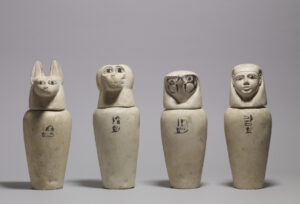 Why the Organs Were Not Thrown AwayAncient Egyptian mummification separated the liver, lungs, stomach, and intestines—but the parts were preserved, guarded, and kept inside a larger funerary order. Division did…
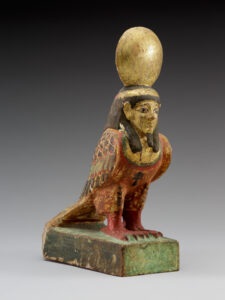 The Person Was Never One ThingKa, Ba, Akh, and Heka do not form a neat four-part soul system. Ancient Egyptian personhood was layered, mobile, relational, and reconstructed through return.
 Purple Haze, Purple Rain, and When Distortion Becomes RuleA haze colors the field. Rain brings the color down. Reign begins when the distortion no longer just affects perception but starts organizing identity…
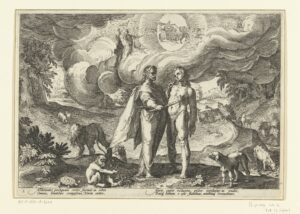 The Heel Grab, the Flaming Sword, and Stolen FireA heel is caught, a boundary is guarded, and fire is stolen. GEOMYTHA reads these as three stages of one pressure: interception, defense, and…
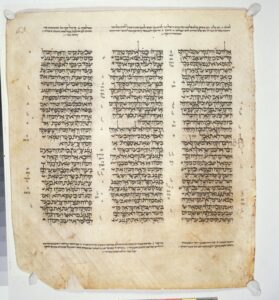 Do Not Eat the ThoughtLeviticus begins with literal rules about what may enter the body. GEOMYTHA asks a second, clearly labeled question: what would a discipline of mental…
 What Is and What Should Never BeImagination is useful when it helps us respond to reality. It becomes a trap when the alternative world starts demanding that reality obey it.
 How to Read the Verb Beneath the MythBefore asking what a mythic figure represents, ask what the figure does. A practical GEOMYTHA guide to reading field, reflection, claim, and identity as…
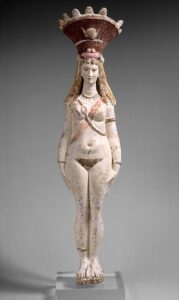 Why Isis Comes FourthPaid essay — public preview. This page introduces the original essay. The complete argument, examples, and conclusion are available to paid Geomytha subscribers on…
Showing 8 most recent linked essays.
Follow the mechanism
Moves into
See also
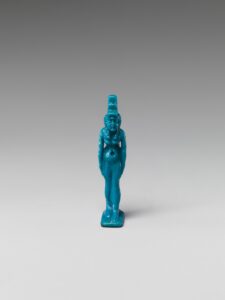 IsisIn Geomytha, Isis names the unclaimed field: Is — pure being, awareness before possession, and the ground before the claimant appears.
 Presence as VesselPresence acts as a vessel when experience can be received, held, and related to without immediately being seized as identity or possession.
 First FireFirst Fire is the formative fire of Is → Am: source becoming a vessel capable of reflected presence.
 Is / Am / I / ThisThe foundational Geomytha grammar is Is → Am → I → This: Source → Reflection → Claim → Identity.