Before asking what a mythic figure represents, ask what the figure does.
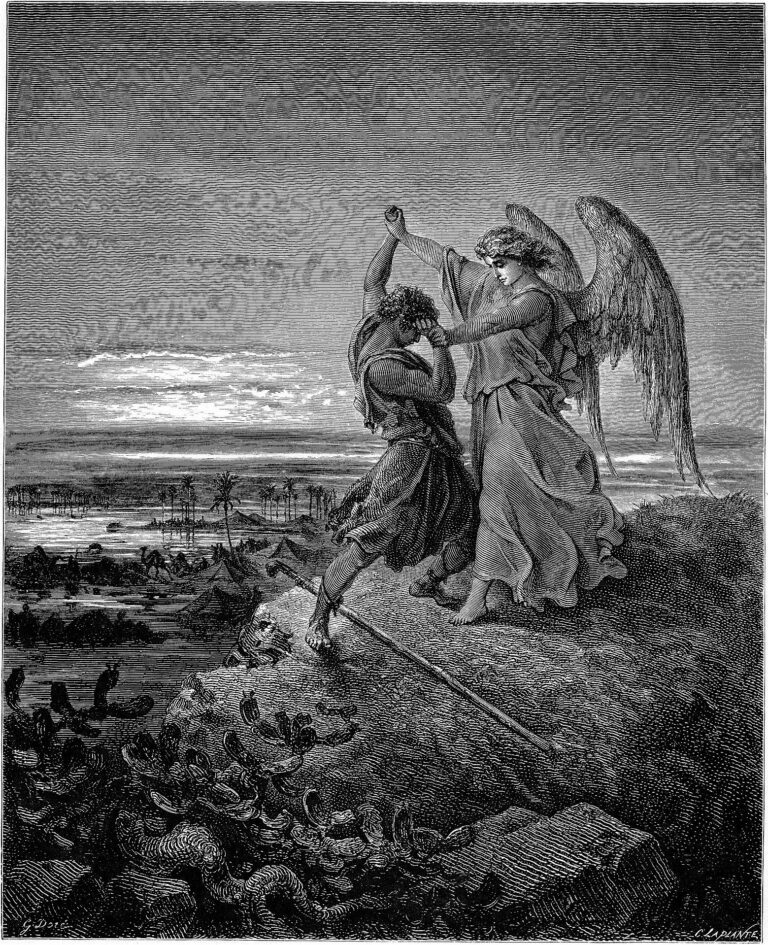
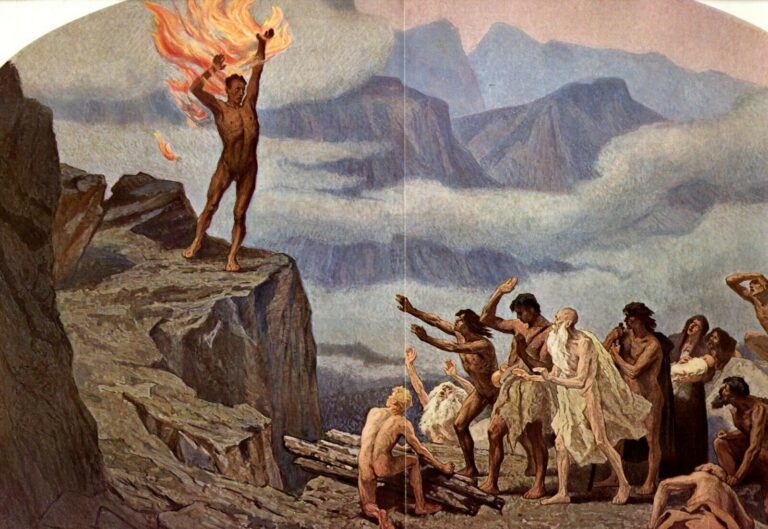
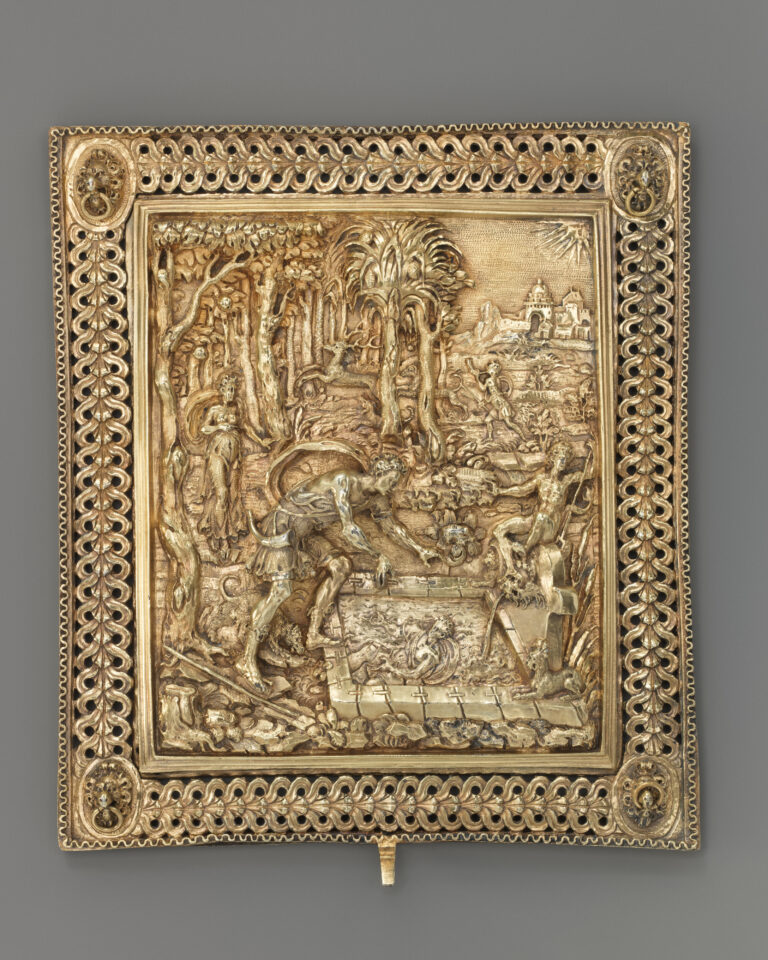
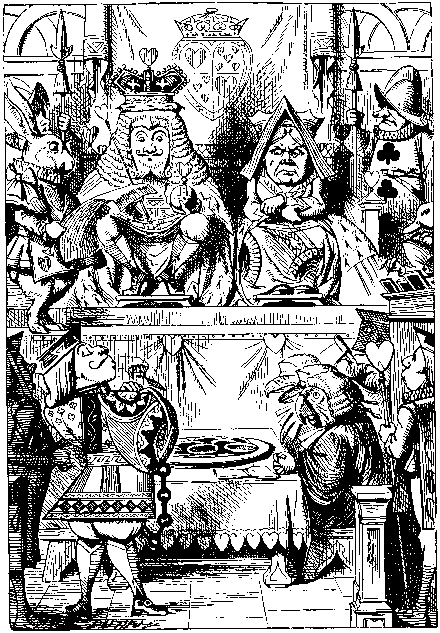
Jacob enters his story holding his brother’s heel. PrometheusPrometheus — Fire BringerPrometheus is the Titan associated in Greek literary tradition with conflict over fire and its availability to mortals; later visual art repeatedly depicts him bringing or animating with heavenly fire.Read full entry → crosses a boundary and takes fire. MacbethMacbeth — Prophecy and CrownThe witches greet Macbeth with a prophecy that he will become king; Macbeth later kills Duncan and takes the crown.Read full entry → takes a crown.
TheseThese — AccumulationThese names accumulation: possessions, titles, achievements, beliefs, communities, and other extensions gathered around identity.Read full entry → are not the same stories. They do not prove a common historical origin, and their characters are not interchangeable. But something underneath them can still rhyme.
The figure is the costume. The verb is the mechanism.
That is one of the simplest ways into GEOMYTHA.
Start with the smaller question
Symbolic reading usually begins too high up. We ask what a serpent “really means,” what a king “stands for,” or which god secretly corresponds to which character.
Start lower.
What is happening?
What is the decisive action?
Hold. Reflect. Grab. Steal. Seize. Name. Become. Crown.
When you read the action before the character, myth begins to look less like a warehouse of unrelated symbols and more like a grammar. GEOMYTHA organizes that grammar around four broad movements: field, reflect, claimI — ClaimI names claim: the interruption by which reflected presence is taken as mine.Read full entry →, identityThis — IdentityThis names the formed identity: the body, role, image, wound, belief, or story claimed as what the self is.Read full entry →. In its simplest internal language: Is, Am, I, This.
These are not four separate beings. They are four movements through which something can appear, become legible, be taken hold of, and finally stabilize as a recognizable form.
Field: what allows something to appear?
Before anything can be claimed, named, or turned into identity, something has to hold the possibility of it.
GEOMYTHA calls that movement field.
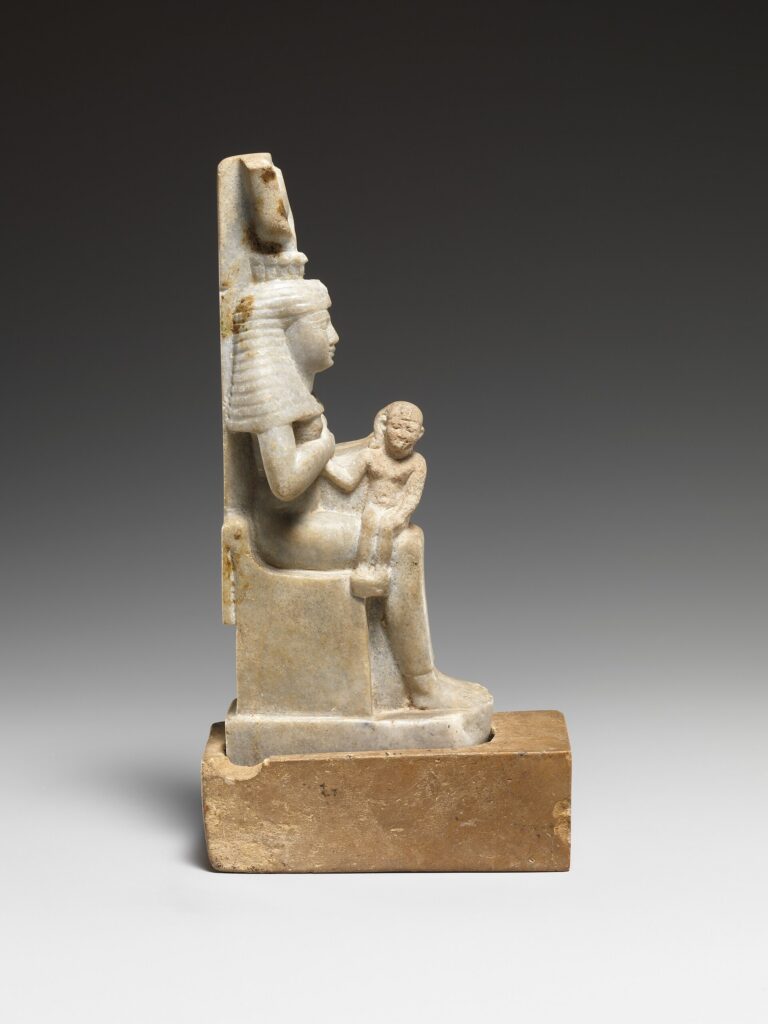
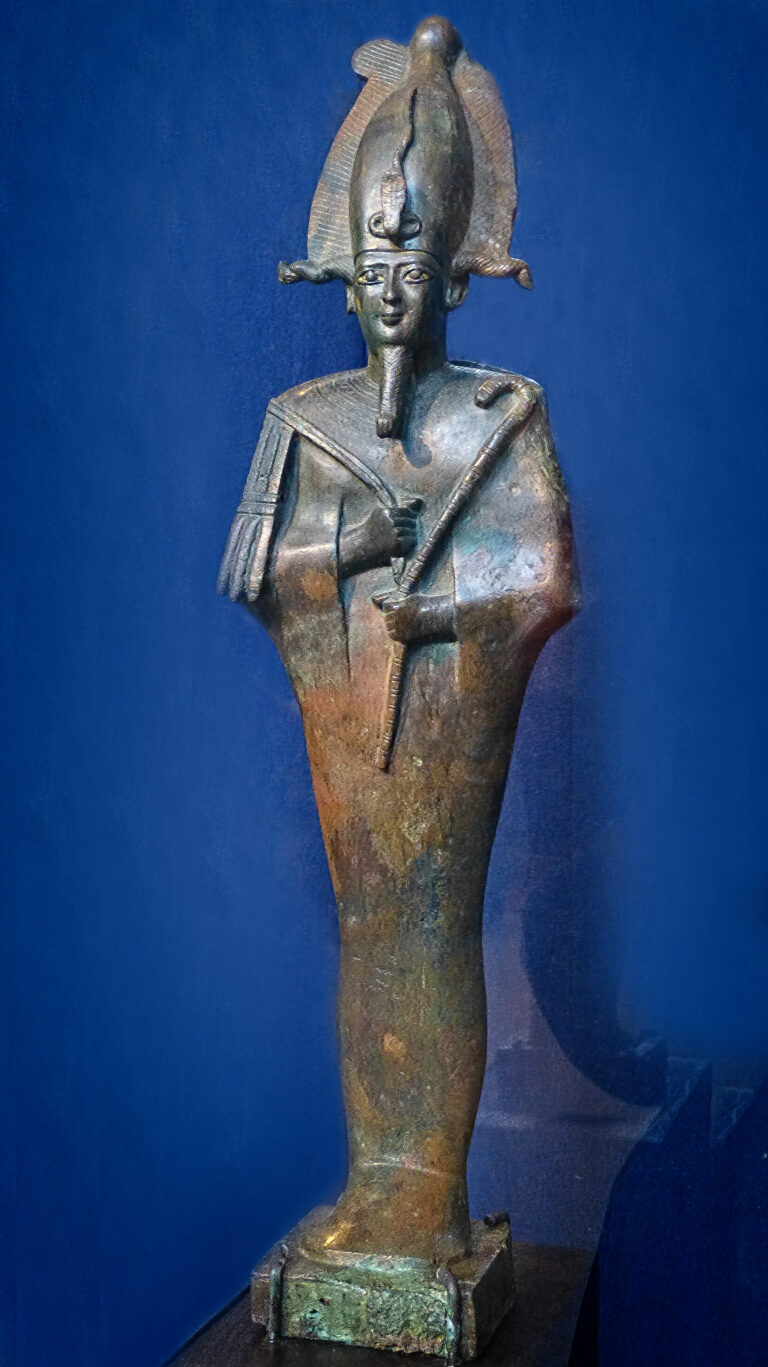
In Egyptian myth, IsisIsisIn Geomytha, Isis names the unclaimed field: Is — pure being, awareness before possession, and the ground before the claimant appears.Read full entry → and Nephthys revive OsirisOsirisIn Geomytha, Osiris names reflected presence: Am — awareness reflected as living consciousness without yet becoming ownership.Read full entry → after his murder, and HorusHorusIn Geomytha, Horus names the identity that forms after claim: This — the body, role, image, wound, belief, or story taken as what the self is.Read full entry → follows from that restored relation. The Metropolitan Museum of Art summarizes this cycle as Isis and Nephthys reviving Osiris through magic before Osiris continues as ruler of the afterlife. GEOMYTHA does not treat that museum account as proof of its own system. It uses the story as an image of a function: scattered pieces are brought back into relation before a new form can emerge.
A field, in this sense, is not merely empty space. It is the condition that allows a pattern to appear.
The reading rule is simple: before asking what something is called, ask what allows it to appear at all.
Reflect: what makes the pattern legible?
Once something appears within a field, it can be reflected.
ReflectionAm — ReflectionAm names reflected presence: awareness embodied or mirrored without yet becoming ownership.Read full entry → is not just copying. It is the movement by which something becomes readable in another form.
A mirror does this visually. Language does it conceptually. A map does it spatially. A myth does it narratively.
But reflection contains a danger. The image can become more important than what it reveals. The word can become more important than what it names. The map can become more authoritative than the territory.
So reflection is not the enemy. Reflection is necessary. The question is whether the image remains transparent to what it reflects.
Claim: when does relation become grasp?
Then something changes. Reflection becomes claim.
Genesis gives Jacob a striking sequence. He is born holding Esau’s heel. Later, Esau sells him the birthright. Later still, Jacob receives Isaac’s blessing while presenting himself as Esau. The text itself is more complicated than a single moral label, but the repeated physical and social motion is visible: relation becomes grasp, transfer, possession.
Prometheus gives us a different version of the movement. In Hesiod’s Works and Days, Zeus withholds fire and Prometheus steals it back for human beings. Depending on the frame, that act can be read as theft, liberation, civilization, defiance, or gift.
The moral meaning changes. The motion remains visible.
Something that was there becomes something taken.
This is why GEOMYTHA compares verbs without claiming that Jacob and Prometheus are “the same figure.” Grabbing a heel is not stealing divine fire. Selling a birthright is not taking a throne. But grab, take, seize, and possess belong to a recognizable family of actions.
The useful question is not “Which character secretly equals which?” It is: when does participation become possession?
Identity: when the claim becomes a form
A claim can pass. Identity stabilizes it.
This is useful. A doctor needs to be able to say, “I am the doctor.” A parent has continuing responsibility. A craft needs names. A society needs roles.
The problem begins when the form carrying the pattern starts pretending to be the entire field.
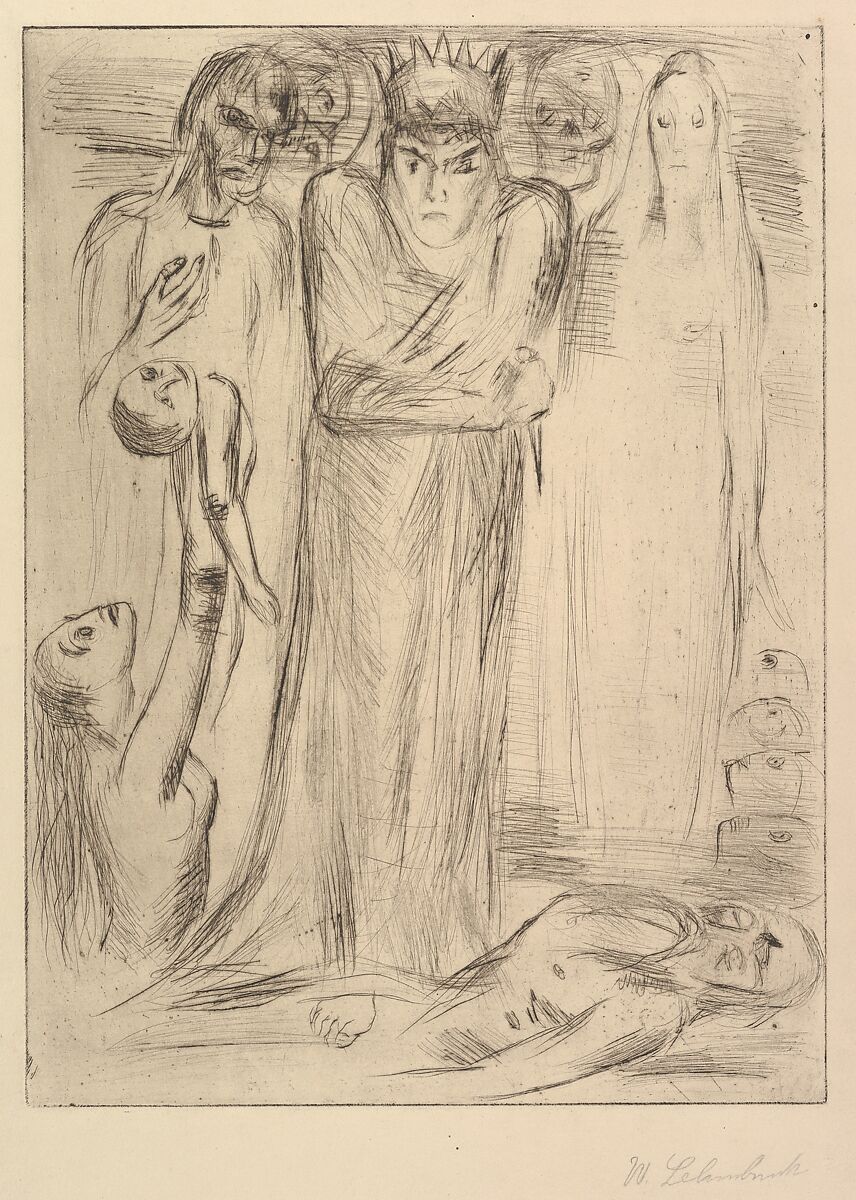
Macbeth makes the mechanism easy to see. Before Macbeth is king, the crown is an object of desire. After he becomes king, keeping the crown reorganizes his perception. Banquo becomes a threat. Succession becomes a threat. The title that promised completion produces a new problem: it must now be defended.
In Act 3, Macbeth says that being king is not enough unless he can be king safely. That is the shift. The possession no longer sits quietly in his hand. His world begins reorganizing around maintaining it.
The thing he possesses begins possessing him.
Identity therefore has a real function: it stabilizes continuity. The mistake is turning the useful statement “this is the form carrying the pattern now” into the absolute statement “this form is all.”
The stress test: the same verb does not mean the same story
This method fails if every similarity becomes proof.
Two figures can perform the same verb for completely different reasons. The same verb can liberate in one story and destroy in another. The same symbol can perform different functions from one scene to the next.
Prometheus taking fire does not establish that every act of taking is Promethean. Jacob’s heel-grab does not prove that every rival pair derives from Genesis. Macbeth’s crown does not make every king a Macbeth.
Functional similarity gives us a place to begin looking. It does not establish historical transmission, authorial intent, or a secret universal code.
That distinction matters because GEOMYTHA becomes weaker, not stronger, when analogy is asked to do the work of evidence.
Read the verb
The next time a story gives you a serpent, a king, a thief, a mother, a mirror, a crown, or a forbidden fire, resist the urge to decide immediately what the object “really means.”
Watch what happens.
Who holds?
Who reflects?
Who takes?
Who becomes?
Read the verb. Locate the function. Then test what the transformation does.
The figure is the costume. The verb is the mechanism.
Sources and further reading
- Genesis 25–28, Sefaria — Jacob, Esau, the heel, birthright, and blessing narrative.
- Hesiod, Works and Days 42–58, Perseus Digital Library — Prometheus and the theft of fire.
- Shakespeare, Macbeth, Act 3, Scene 1, Folger Shakespeare Library — Macbeth after taking the crown.
- The Metropolitan Museum of Art, Nedjemankh exhibition gallery — institutional summary of Isis, Osiris, Horus, and Egyptian funerary transformation.
GEOMYTHA interpretation is comparative and symbolic. The historical and literary sources above establish the underlying stories and texts; they do not establish GEOMYTHA’s interpretive framework as the intent of their creators.