I — Claim
Public references and limits:
SN 22.89 allows a precise comparison between self-conceit and identification. GEOMYTHA’s claimant is a functional reading; first-person speech alone is insufficient evidence of capture.
Geomytha distinguishes claimant I from ordinary functional first-person language.
I introduces ownership, possession, direction, projection, and self-reference into reflection.
Am → I is the interruption; I → This hardens claim into identity.
A responsible 'I made a mistake' may reduce defensive identity rather than create it. Require possession or closure, not the pronoun alone. The mapping must explain why one first-person act captures relation and another preserves accountability.
This entry’s name and mechanism belong to GEOMYTHA’s framework. The linked primary works are independent comparison witnesses, not evidence that the GEOMYTHA term originated in their cultures. Specific comparison references: Khemaka Sutta (SN 22.89) — Residual “I Am” Conceit; SN 12.2 — Analysis of Dependent Co-arising. The original work, a later translation, a catalogue record and an extant manuscript are different kinds of evidence. The oldest surviving witnesses of the comparison traditions are not established by this entry.
The category does not mean every use of the word I is pathological.
Do not use the framework to demonize practical self-reference or create a new anti-ego identity.
Where this mechanism appears
Explore the essays and Index entries linked to this mechanism.
 White Room: The Shadow Waiting to Become Someone ElseChanging the image of who you are can leave the same need for an image in charge. A GEOMYTHA reading of Cream's White Room…
 The Superpower You Forgot to Turn OffThe human “I” can plan, protect, and choose. GEOMYTHA reads Dragon Ball's transformations as a question about when that ability becomes an identity we…
 The Rebellion TrapOpposition is not freedom when identity still needs an enemy. A sourced GEOMYTHA reading of Satan, rebellion, inversion, and the claimant that can wear…
 Why the Organs Were Not Thrown AwayAncient Egyptian mummification separated the liver, lungs, stomach, and intestines—but the parts were preserved, guarded, and kept inside a larger funerary order. Division did…
 The Person Was Never One ThingKa, Ba, Akh, and Heka do not form a neat four-part soul system. Ancient Egyptian personhood was layered, mobile, relational, and reconstructed through return.
 Purple Haze, Purple Rain, and When Distortion Becomes RuleA haze colors the field. Rain brings the color down. Reign begins when the distortion no longer just affects perception but starts organizing identity…
 I Am Running Until I Become the RunnerA living action can become a defended identity. Flow gives us a way to see the difference between doing the verb and turning the…
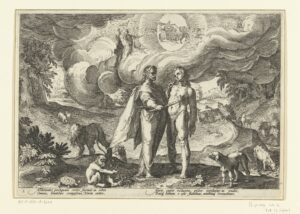 The Heel Grab, the Flaming Sword, and Stolen FireA heel is caught, a boundary is guarded, and fire is stolen. GEOMYTHA reads these as three stages of one pressure: interception, defense, and…
Showing 8 most recent linked essays.
 Artificial Intelligence (AI)Artificial intelligence is a broad technical field encompassing machine-based systems that can infer from inputs and generate outputs such as predictions, recommendations, decisions, or content for defined objectives. The field includes machine-learning and neural-network…
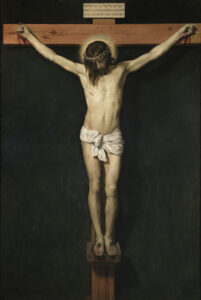 ChristJesus Christ as the central figure of Christianity. Matthew 27 depicts the soldiers' mock coronation with a robe and crown of thorns before crucifixion; Philippians 2 describes Christ humbling himself and becoming obedient unto…
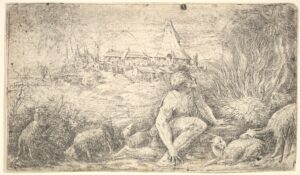 Ehyeh Asher Ehyeh — Exodus 3:14 / Burning BushIn Exodus 3, Moses asks what name he should give the Israelites when they ask who sent him. The reply includes the Hebrew formula Ehyeh Asher Ehyeh before Moses is instructed what to say…
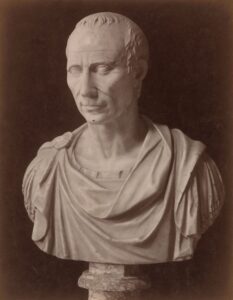 Julius CaesarRoman general, statesman, and dictator whose calendar reform reorganized the Roman civil year into the Julian system. The historical record is treated separately from Geomytha's symbolic Caesar/seizure reading.
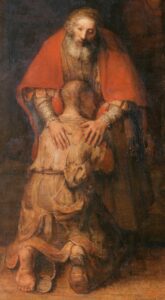 Prodigal Son — Luke 15The Prodigal Son is the younger son in Luke 15:11–32 who asks for his share of the estate, leaves for a distant country, spends what he has, falls into need, comes to himself, and…
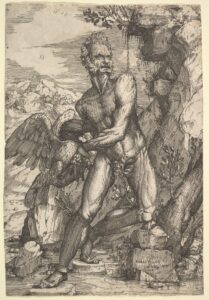 Prometheus — Fire BringerPrometheus is the Titan associated in Greek literary tradition with conflict over fire and its availability to mortals; later visual art repeatedly depicts him bringing or animating with heavenly fire.