The Interruption — Am → I
Public references and limits:
The Buddhist references can test identification and attachment as processes. They do not make the English word I the cause of those processes, or demonstrate GEOMYTHA’s grammatical sequence as a historical doctrine.
The interruption is the functional birth of the claimant within the grammar.
It identifies the hinge where relation becomes possession, strategy, projection, or mine.
Am → I.
A scientist measures, a parent names a need, and a witness gives an account without necessarily seizing experience. Locate the conversion from useful distinction into possessive authority. Claim cannot be inferred simply from language, measurement or action.
This entry’s name and mechanism belong to GEOMYTHA’s framework. The linked primary works are independent comparison witnesses, not evidence that the GEOMYTHA term originated in their cultures. Specific comparison references: Khemaka Sutta (SN 22.89) — Residual “I Am” Conceit; SN 12.2 — Analysis of Dependent Co-arising. The original work, a later translation, a catalogue record and an extant manuscript are different kinds of evidence. The oldest surviving witnesses of the comparison traditions are not established by this entry.
Thought, distinction, and self-reference are not automatically the interruption; the defining feature is claiming.
Do not label every decision, boundary, or act of agency as pathological claim.
Where this mechanism appears
Explore the essays and Index entries linked to this mechanism.
 Between Bells: The Ring Is a BoxBoxing makes identity visible under pressure: the ring limits movement, the opponent reveals habits, the guard protects, the bell interrupts, and the corner offers…
 I Am Running Until I Become the RunnerA living action can become a defended identity. Flow gives us a way to see the difference between doing the verb and turning the…
 The Heel Grab, the Flaming Sword, and Stolen FireA heel is caught, a boundary is guarded, and fire is stolen. GEOMYTHA reads these as three stages of one pressure: interception, defense, and…
 The Solar Eclipse as the Darkened ClaimThe Sun goes dark in the middle of the day. Not at night.Not at sunset.Not by the ordinary mercy of evening. In the hour…
 The Body at the GateYou are what you eat. The phrase has become so ordinary that its deeper meaning passes unnoticed. Eating is not the same as seeing,…
 A, M, N, Z: The Alphabet of the Two FiresLetters are little gates. Before they become words, before they carry arguments, prayers, contracts, names, threats, scriptures, brands, and songs, letters are marks. Shapes.…
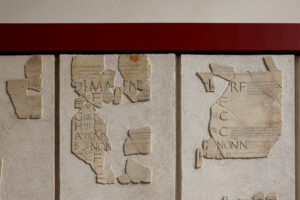 Why Calendars Need RemaindersA calendar is not just a way to count days. It is a claim about reality. A calendar tells a people when to work,…
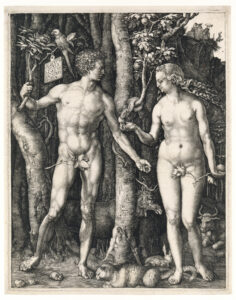 The Sacred Is Not the TrapAfter all the fires, the world is still good. That has to be said. After beast-fire, stolen fire, Luciferic light, Promethean theft, Ammit, the…
Showing 8 most recent linked essays.
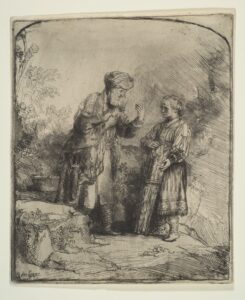 Binding of Isaac — Genesis 22:1–19Genesis 22 presents God testing Abraham by commanding him to offer Isaac as a burnt offering. Abraham binds Isaac and reaches for the knife, but a messenger calls from heaven and tells him not…
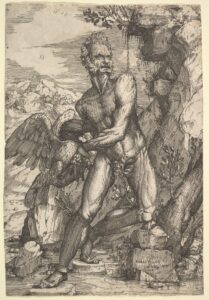 Prometheus — Fire BringerPrometheus is the Titan associated in Greek literary tradition with conflict over fire and its availability to mortals; later visual art repeatedly depicts him bringing or animating with heavenly fire.
Follow the mechanism

Moves into
 I — ClaimI names claim: the interruption by which reflected presence is taken as mine.
 Claim Hardening into IdentityClaim hardens reflected presence into identity when I takes an appearance, role, body, wound, belief, story, insight, or other form and fixes it as This: the self-defining object in the sentence “I am this.”
See also
 SetIn Geomytha, Set names the claimant: I — the interruption by which reflection is taken as mine and converted toward ownership.
 Conceptual CaptureConceptual capture occurs when naming, categorizing, measuring, or explaining stops serving relation and begins enclosing the living field inside fixed terms.