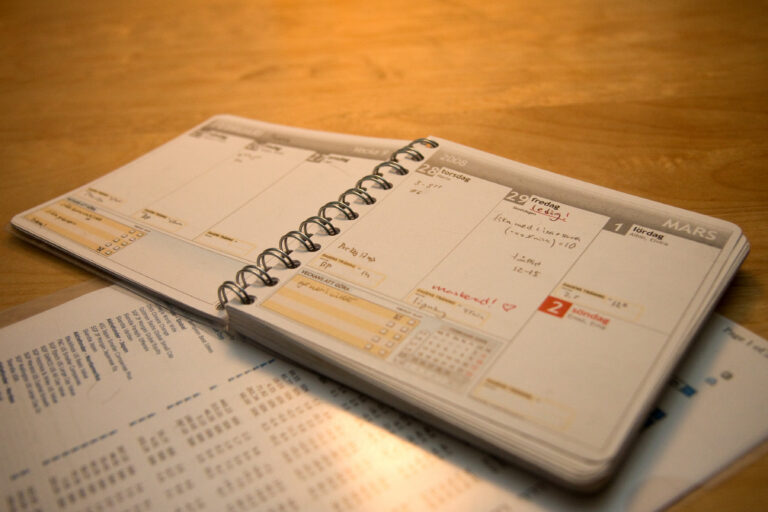
A calendar is not just a way to count days.
It is a claimI — ClaimI names claim: the interruption by which reflected presence is taken as mine.Read full entry → about reality.
A calendar tells a people when to work, when to rest, when to plant, when to harvest, when to fast, when to feast, when to remember the dead, when to crown the king, when to begin again. It does not merely observe time. It organizes life around a pattern.
That is why calendars are always more than technical tools.
They are symbolic machines.
They turn the sky into order. They turn recurrence into ritual. They bind labor to season, memory to festival, and public life to invisible rhythms. A people’s calendar tells you what kind of world they believe they inhabit.
But every calendar faces the same humiliation.
Reality exceeds the count.
No matter how elegant the system becomes, something eventually slips. The seasons drift. The stars move. The year refuses to fit cleanly into the wheel designed to hold it.
A calendar therefore survives only if it learns to admit remainderClosed System / Hidden TermA closed system achieves the appearance of completeness by excluding or minimizing something it cannot integrate; the excluded term remains active and returns as strain, contradiction, anomaly, backlash, or breakdown.Read full entry →.
That is the deeper lesson.
A closed calendar becomes false.
An open calendar remains alive.
A Calendar Is a World
Modern people often treat calendars as neutral.
Dates.
Boxes.
Appointments.
Schedules.
But older civilizations knew better. Calendars were structures of meaning. They told the community how heaven touched earth. They placed human labor inside cosmic pattern.
The Egyptian calendar did this with striking clarity.
Twelve months of thirty days gave the year a perfect visible structure. Three hundred and sixty days. A clean circle. A world that could be counted, divided, and administered.
Yet the year did not end there.
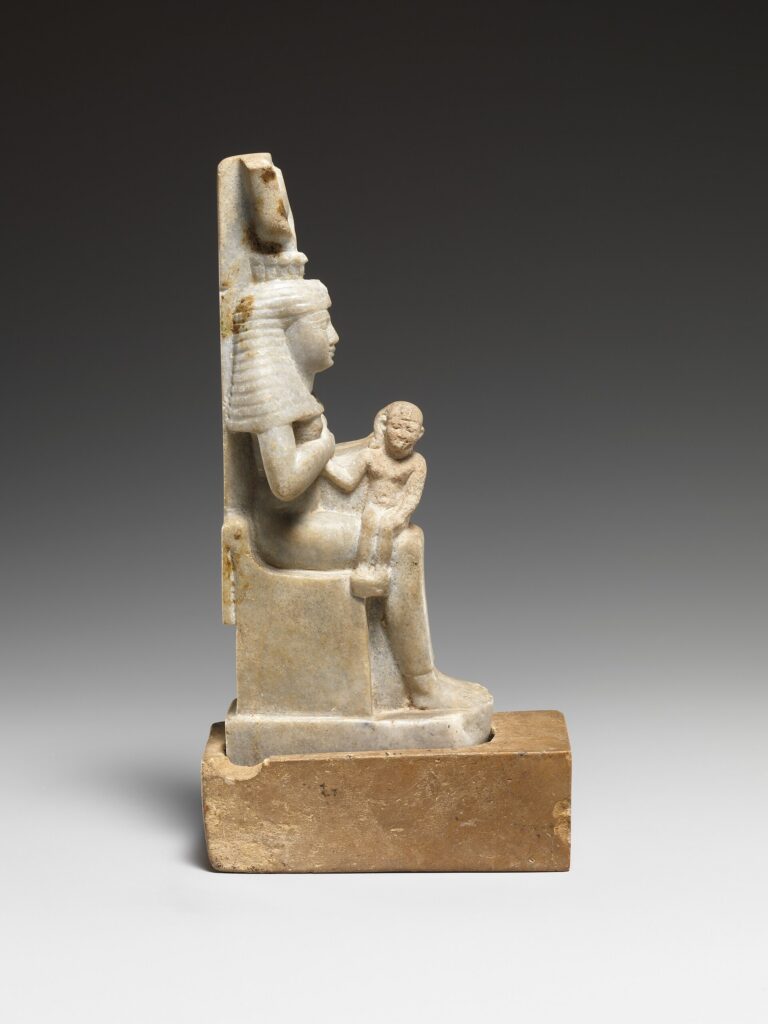
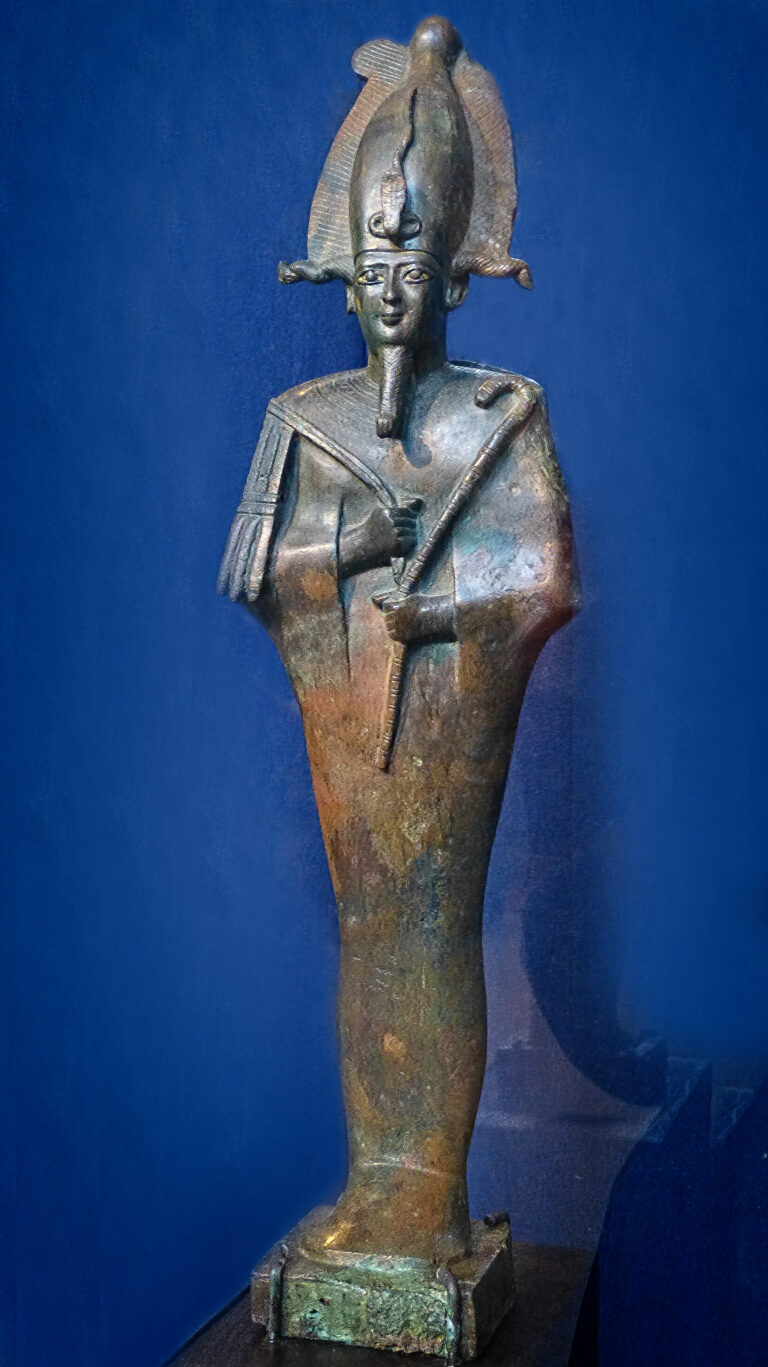
Five additional days stood outside the ordinary months. TheseThese — AccumulationThese names accumulation: possessions, titles, achievements, beliefs, communities, and other extensions gathered around identity.Read full entry → epagomenal days were not merely a mathematical inconvenience. They became sacred time. Myth placed the births of OsirisOsirisIn Geomytha, Osiris names reflected presence: Am — awareness reflected as living consciousness without yet becoming ownership.Read full entry →, HorusHorusIn Geomytha, Horus names the identity that forms after claim: This — the body, role, image, wound, belief, or story taken as what the self is.Read full entry → the Elder, SetSetIn Geomytha, Set names the claimant: I — the interruption by which reflection is taken as mine and converted toward ownership.Read full entry →, IsisIsisIn Geomytha, Isis names the unclaimed field: Is — pure being, awareness before possession, and the ground before the claimant appears.Read full entry →, and Nephthys in thoseThose — ProjectionThose names projection: enemies, outsiders, competitors, threats, and disowned qualities placed beyond the identity boundary.Read full entry → days outside the wheel.
This is extraordinary.
The remainder was not ignored.
It was mythologized.
EgyptEgyptAncient Egyptian cultural and mythic field referenced by the essay.Read full entry → did not simply patch the calendar. It gave the excess divine weight. It recognized that what does not fit the system may be precisely where the deepest powers appear.
That is already a warning to every closed order.
The part that does not fit may not be meaningless.
It may be the part that tells the truth.
The Lie of Perfect Order
A perfect calendar can become a lie.
That sounds strange, because order feels truthful. Symmetry feels truthful. A clean system feels more reliable than a messy one.
But a system can be internally perfect and externally wrong.
If the calendar refuses correction, it drifts from the seasons. Spring slowly detaches from spring. The harvest no longer matches the sky. Ritual becomes disconnected from the living rhythm it was meant to honor.
The calendar may still be neat on paper.
But it has lost contact with reality.
This is one of the oldest dangers of symbolic systems.
A religion can become internally consistent while losing contact with presence.
An ideology can become perfectly logical while losing contact with human suffering.
An identityThis — IdentityThis names the formed identity: the body, role, image, wound, belief, or story claimed as what the self is.Read full entry → can become coherent while losing contact with the living person underneath it.
A doctrine can answer every question while no longer hearing the question being asked.
The false self loves this kind of perfection.
It loves systems that cannot be interrupted.
It loves identities that cannot be corrected.
It loves stories that never have to admit a remainder.
But life does not obey such closure.
Neither does time.
Caesar and Seizure
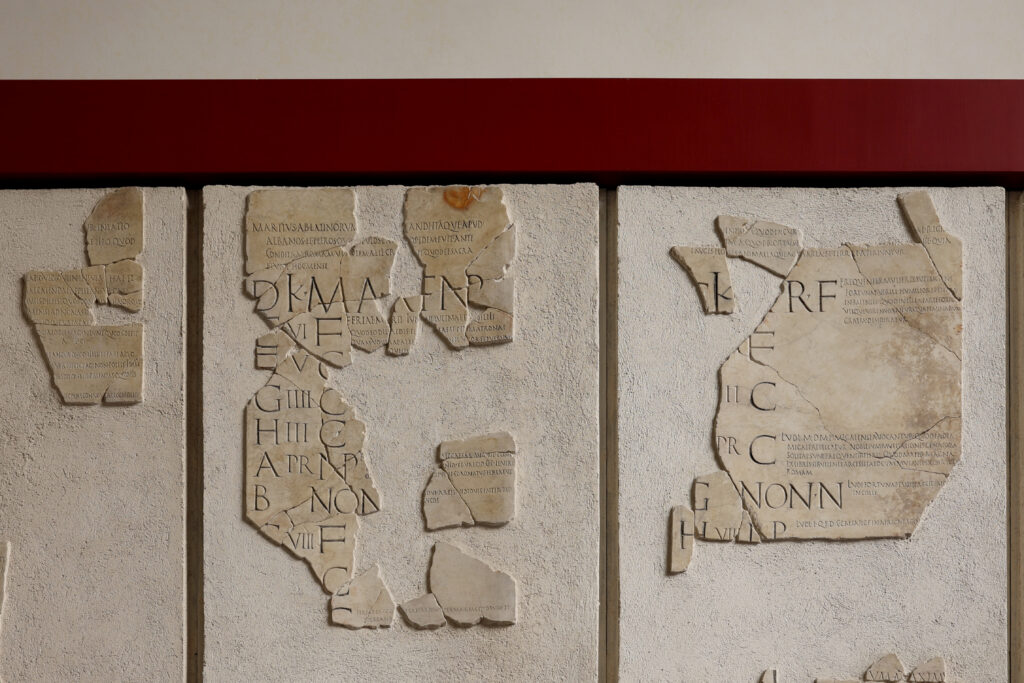
Julius CaesarJulius CaesarRoman general, statesman, and dictator whose calendar reform reorganized the Roman civil year into the Julian system. The historical record is treated separately from Geomytha's symbolic Caesar/seizure reading.Read full entry →’s calendar reform was one of the great acts of Roman ordering.
Historically, it was a real achievement. Roman time had become unstable, politically manipulated, and misaligned. The Julian reform brought order and regularity to the year.
But symbolically, Caesar matters for another reason.
Caesar is a useful mnemonic for seizure.
The sound itself helps reveal the archetype.
Caesar.
Seizure.
The grasp.
The claim.
The imperial act of taking hold.
To make a calendar is, in one sense, to seize time. To place the sky under law. To tell the year where it belongs. To bring recurrence under administration.
Empire always wants this.
The ego wants it too.
It wants to seize the story.
Seize the identity.
Seize the future.
Seize the meaning.
Seize the wound and turn it into self.
Yet time resists seizure.
Even Caesar’s calendar could not fully possess the year. Its correction was powerful, but not perfect. The small discrepancy accumulated. Centuries later, the Gregorian reform had to correct what Roman order could not fully master.
That is the point.
The seizure of time always fails eventually.
Not because order is useless.
But because reality is greater than the hand that grasps it.
The Hidden Correction
Remainders do not always announce themselves immediately.
That is part of their mystery.
A small fraction can hide for years. A slight misalignment can go unnoticed. A subtle error can accumulate quietly beneath the visible order.
Then one day the hidden becomes impossible to ignore.
The calendar must be corrected.
The extra day must be inserted.
The skipped days must be acknowledged.
The system must confess that it was never final.
This is what leap years reveal in miniature.
The hidden remainder does not disappear because it is inconvenient.
It gathers.
It waits.
It returns.
The invisible eventually demands recognition.
And when it does, the calendar must either open or become false.
Sacred Interruptions
This structure appears far beyond calendar reform.
The SabbathSabbathNamed weekly sacred rest pattern in Jewish tradition.Read full entry → interrupts labor.
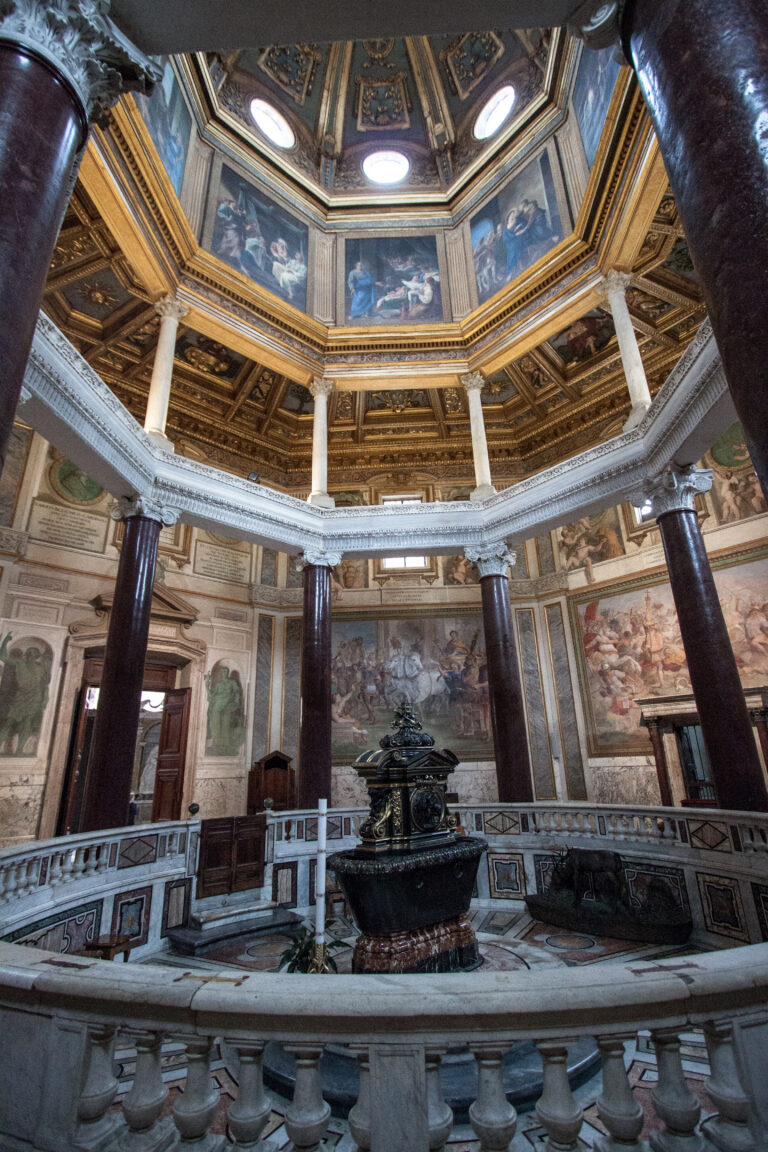
The Eighth DayThe Eighth Day — Completion ReopenedEarly Christian writers used the eighth day as a resurrection symbol beyond the completed seven-day week. Augustine explicitly calls the eighth day a type of resurrection. The Lateran Baptistery’s official history states…Read full entry → interrupts the week.
The five days outside the Egyptian year interrupt the twelve months.
The hidden thirteenth interrupts the public twelve.
The leap day interrupts ordinary time.
Again and again, sacred time enters as interruption.
Not random disruption.
Corrective interruption.
The interruptionThe Interruption — Am → IAm → I is the interruption in which reflected presence becomes claim.Read full entry → that prevents the system from mistaking itself for sourceIs — SourceIs names unclaimed being: awareness before possession, distinction, or identity.Read full entry →.
This is why remainder is not merely leftover.
Remainder is relation.
It keeps the system related to what exceeds it.
The calendar needs remainder because the calendar is not heaven.
The doctrine needs silence because the doctrine is not God.
The identity needs humility because the identity is not the self.
The map needs blank space because the map is not the territory.
The wheel needs an opening because the wheel is not life.
Why Every Self Needs a Remainder
The same principle applies inwardly.
A person with no remainder becomes dangerous.
A person who has explained himself completely can no longer repent. A person who has sealed her identity can no longer receive correction. A person who has turned pain into total self-definition can no longer be surprised by healing.
We need remainders.
Not chaos.
Not self-destruction.
Not endless uncertainty for its own sake.
But room.
Room to be corrected.
Room to discover that the story was incomplete.
Room to admit that the wound was real but not final.
Room to let another person reveal what our private system could not see.
Room to grow.
A life with no remainder becomes a prison.
A life with remainder remains capable of returnReturn — RemembranceReturn names remembrance and release: the loosening of possession so reflection can become transparent to source again.Read full entry →.
The Open Calendar
The best calendar is not the one that pretends to be perfect.
The best calendar is the one that remains faithful.
Faithful to the sky.
Faithful to the seasons.
Faithful to correction.
Faithful enough to admit when the count has drifted.
That is a profound spiritual model.
The open life is not the life without order.
It is the life whose order remains transparent to reality.
The open mind is not the mind without conviction.
It is the mind whose convictions remain capable of correction.
The open self is not the self without form.
It is the self that knows form is not source.
Calendars need remainders because time is alive.
And people need remainders because consciousness is alive.
Something must remain unseized.
Something must remain capable of return.
Something must stand outside the wheel and remind the wheel what it serves.
The remainder is not the failure of the calendar.
It is what keeps the calendar true.