This — Identity
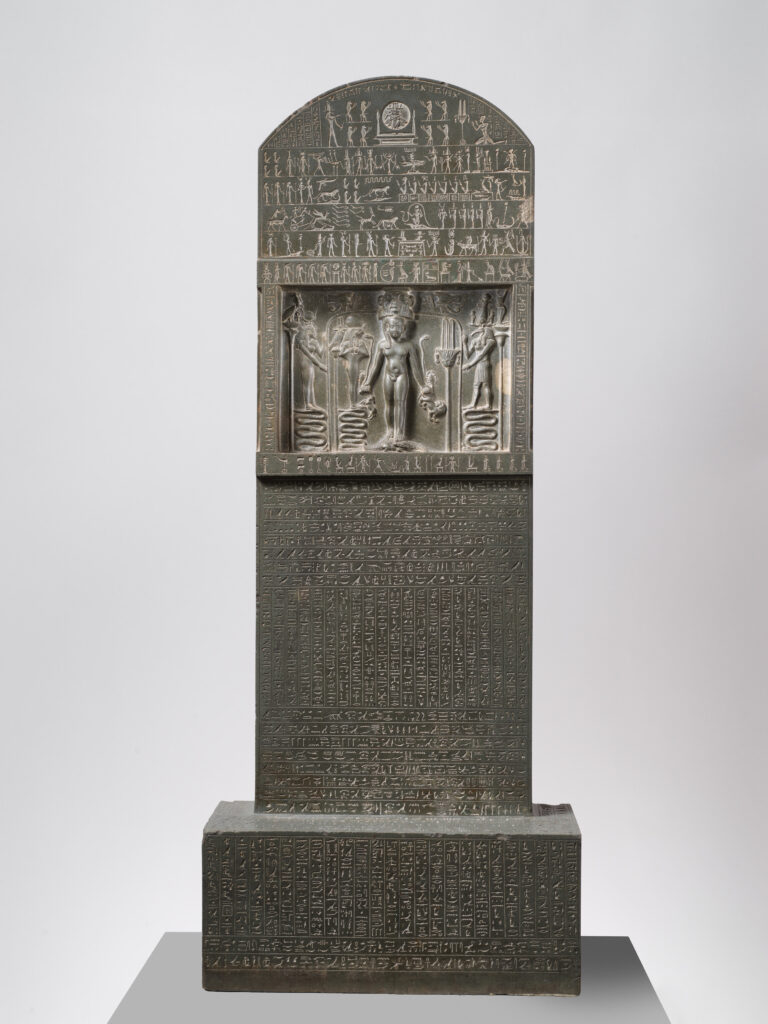
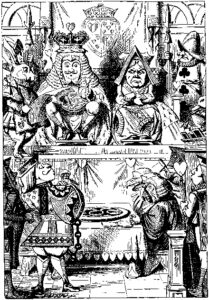
Egyptian Horus traditions contain multiple manifestations. Horus the Child, son of Isis in the Osirian tradition, must be distinguished here from Haroeris / Horus the Elder. The Met identifies the pictured figure as Horus the Child; the stela belongs to protective and healing practice, not an Egyptian doctrine of ego. Alice and Narcissus provide different literary encounters with self-image; a stable, revisable role remains a counterexample to identity fixation.
Geomytha treats form as necessary but distinguishes form from form claimed as final self.
The correspondence is Horus the Son = This / formed identity. Horus the Elder / Haroeris belongs to the watcher or witnessing function in GEOMYTHA and must not be collapsed into This. The child image identifies the son; childhood or protective action alone does not establish identity fixation.
Historical sources identify particular Horus manifestations and their religious functions. GEOMYTHA distinguishes Horus the Son as formed identity (This) from Horus the Elder as watcher. The former falcon illustration obscured this functional distinction and has been moved to the Elder draft as a clearly labelled comparison.
This is the object produced when I fixes reflected experience into a self-defining form.
I → This forms identity; This → I destabilizes it; This → Am softens identity back into living relation.
Horus the Son of Isis and Osiris is GEOMYTHA's correspondence for This / formed identity. The lead image is the Met's Magical Stela with Horus the Child (50.85), not a generic falcon.
A useful name, diagnosis or job description can remain provisional. The identity mechanism requires the description to exclude the rest of experience or resist correction as a threat to being. Form appearing is not automatically form claimed.
This entry’s name and mechanism belong to GEOMYTHA’s framework. The linked primary works are independent comparison witnesses, not evidence that the GEOMYTHA term originated in their cultures. Specific comparison references: Alice’s Adventures in Wonderland; Ovid, Metamorphoses Book III — Narcissus and Echo. Alice and Narcissus provide different literary encounters with self-image. A form becomes the proposed problem only when it is defended as exhaustive identity. A stable, revisable role is a counterexample. The original work, a later translation, a catalogue record and an extant manuscript are different kinds of evidence. The oldest surviving witnesses of the comparison traditions are not established by this entry.
This is not a rejection of bodies, roles, names, or ordinary personhood. These are GEOMYTHA's interpretive correspondences, not museum definitions. A falcon shape or double crown alone cannot establish Horus the Elder rather than another manifestation.
Do not mistake having a form for being trapped by identity; the problem is possession and finality.
Where this mechanism appears
Explore the essays and Index entries linked to this mechanism.
 White Room: The Shadow Waiting to Become Someone ElseChanging the image of who you are can leave the same need for an image in charge. A GEOMYTHA reading of Cream's White Room…
 The Superpower You Forgot to Turn OffThe human “I” can plan, protect, and choose. GEOMYTHA reads Dragon Ball's transformations as a question about when that ability becomes an identity we…
 The Rebellion TrapOpposition is not freedom when identity still needs an enemy. A sourced GEOMYTHA reading of Satan, rebellion, inversion, and the claimant that can wear…
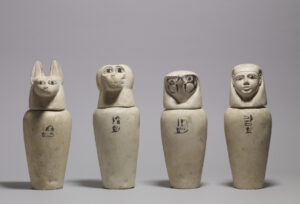 Why the Organs Were Not Thrown AwayAncient Egyptian mummification separated the liver, lungs, stomach, and intestines—but the parts were preserved, guarded, and kept inside a larger funerary order. Division did…
 Between Bells: The Ring Is a BoxBoxing makes identity visible under pressure: the ring limits movement, the opponent reveals habits, the guard protects, the bell interrupts, and the corner offers…
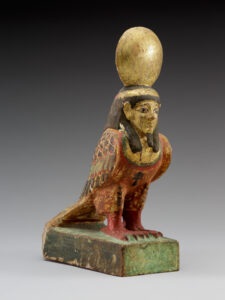 The Person Was Never One ThingKa, Ba, Akh, and Heka do not form a neat four-part soul system. Ancient Egyptian personhood was layered, mobile, relational, and reconstructed through return.
 Purple Haze, Purple Rain, and When Distortion Becomes RuleA haze colors the field. Rain brings the color down. Reign begins when the distortion no longer just affects perception but starts organizing identity…
 I Am Running Until I Become the RunnerA living action can become a defended identity. Flow gives us a way to see the difference between doing the verb and turning the…
Showing 8 most recent linked essays.
 Artificial Intelligence (AI)Artificial intelligence is a broad technical field encompassing machine-based systems that can infer from inputs and generate outputs such as predictions, recommendations, decisions, or content for defined objectives. The field includes machine-learning and neural-network…
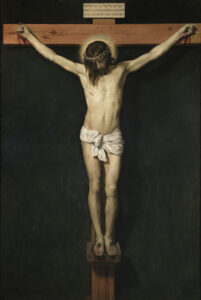 ChristJesus Christ as the central figure of Christianity. Matthew 27 depicts the soldiers' mock coronation with a robe and crown of thorns before crucifixion; Philippians 2 describes Christ humbling himself and becoming obedient unto…
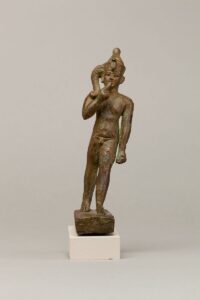 Double Crown of Upper and Lower Egypt — PschentThe Double Crown combines the White Crown associated with Upper Egypt and the Red Crown associated with Lower Egypt. It expresses kingship over both regions and also appears on deities. The selected Met figure…
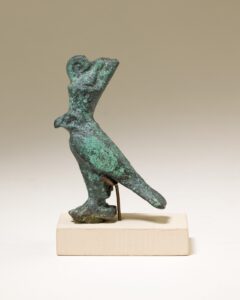 Horus the Elder — The WatcherHaroeris is a named manifestation of Horus, known as Horus the Elder. British Museum EA20654 is a lapis-lazuli amuletic figure identified as Haroeris, represented as a hawk-headed standing god in the double crown. The…
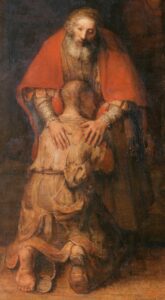 Prodigal Son — Luke 15The Prodigal Son is the younger son in Luke 15:11–32 who asks for his share of the estate, leaves for a distant country, spends what he has, falls into need, comes to himself, and…
Follow the mechanism
Moves into
 These — AccumulationThese names accumulation: possessions, titles, achievements, beliefs, communities, and other extensions gathered around identity.
 The Identity-WorldThe identity-world begins when This no longer remains a single self-description but expands into possessions, enemies, and a total symbolic environment.
Often confused with
See also
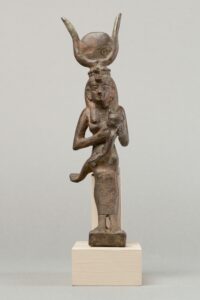 HorusIn GEOMYTHA, Horus the Son names the identity that forms after claim: This — the body, role, image, wound, belief, or story taken as what the self is.
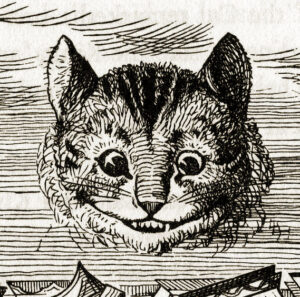 Identity Destabilization — This → IThis → I is the cracking of a fixed identity back toward the claim that constructed it.
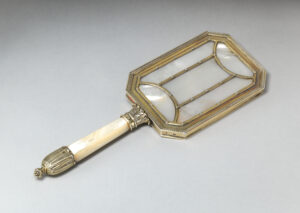 Identity Returning to Reflection — This → AmThis → Am is identity softening back into living reflection and relation.
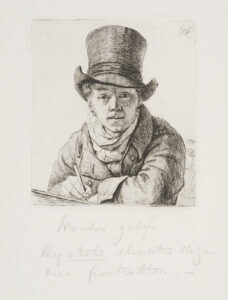 Narrative Self-Maintenance / Story of MeNarrative Self-Maintenance is the continuous work of explaining, rehearsing, defending, projecting, and interpreting experience so that the story of me remains central and coherent.