Identity Returning to Reflection — This → Am
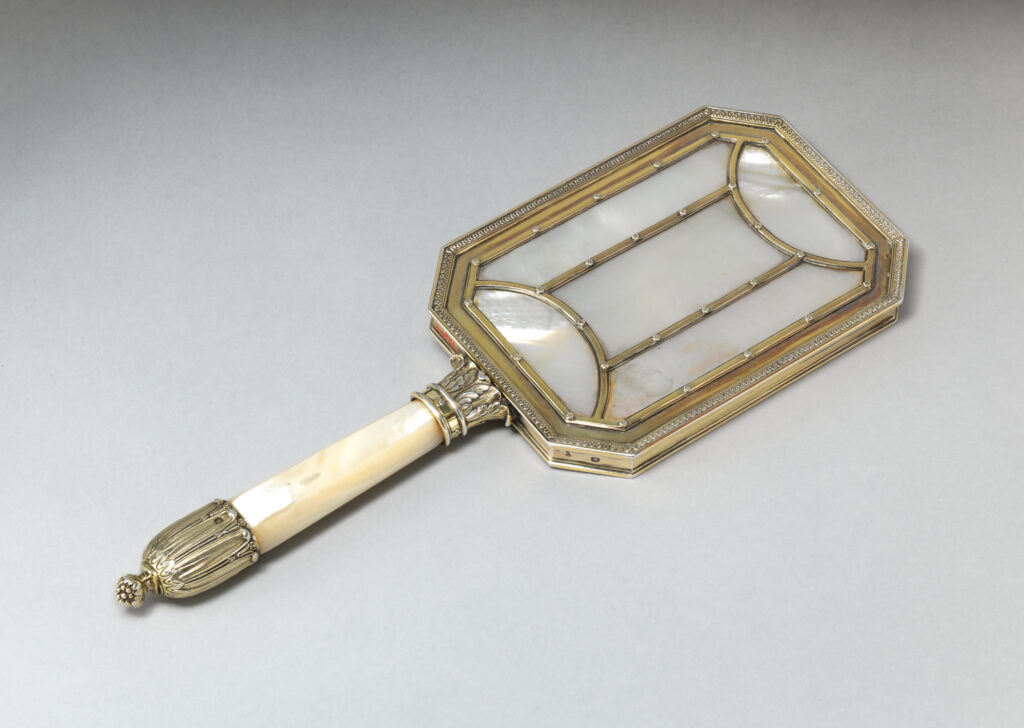
Public references and limits:
Alice and Narcissus offer contrasting outcomes for encounters with self-image. The test must include an action that loosens ownership. An encounter with a reflection can also deepen fixation, so the motif alone does not show correction.
The movement is corrective when a role, story, wound, or image becomes visible as an appearance rather than the whole self.
It names redemption without erasure: form remains usable but no longer claims final sovereignty.
This → Am.
Changing a label may leave the underlying possession intact. Look for an increased ability to receive correction and meet others without defending the old form. A fashionable new identity is a hostile example if the same closure survives.
This entry’s name and mechanism belong to GEOMYTHA’s framework. The linked primary works are independent comparison witnesses, not evidence that the GEOMYTHA term originated in their cultures. Specific comparison references: Alice’s Adventures in Wonderland; Ovid, Metamorphoses Book III — Narcissus and Echo. The original work, a later translation, a catalogue record and an extant manuscript are different kinds of evidence. The oldest surviving witnesses of the comparison traditions are not established by this entry.
The movement does not require abandoning names, roles, commitments, or memory.
Do not confuse flexibility of identity with lack of responsibility or continuity.
Where this mechanism appears
Explore the essays and Index entries linked to this mechanism.
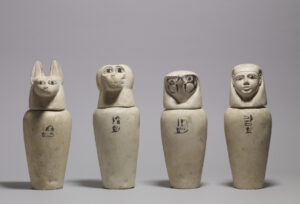 Why the Organs Were Not Thrown AwayAncient Egyptian mummification separated the liver, lungs, stomach, and intestines—but the parts were preserved, guarded, and kept inside a larger funerary order. Division did…
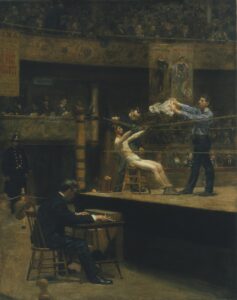 Between Bells: The Ring Is a BoxBoxing makes identity visible under pressure: the ring limits movement, the opponent reveals habits, the guard protects, the bell interrupts, and the corner offers…
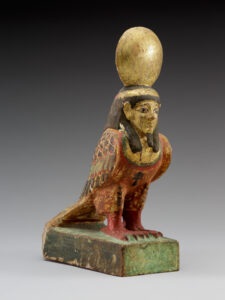 The Person Was Never One ThingKa, Ba, Akh, and Heka do not form a neat four-part soul system. Ancient Egyptian personhood was layered, mobile, relational, and reconstructed through return.
 Second Nature Is Not First NatureConditioning becomes identity when familiarity is mistaken for source. Return does not require erasing what was learned; it requires seeing it without possession.
 Star Fields Forever“Strawberry Fields Forever” sounds like a childhood memory dissolving in real time. That is why it still feels strange. It is not merely nostalgic.…
 Enter Sandman: Why We Keep Running from SleepThere are few songs in popular music more misunderstood than Metallica’s Enter Sandman. It is usually heard as a song about nightmares. About monsters…
 ReturnA fish does not know it is swimming in water. The water is too close. Too constant. Too complete. It surrounds the fish from…
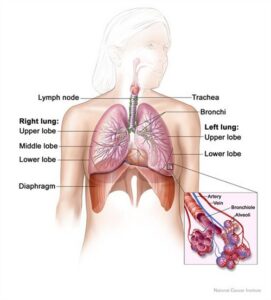 The Body Grammar of BreathThe false self is not only an idea. It is a body-pattern. It has a route. It has a pressure. It has a place…
 Enter Sandman — Metallica“Enter Sandman” is a Metallica song from the 1991 album Metallica, built around imagery of bedtime, sleep, fear, dreams, and the Sandman.
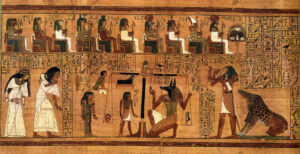 Papyrus of Ani — Weighing of the HeartThe British Museum identifies the scene as Ani’s Judgment in the Hall of Judgment. Ani’s heart is weighed against a feather representing Ma’at, truth and order. The scene belongs to the ancient Egyptian afterlife…
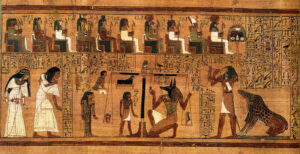 Weighing of the Heart — Papyrus of Ani, Frame 3The British Museum identifies this scene as Ani’s Judgment: Ani’s heart is placed in one pan of a balance and a feather representing Ma’at, the divine personification of truth and order, in the other.…
Follow the mechanism
Moves from
See also
 Recovered CenterRecovered Center names the restoration of right relation after fragmentation, when form becomes ordered around source without pretending to be source.
 Direct SeeingDirect Seeing is contact with experience before immediate naming, interpretation, symbolic classification, or self-positioning takes over.