Solve et Coagula — Dissolve and Re-form
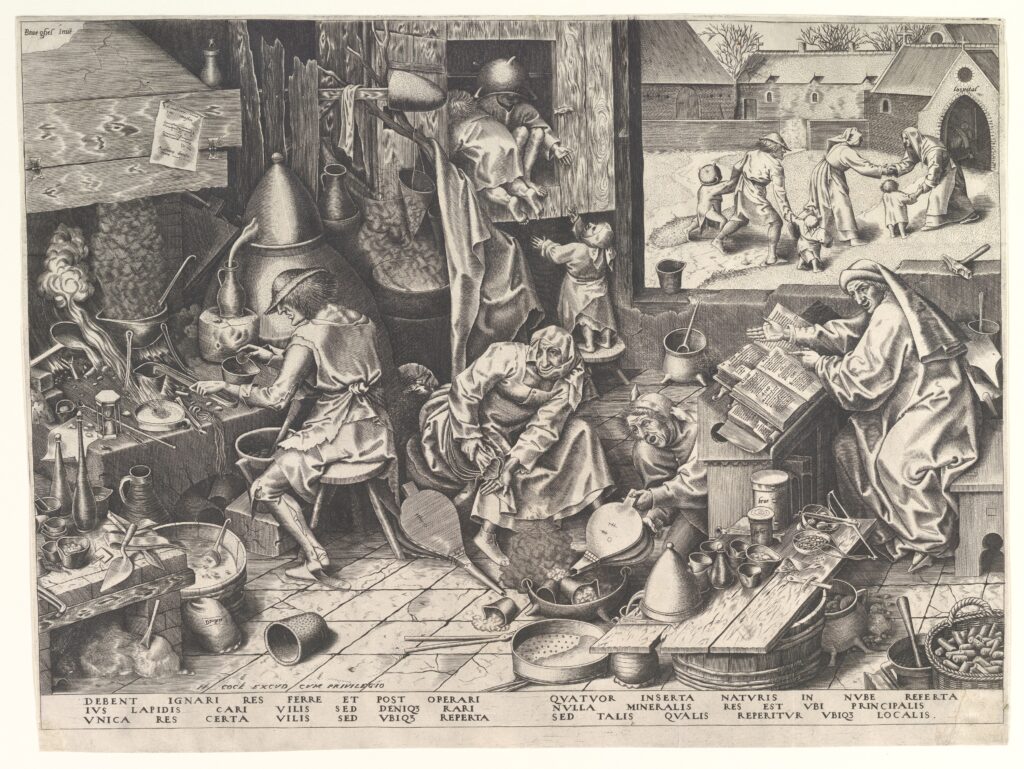
Public references and limits:
Princeton’s manuscript-based alchemy exhibition supplies historical context for alchemical imagery. It does not establish the first occurrence of the exact Latin formula. The GEOMYTHA dissolve-and-re-form reading must distinguish symbolic transformation from a laboratory operation.
Geomytha uses the alchemical formula as a compact image for breaking counterfeit form without ending in formlessness.
It prevents Geomytha from becoming anti-form: dissolution is necessary where structure has hardened, but the work includes re-embodiment and right relation.
This → I or Am through dissolution, followed by re-formation that remains answerable to Is / Am rather than hardened claim.
Dissolution can damage a workable relation, and re-formation can consolidate control. Test both phases independently against what they make possible. Alchemical terminology is a comparative lens, not evidence for every psychological change.
This entry’s name and mechanism belong to GEOMYTHA’s framework. The linked primary works are independent comparison witnesses, not evidence that the GEOMYTHA term originated in their cultures. Specific comparison references: Prime Matter — Through a Glass Darkly: Alchemy and the Ripley Scrolls 1400–1700. The original work, a later translation, a catalogue record and an extant manuscript are different kinds of evidence. The oldest surviving witnesses of the comparison traditions are not established by this entry.
This is Geomytha's interpretive use of an alchemical formula and should not be presented as a complete history or doctrine of alchemy.
Do not romanticize collapse, instability, or destruction as transformation merely because form is breaking down.
Where this mechanism appears
Explore the essays and Index entries linked to this mechanism.