Living Symbol
Public references and limits:
Campbell’s attributed myth functions and Exodus’s concrete ritual object are separate supports for comparison. Living Symbol is GEOMYTHA’s evaluative term. A literal, practical or historical use of a symbol can still be meaningful.
Geomytha uses living symbol for text, image, ritual, story, or artwork that opens experience beyond itself instead of demanding to be treated as the final reality.
It distinguishes symbolic forms that remain transparent to source from forms whose meaning has hardened into repetition, spectacle, or possession.
Is / Am remains perceptible through form rather than being sealed by I into a final This.
A fixed conventional sign can remain useful without being spiritually deep. A living-symbol claim needs evidence of continuing relation and interpretive responsiveness. Meaningfulness to one reader does not establish universal sacred power.
This entry’s name and mechanism belong to GEOMYTHA’s framework. The linked primary works are independent comparison witnesses, not evidence that the GEOMYTHA term originated in their cultures. Specific comparison references: Joseph Campbell's Four Functions of Myth — Foundation Commentary and References; Exodus 25 — Ark, sanctuary and carrying poles. The original work, a later translation, a catalogue record and an extant manuscript are different kinds of evidence. The oldest surviving witnesses of the comparison traditions are not established by this entry.
The term is an internal criterion of symbolic function, not an objective ranking of traditions or artworks.
Do not call a symbol living merely because it feels mysterious, old, beautiful, or personally meaningful.
Where this mechanism appears
Explore the essays and Index entries linked to this mechanism.
 Is the Millennium Falcon the Falcon Before the Throne?It is one of the most famous vehicles in modern mythology. Generations of viewers remember its shape immediately. Its battered exterior. Its impossible escapes.…
 Star Fields Forever“Strawberry Fields Forever” sounds like a childhood memory dissolving in real time. That is why it still feels strange. It is not merely nostalgic.…
 You Have No Power Over MeA maze is not always built to hide a monster. Sometimes it is built to protect a king. That is the bridge from the…
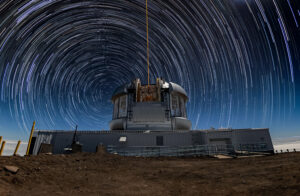 The Center That Does Not MoveMovement appears to be the opposite of stillness. Yet without stillness, movement becomes impossible. A wheel turns because something does not. The axle remains.…
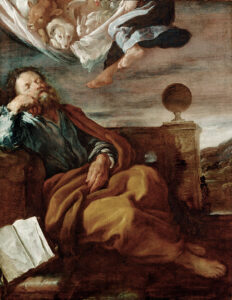 The Body at the GateYou are what you eat. The phrase has become so ordinary that its deeper meaning passes unnoticed. Eating is not the same as seeing,…
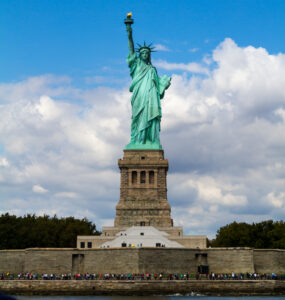 Liberty Is Not FreedomA person can have choices and still not be free. They can choose the city, the job, the partner, the religion, the platform, the…
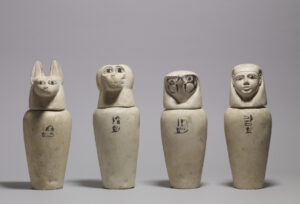 Four Directions and the Cross of ConsciousnessFour appears everywhere. Four seasons. Four directions. Four rivers flowing from Eden. Four elements. Four corners of the earth. Four winds. Four creatures surrounding…
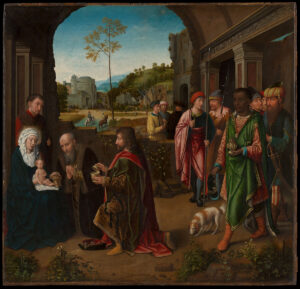 Why the Magi Followed a StarMost people remember the Wise Men. Few remember the thing they were following. The story is usually told as though the kings themselves are…
Showing 8 most recent linked essays.
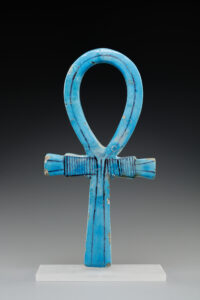 Ankh — Life Sign and CrossingThe Met identifies the ankh as a hieroglyph used to write “live,” “alive,” or “life,” and as a general symbol of life. Its wooden model is dated to Egypt’s Middle Kingdom, long before Christianity.
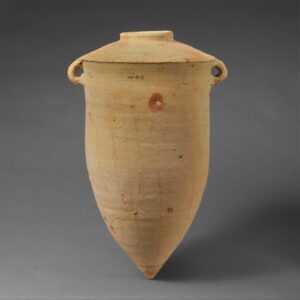 Bet — Semitic Letter / HouseBet/Beth belongs to the Semitic alphabetic tradition represented by Phoenician and related scripts. In the Phoenician letter-name sequence, beit/beth is traditionally associated with 'house'; the corresponding letter-name lineage passes into Greek beta.
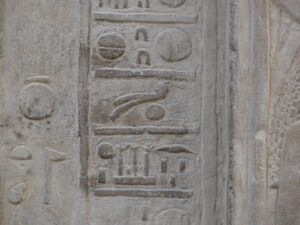 Egyptian Epagomenal Days — Five Days Outside the 360-Day YearThe ancient Egyptian civil calendar organized twelve 30-day months and added five epagomenal days to complete a 365-day year; later traditions associated these days with divine births.
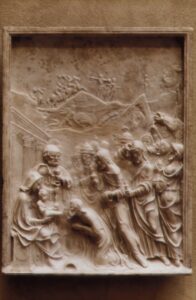 Magi and the Star — Matthew 2Matthew 2 describes Magi who see a star, travel to Judea, encounter Herod, and then find the child Jesus. Christian art developed a long Adoration of the Magi tradition around this episode.
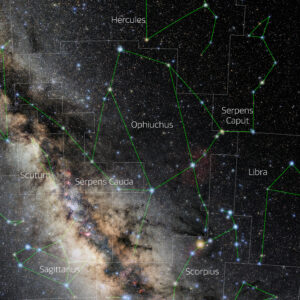 Ophiuchus / Serpent-Bearer — Astronomical ZodiacThe IAU states that the Sun’s apparent path crosses Ophiuchus and that, astronomically, Ophiuchus is one of the constellations along the zodiacal path; astronomical constellations are not evenly spaced.
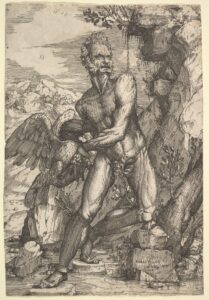 Prometheus — Fire BringerPrometheus is the Titan associated in Greek literary tradition with conflict over fire and its availability to mortals; later visual art repeatedly depicts him bringing or animating with heavenly fire.
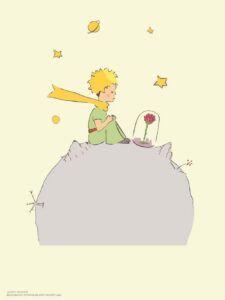 The Rose — The Little PrinceThe Little Prince cares for a particular rose and comes to understand her as unique through the time and attention he has given her. Official Little Prince materials emphasize watering, protecting, attending to, and…
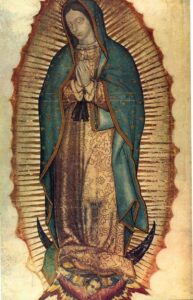 Tilma of Our Lady of GuadalupeIn the Catholic Guadalupe tradition, Juan Diego is said to have presented his tilma to the bishop in Mexico City in 1531, where the image associated with Our Lady of Guadalupe appeared on the…
Showing 8 linked Index instances.
Follow the mechanism
Moves into
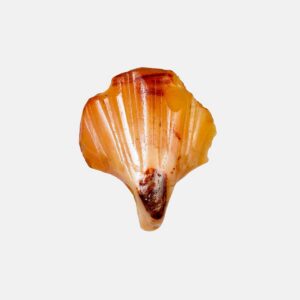 Shell and CenterShell and Center distinguishes the structure built to preserve, transmit, or protect living source from the living center the structure is meant to serve.
 Liturgy as RepatterningLiturgy as Repatterning names repeated embodied form that reorganizes attention, time, memory, posture, and relation rather than merely conveying information.
See also
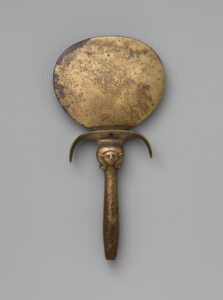 Mirror, Not a ThroneMirror, Not a Throne is the rule that an interpretive system should reveal recurring structures without becoming a new identity, authority, or worldview that replaces direct seeing.
 Sacred MigrationSacred Migration names the movement by which functions once carried by one symbolic institution reappear in another medium, practice, ideology, technology, or cultural form.